MLB
Boyd's Knee Rehab Pays Off as Cubs Rotation Becomes November Asset
Matthew Boyd's seven-inning performance against Kansas City capped a stretch where Chicago's starting pitchers have delivered elite volume and efficiency—a sustainable advantage that shapes playoff rotation confidence.
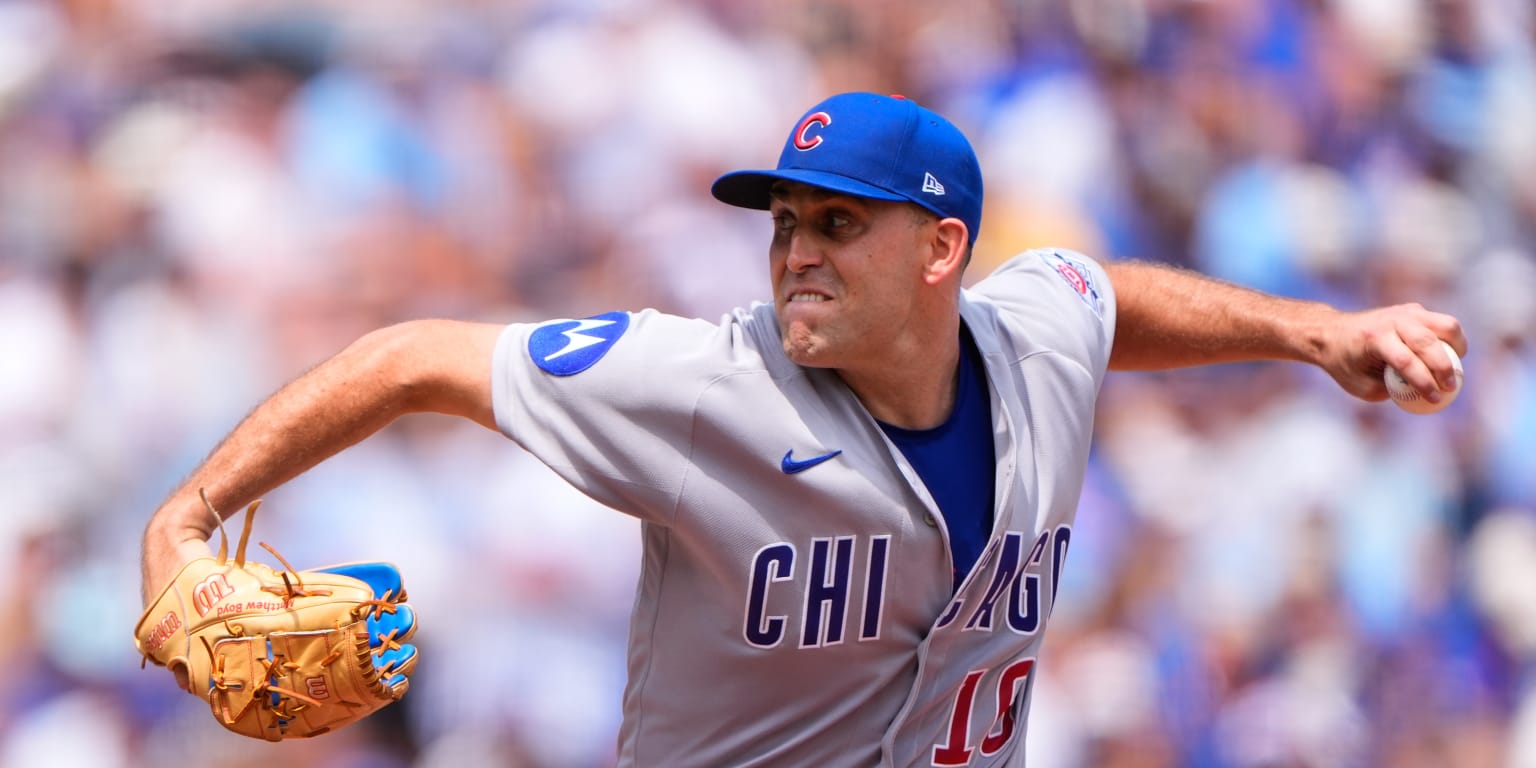
Matthew Boyd limited Kansas City to two runs over seven innings Sunday, improving to 8-1 with a 3.50 ERA on the season. The Cubs won 10-2, extending their run to 12-5 over the past 17 consecutive games played without a rest day. What matters more than the win total, though, is how Chicago is winning: through starting pitching depth that has begun to look like a legitimate organizational edge rather than a hot streak.
Boyd underwent left knee surgery in May—roughly 2.5 months before this performance—and has spent the summer proving the procedure was not a career inflection point. Since returning to the active roster in late June, Boyd has gone 6-0 with a 2.43 ERA across nine outings. That 2.43 mark matters because it's not outlier performance; it's a persistent pattern. From July 4 onward, the Cubs' entire rotation has compiled a 2.91 ERA while logging 176 1/3 innings—both league-leading figures. Boyd anchors that group, but he's not carrying it alone. Counsell credited the depth: "The starting pitching has been a big reason why we've been able to get through" the grind of consecutive games. That's not manager-speak softening the workload narrative; it's accurate assessment of where Chicago's competitive advantage sits.
Ian Happ's three-hit performance and two-run homer offer a secondary narrative—he broke an 0-for-22 drought Saturday, then went 5-for-7 since—but Happ's emergence does not change the rotation's trajectory. A slumping position player finding his stroke is volatility smoothing; elite starting pitching depth is structural. The Cubs are not winning games because Happ got hot. They're winning them because their starters are generating outs at a rate that allows inferior offensive nights to remain wins. In a compressed playoff format, the team with five reliable arms and a 2.91 ERA from the rotation wins more series than the team relying on a position player's hot streak to carry the load.
For prop purposes, this reshapes how to model Cubs team totals going forward. The rotation strength means Chicago's aggregate run prevention is durable across opponents and quality of relief arms. Games where the Cubs' offense underperforms—which will happen—no longer carry the same "uh-oh" risk they would for an offense-first club. Boyd's post-surgery performance is the proof point: he's not a temporary liability or an aging arm on borrowed time. He's a foundational piece that limits the variance in any given night's ceiling. Against sub-.500 competition, a rotation running 2.91 ERA since July 4 compounds every offensive advantage into win probability that the market may still be pricing with generic Cubs-baseline assumptions rather than rotation-specific weight. The Cubs hit an off-day Monday (August 12), breaking the 17-game grind. When they resume, expect starting pitching to remain the underrated reason they remain in the NL Central conversation.
MLB Intelligence — Baseball intelligence beyond the box score. Open MLB Intelligence →