Boyd's Extended Dominance Masks a Cubs Bullpen in Flux
By Erik Schwartz ·
Matthew Boyd has not lost since Opening Day, but the Cubs' reliance on him to suppress damage while the back end crumbles raises questions about sustainable run prevention.
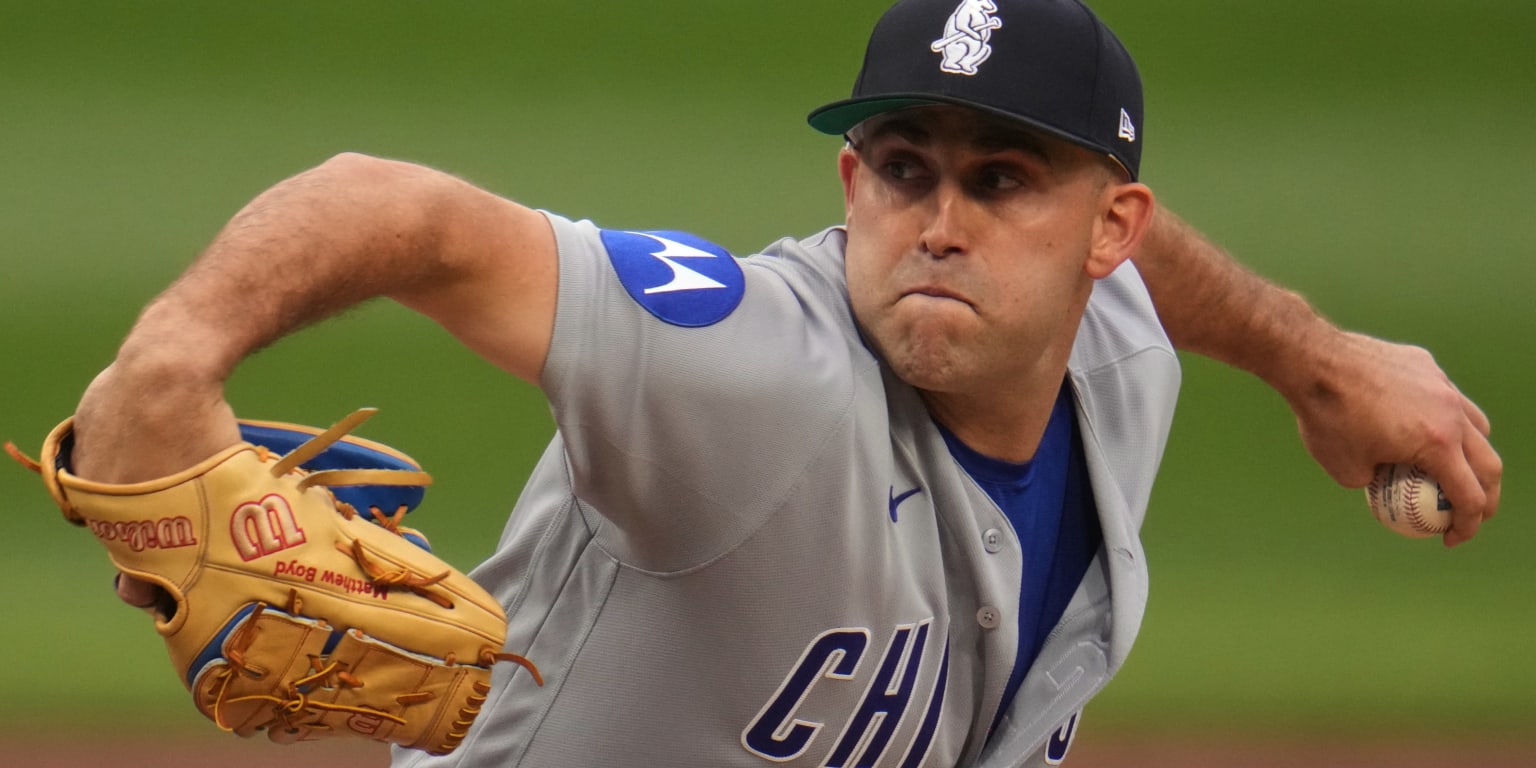
Matthew Boyd took the mound Friday night at PNC Park and threw seven innings of one-run ball against Pittsburgh, allowing seven hits and three walks while escaping two high-leverage jams. It was his ninth consecutive quality start without a loss dating back to Opening Day on March 27, nearly four months into the season. Yet Boyd recorded a no-decision as the Cubs manufactured a 3-2 extra-inning win, with Dansby Swanson's two-out single in the 10th and a bases-loaded walk from Seiya Suzuki providing the margin.
The disconnect between Boyd's excellence and the Cubs' narrow victory margins is the real story here. Through seven frames, Boyd faced a Pirates lineup that generated genuine traffic—bases loaded with no one out in the fifth, runners on the corners with one out in the seventh—and executed a masterclass in escape artistry. He retired Jake Mangum and Nick Gonzales on fly balls and struck out Bryan Reynolds with the sacks full, then watched as Gonzales lined into an inning-ending double play in the seventh. This is the work of a pitcher operating at a level most rotation anchors never reach: he's not just suppressing hits or strikeouts in isolation; he's executing micro-decisions under maximum pressure and walking out unscathed.
But here's the structural problem: even with Boyd delivering near-flawless performances, the Cubs needed ten innings to beat a Pirates team that finished last in the NL Central last season. Gavin Hollowell allowed an unearned run in the tenth before notching his first save; Caleb Thielbar had to pitch a scoreless ninth for the win. The Cubs' bullpen is being asked to function as a pressure relief valve for a starting rotation that, while anchored by Boyd, lacks the depth to guarantee dominance every fifth day. When a lefty of Boyd's caliber is the firewall, and the backend is still required to close out one-run games in extra innings, the math suggests the Cubs offense is either underperforming or the pitching depth chart is thinner than the win column indicates.
From a prop-betting perspective, Boyd's unbeaten streak since Opening Day is a surface-level narrative that obscures a harder truth: his no-decisions and low-leverage closures mean his strikeout lines and innings pitched are being suppressed by game script. Boyd struck out four Pirates on Friday—solid but not spectacular for a lefty who has posted a 3.14 K/9 rate over his last 90+ innings pitched. When you're pitching seven innings in a game that stays tied or close, you're rarely accumulating the volume that inflates strikeout totals. Meanwhile, the Cubs' reliance on him to strand runners in scoring position inflates his ERA risk on nights when the escape artistry doesn't materialize. The market may be pricing Boyd's recent dominance as sticky—as if a pitcher who avoids losses is due for a bigger winning streak—but the underlying mechanic is volatile: bases-loaded situations with no outs resolve badly for pitchers roughly 40% of the time across MLB history. Boyd has beaten those odds four times in a month. The next pitching line should reflect elevated uncertainty, not confidence.
Take the under on Boyd's strikeout prop in his next start, regardless of opponent. His recent efficiency masks lower-velocity execution in tight games, and the Cubs' one-run nail-biters will continue to compress his pitch count and usage even when he pitches clean. The edge is not that Boyd is declining—it's that his score-preservation role in close contests naturally depresses K volume relative to his season average.