Cubs Rotation Stabilizes While Front Office Hunts Upgrades at Deadline
By Erik Schwartz ·
Matthew Boyd, Shota Imanaga, and a suddenly competent ensemble have transformed Chicago's pitching picture in July, raising the stakes on whether rentals or controlled arms are worth the cost.
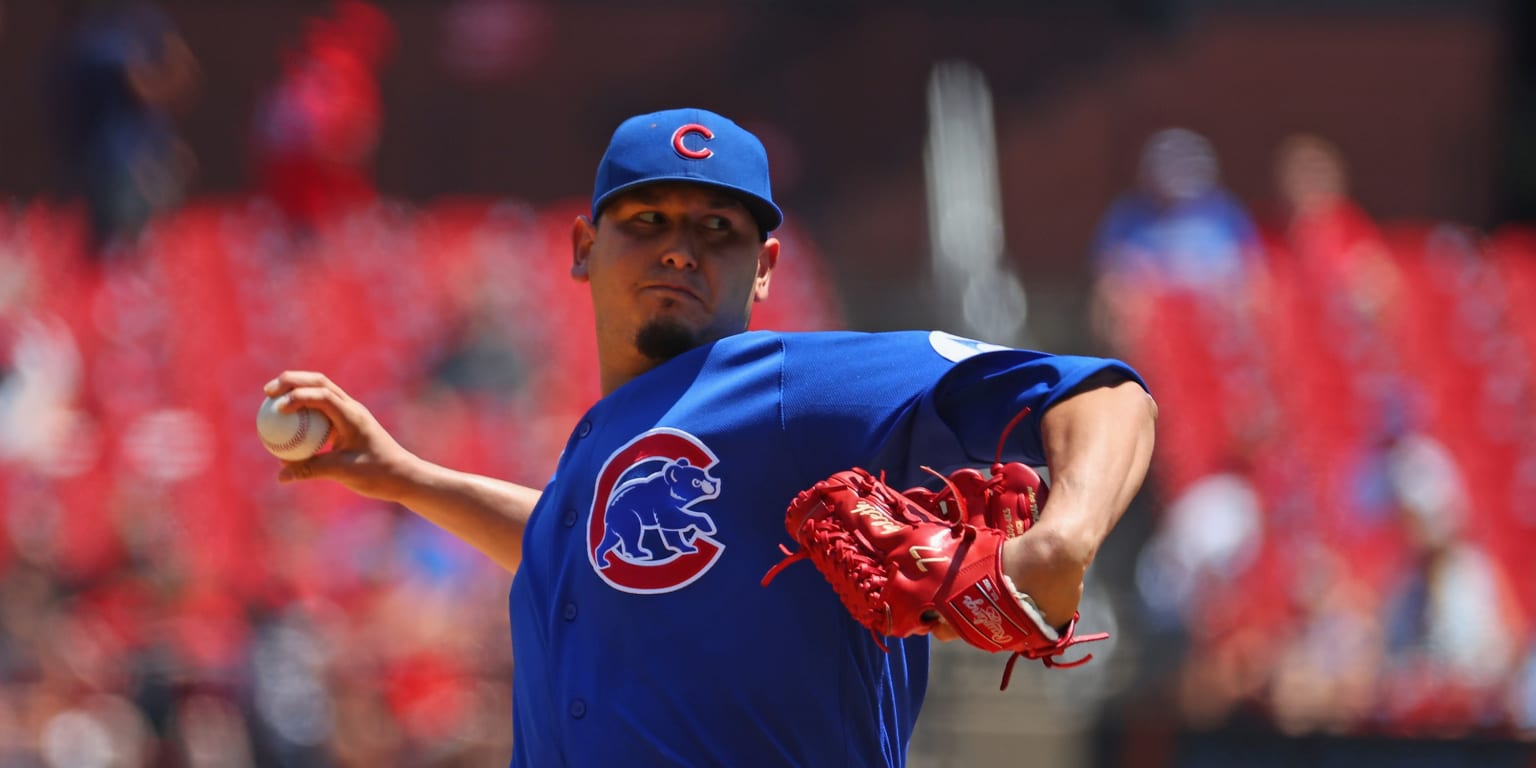
The Cubs' rotation has swung from crisis to credible in six weeks. In late June, when Ben Brown and Edward Cabrera landed on the injured list within days of each other, the starting depth had collapsed so severely that manager Craig Counsell wondered aloud who would even take the mound. Now, entering Monday's trade deadline with a 2.85 ERA over the past 21 games, Chicago's current five-man rotation—Matthew Boyd, Shota Imanaga, David Peterson, Colin Rea, and Javier Assad—has performed at a level that ranks among baseball's top units for the month. Assad's solid effort Thursday against St. Louis (4⅓ innings, one run allowed) in a 10-inning win underscored the turnaround.
Boyd has been the anchor, posting a 1.93 ERA over his last seven starts since returning from left knee surgery earlier this month. Imanaga sits at 2.00 over his last eight outings. Peterson, acquired from the Mets during that late-June scramble, has strung together three consecutive starts with a 1.56 ERA. The group is performing at a level that removes near-term panic—Counsell acknowledged the rotation's stabilization directly—but depth vulnerability remains a real concern. Cabrera begins a minor-league rehab assignment with Triple-A Iowa on Friday and will need three outings before activation, likely pushing his return to mid-to-late August. Brown's neck-injury timetable is far murkier.
That timeline paradox is driving Cubs president of baseball operations Jed Hoyer's deadline calculus. The team is exploring a blockbuster bid for Detroit's Tarik Skubal, though competing with the Dodgers, Brewers, and Rays for an ace-caliber arm will drain farm capital with uncertain payoff. More realistic targets are controllable arms like Reid Detmers or José Soriano of the Angels (both signed through 2028), but asking prices on those deals are historically punishing. Rental options—Kevin Gausman from Toronto, Clay Holmes from the Mets—offer lower upfront cost and simpler exit ramps.
From a betting lens, the Cubs' current rotation stability reshapes how to read their starter-dependent props. Overs on team totals and under-heavy scenarios that assumed rotation fragility now face a different pitching profile. Boyd and Imanaga are delivering sub-2.00 ERAs on volume; that's not a mirage built on small-sample noise—Boyd's 1.93 ERA spans seven starts, Imanaga's 2.00 across eight games. Peterson's 1.56 over three games carries higher variance risk, but he's faced legitimate competition in that stretch. The mechanism here is straightforward: a rotation that was leaking 5+ runs per game in June is now operating like a fringe-playoff staff. Sportsbooks may not have fully repriced Cubs team totals downward if their early-July lines were built on the June rotation's performance baseline. If the market still views Chicago's pitching as a relative weakness, overs on their team total become vulnerable because the actual rotation performance has moved decidedly in the other direction.
The deadline acquisition question is separate from the stability story. Adding a Gausman-type rental doesn't materially change Boyd or Imanaga's workload or stuff profile. But a controllable arm like Detmers could shift curveball usage in the rotation's arsenal and lower overall ERA pressure if the Angels' asking price includes a high prospect outlay. For now, track whether Cubs team overs reflect June dysfunction or late-July reality. If the line hasn't adjusted to the 2.85 July ERA cluster, that's the edge.