MLB · milestone
Brewers Detonate 22-Run Mercy Against Mariners, Exposing Seattle's Pitching Liability
Milwaukee's franchise-tying explosion—21 runs in the final four innings—reveals a bullpen vulnerability that markets may still be underpricing.
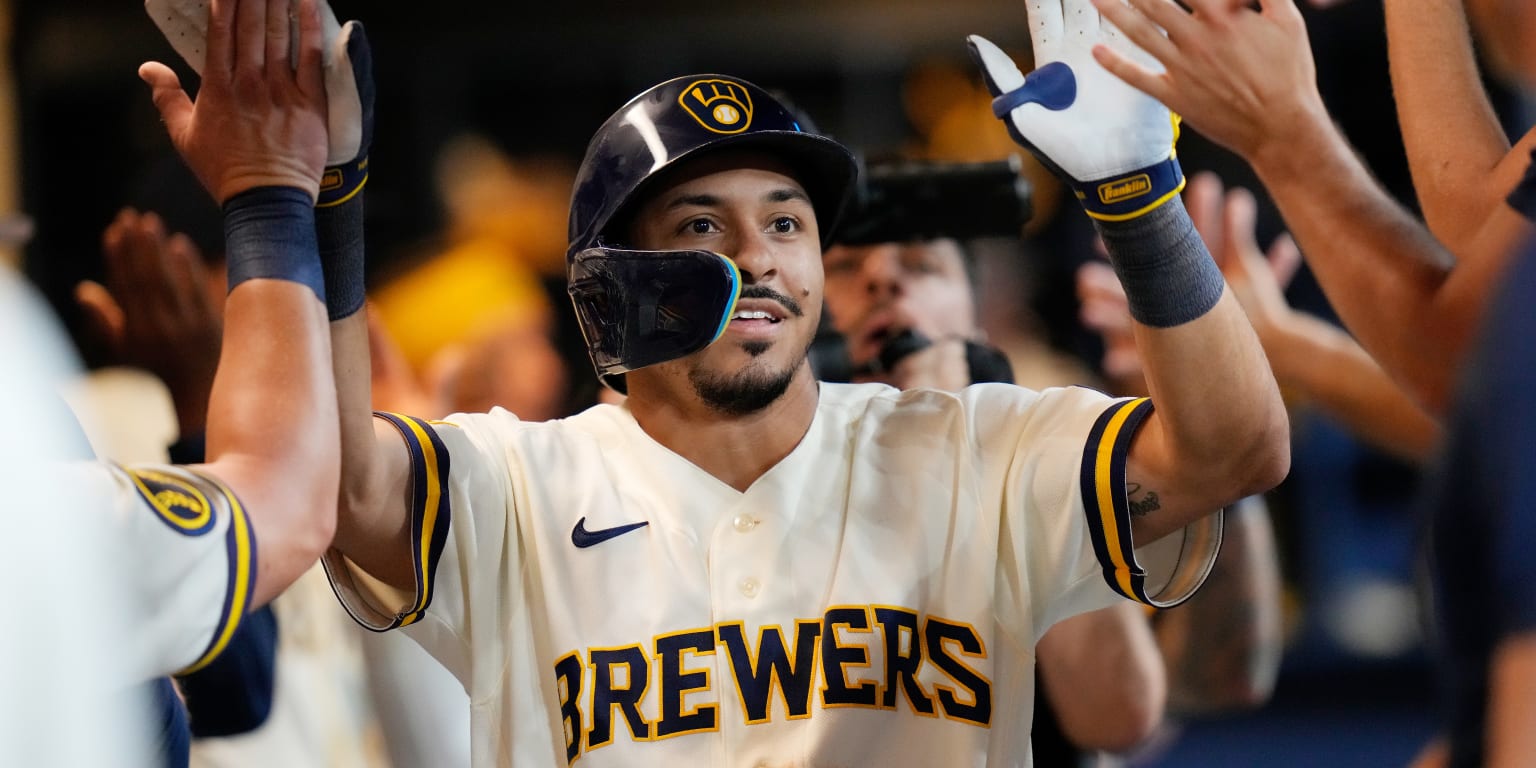
The Brewers matched their franchise record by scoring 22 runs in a shutout rout of the Mariners on Tuesday night, with the damage concentrated in a four-inning assault that converted a competitive game into an embarrassment. After Jake Bauers scratched out Milwaukee's opening run in the first inning, the Brewers' lineup dormant through the fourth, the offense ignited in the fifth and never relented, unleashing 21 runs across innings five through eight to push the final margin to 22-0. The victory moved Milwaukee to 30 games over .500 overall and 20 games above the break-even mark at home—a roster performing significantly better than preseason projections suggested.
The execution itself traced a familiar late-inning script: Christian Yelich's three-run homer punctuated a five-run fifth, David Hamilton and Bauers each contributed multi-run shots in a five-run sixth, and the collapse accelerated in the eighth when Mariners center fielder Julio Rodríguez threw a relay into the stands on what should have been the second out of a bases-loaded sacrifice fly, handing Milwaukee three runs on a single error. Rookie outfielder Luis Lara capped the inning with a two-run home run—his first in the majors—off a position player, Mariners infielder Leo Rivas, pressed into pitching duty after Seattle's relief corps had already been decimated. The Brewers' four home runs from the fifth inning onward contradicted their season trend; Milwaukee enters with just 117 homers, the fewest in baseball, but Tuesday's display illustrated the raw power potential sitting in the lineup when fastballs hang or mistakes compound.
What the surface score obscures is the structural failure on Seattle's side. Once the Brewers' bats woke in the fifth, there was no circuit-breaker—no reliable reliever to stanch the bleeding, no defensive execution to prevent the error spiral. The Mariners' bullpen had already surrendered the competitive shape of the game by the time Rodriguez's throw sailed into the stands, a cascading collapse that felt less like the Brewers' offense breaking out and more like Seattle's pitching infrastructure simply ceasing to function. Position players were pitching by inning eight because the relief depth had evaporated.
For bettors, the immediate takeaway is narrow: Tuesday's game was a variance event, not a repeatable pattern. A 22-0 shutout tied for the most lopsided win in MLB since 1888; even franchise records don't forecast the next series. The Brewers' seasonal home run rate sits in the bottom tier of baseball, and one four-inning outburst doesn't reverse that underlying skill. However, the angle worth monitoring is Mariners bullpen durability in the short term. Seattle's relief group clearly had nothing left by the middle innings, which means games three and four of the series carry elevated risk for run-inflated totals if the Mariners are forced to lean on a depleted pen again. The Brewers' team total over 4.5 runs for the next two games has edge if Seattle's relievers remain gassed from Tuesday's emergency usage; the mechanism isn't that Milwaukee's bats are suddenly elite, but that an exhausted bullpen facing a lineup that just proved it can score in bunches creates a structural mismatch. Conversely, Mariners team totals shrink if Rodriguez and company take Wednesday off to recover, a form of regression that markets may already be pricing after the shellacking.
MLB Intelligence — Baseball intelligence beyond the box score. Open MLB Intelligence →