Pittsburgh's Tolvanen Bet: Positive Regression Play on a Discounted Shot Volume
By Erik Schwartz ·
A 12-goal season masks a 8.5% shooting percentage from a player who has historically converted at 12%; the Penguins' cost of entry is near zero, and the edge sits entirely on whether Tolvanen's finishing reverts to type.
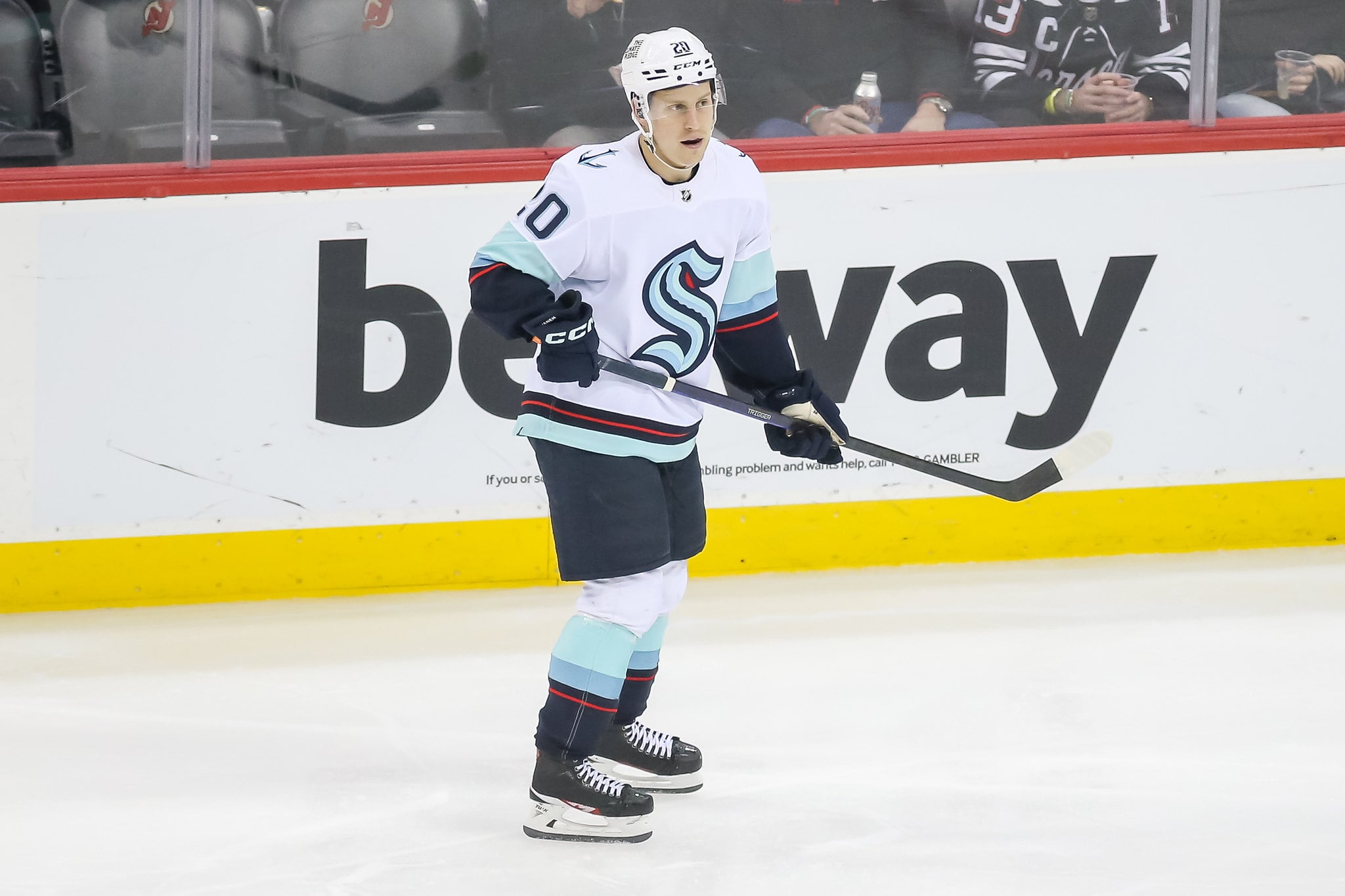
The Pittsburgh Penguins have the cap flexibility and roster depth to absorb a short-term flier on Eeli Tolvanen, and the math on a potential rebound is sharper than his disappearance from the free-agent market suggests. Per reporting from The Hockey Writers, Tolvanen dropped from 23 goals in 2024-25 to just 12 last season despite maintaining 141 shots on goal—a volume that would have yielded roughly 17 goals had he shot at his 12% career rate instead of 8.5%. That's not noise; that's the kind of isolated statistical collapse that creates value in a low-risk acquisition.
Tolvanen's 27-year-old profile is a mixed bag operationally. He played both wing positions for Seattle, logged power-play and penalty-kill minutes, and led the Kraken in hits during the first half of the season. He's not a one-dimensional scoring chase. But the engine that matters here is the shot and the conversion rate on it. His career 92 goals across 768 shots over 423 games establishes a floor. Last season's 8.5% conversion sits 3.5 percentage points below his mark—a delta that's historically sustainable to expect reversion on. The Kraken's ice time and deployment didn't prevent shot volume; they just didn't prevent a mechanical collapse in finishing.
The real prop angle hinges on whether Pittsburgh's offense—built around Sidney Crosby's playmaking and stronger puck possession—can create cleaner looks than Seattle did. If Tolvanen operates in a higher-percentage shot diet (rush chances, cross-seam finishes, power-play clean releases), his shot volume of 140+ per season could climb back toward the 16-17 goal band without needing a full reversion. Conversely, if his underlying scoring chances were genuinely weaker or his shot quality deteriorated, the 8.5% miss rate might stick, and Pittsburgh wastes a roster spot. That's the variance the Penguins are pricing in at near-zero cap cost.
For prop bettors, the implications are subtle but real. Tolvanen's goal-scoring line in season-long player props would reflect last season's 12-goal baseline unless sharp operators price in regression already. If his line sits at 13-14 goals for the coming season, there's a floor case: even a modest recovery to 10-11% shooting (still below career norm) yields 14-15 goals on the same volume. But if Vegas has already baked in a rebound to 15-17, you're fighting the adjustment. The edge is in early-season prop data—if Tolvanen's shot rate looks normal but his finishes stay tight through October, unders become valuable; if he starts converting at a clip closer to 11-12%, overs open up mid-season as sharps fade the initial pessimism.
Pittsburgh's low-commitment structure matters because it lets Tolvanen find his rhythm in a better system without the pressure of a long-term deal. That reduces variance on his side but doesn't eliminate the core mechanism: he either finishes at career rates or he doesn't. The Penguins are betting he does. Smart prop players should track his early-season shot quality and conversion frequency; whichever direction the data trends, the edge emerges in the gap between preseason line-setting and October reality.