Oilers Chase Depth While Hellebuyck Signals Exit; Rangers Lock Tolvanen on the Cheap
By Erik Schwartz ·
Edmonton explores trade targets to plug immediate gaps from injury, but goaltender availability and market timing will determine whether this offseason becomes a net positive or a costly lateral move.
The Edmonton Oilers are working the trade market to address two roster emergencies before the 2026-27 season begins. Matt Savoie and Frederik Andersen will both miss time to injury, forcing the team to consider upgrades in scoring depth and goaltending. Per local reporting, the Oilers have circled two names: Columbus winger Kirill Marchenko and Winnipeg goaltender Connor Hellebuyck, though both deals would require cap maneuvering and Columbus or Winnipeg's cooperation.
Marchenko represents the lower-risk opportunity. The 26-year-old carries a manageable contract and has shown consistent production; his connection to Oilers forward Vasily Podkolzin through their time together in Russia provides a familiarity bonus that can smooth on-ice chemistry in the early weeks. The real friction lies in goaltending. Hellebuyck is 33 years old and endured a subpar 2025-26 season while carrying a brutal workload. That he won Olympic gold for Team USA in February 2026 may have further taxed a body already running on fumes. Yet Jets reporter Sean Reynolds suggested Hellebuyck would entertain an Edmonton trade if it improved his Stanley Cup odds—a telling signal that the incumbent Jets organization may not be confident it can re-sign him at reasonable value, or that the player himself has begun eyeing exits.
The Oilers' cap situation is tighter than Edmonton's press coverage typically admits. Adding Marchenko is feasible; absorbing Hellebuyck's salary while maintaining roster depth is a different problem. If Edmonton pursues Hellebuyck aggressively, they'll be betting that a veteran goaltender with a weak recent resume can re-establish form in a lower-stress role, which is a high-variance proposition. Conversely, the Oilers may be better served gambling on prospect depth or short-term bridge rentals at the deadline, a play that keeps their powder dry for deadline trades when leverage shifts.
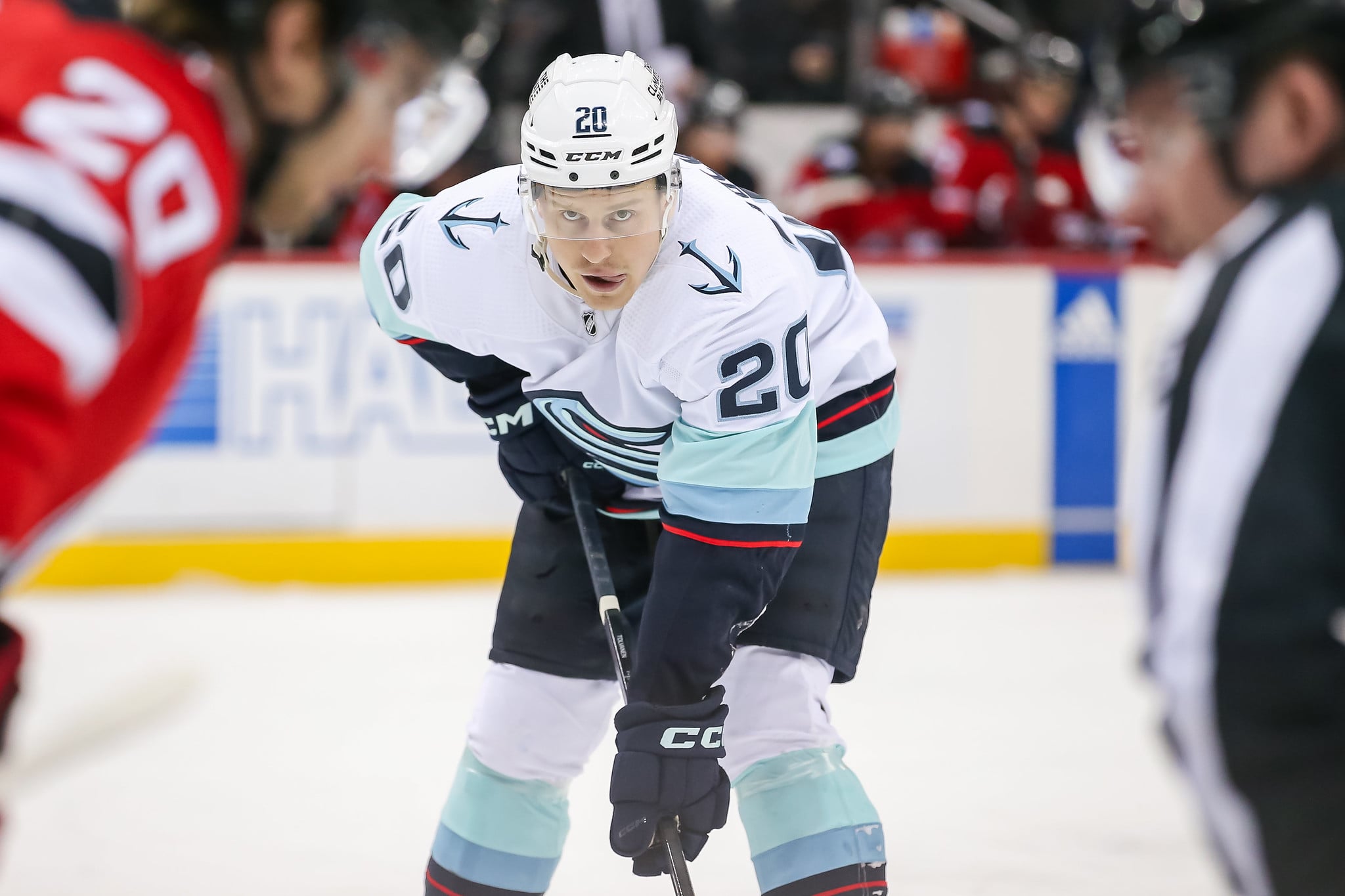
Meanwhile, the New York Rangers added Eeli Tolvanen on a one-year, $1.5 million contract—a transaction so favorable it borders on asymmetric. The 27-year-old winger finished last season with the Seattle Kraken posting 12 goals and 36 points in 78 games. His 2025-26 goal total declined from 23 the prior year, but his point production remained steady and his hit total (187) and special-teams contribution (14 power-play points) provide ballast that mid-six forwards routinely lack. The deal includes no trade protection, making Tolvanen a moveable asset at the deadline if New York's contention window tightens. For prop purposes, Tolvanen's inclusion in the Rangers' rotation immediately pressures the team's spread and total lines. A competent third-line option at minimal cost reduces variance in their depth-scoring equation and lowers the likelihood of blowout losses to weaker opponents—exactly the kind of roster friction that inflates unders when a team is expected to compete.
Edmonton's injury situation and ongoing trade leverage mean the Oilers will likely cycle through multiple lineup configurations before camp opens. That volatility makes pre-camp player props unreliable; wait for injury timelines to solidify and roster construction to finalize before trading shot or assist props tied to Marchenko, Andersen, or other candidates. The Rangers, by contrast, have signaled organizational commitment to depth and balance, a signal that favors unders on their team total relative to projection.