NHL · roster-move
Devils' Hayton Offer Sheet Signals Offensive Desperation—and a Bet on Utah's Salary-Cap Bind
New Jersey's aggressive restricted-free-agent play targets a third-line contributor amid offensive collapse, forcing Utah into a one-week decision that could reshape both rosters.
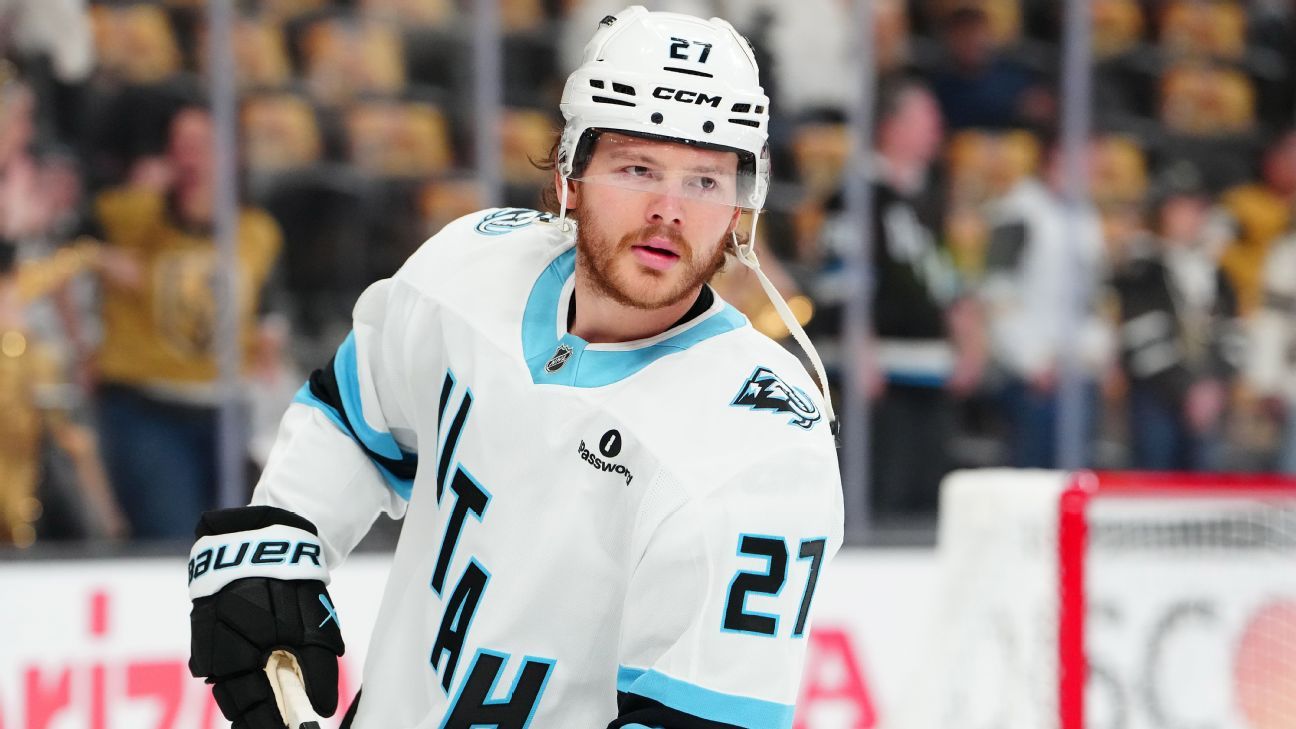
The New Jersey Devils submitted a one-year, $4.775 million offer sheet for Utah Mammoth restricted free agent Barrett Hayton on Wednesday, giving the Mammoth seven days to match or receive a 2027 second-round pick as compensation. The move is unconventional—offer sheets rarely surface in modern NHL management—and it exposes how far the Devils' front office is willing to reach. New Jersey ranked 26th in goals per game last season at 2.76, missing the playoffs entirely. Incoming GM Sunny Mehta is telegraphing that incremental scoring, even at third-line production, has become an emergency.
Hayton, 26, recorded 10 goals and 25 points in 67 games for Utah last year, a pace that projects to roughly 12 goals and 30 points over a full season. He appeared in just one playoff game, a ceiling breaker on a team that made a postseason run. His underlying value is modest—a complementary forward in the 15–20 goal range on a good year. By offer-sheet standards, $4.775 million is fair-to-lean-high for that production tier. The Devils are betting that Utah's recent additions—Vincent Trocheck acquired from New York, Kevin Stenlund re-signed—render Hayton expendable enough that the Mammoth will decline to match and absorb the second-round hit.
Utah faces a thorny calculus. Matching the deal locks Hayton into the salary cap for the next year but prevents him from being traded for 12 months. When his contract expires next summer, he hits unrestricted free agency. The Mammoth gain a year of control but sacrifice trade flexibility and lose the option to replace him at lower cost. Declining the offer sheet stings—a second-rounder in 2027 is real currency—but it frees up roughly $4.8 million in cap space and eliminates the year-long trade freeze. For a team that just invested in Trocheck, that space and flexibility may be more valuable than Hayton's third-line minutes.
The betting angle hinges on Utah's decision timing and what happens to offensive workload if Hayton departs. If the Mammoth decline to match, New Jersey gains a left-wing option for depth scoring. Hayton's 67-game sample in Utah shows 0.37 points per game; third-line wings in New Jersey historically operate in the 0.33–0.39 ppg range depending on matchup. The Devils' lineup is so offensively constrained that even a marginal addition could nudge team totals. However, Hayton's insertion doesn't materially close a 2.76-goal deficit on its own. The real edge materializes if Utah matches and Hayton's workload shifts—fewer ice time, diminished power-play touches—because Trocheck will command first-line minutes. In that scenario, Hayton's next-season point total props would contract from his 25-point baseline toward the 20–22 range, and any Devils fans betting on his offensive production should recognize that the acquisition solves nothing if Utah keeps him.
The offer sheet itself is a theater play by Mehta: prove aggressiveness without banking on success. If Utah matches, the Devils lose nothing but a negotiating stance. If Utah declines, New Jersey saves $4.775M and gains a depth addition. The Mammoth, meanwhile, have one week to decide whether third-line safety net is worth a year of salary-cap inflexibility and a second-round draft pick. For bettors, the play is to monitor Utah's decision before locking in any Hayton props. A matched contract keeps his role intact; a declined offer tilts his new context entirely.