Utah Matches Hayton Offer Sheet, Locks In Middle-Six Forward While Devils Preserve Cap Flexibility
By Ty Whitney ·
The Mammoth's decision to retain Barrett Hayton on a one-year deal clarifies their forward depth heading into next season, but the restricted movement terms and July 2027 free agency window create narrative risk for bettors projecting team stability.
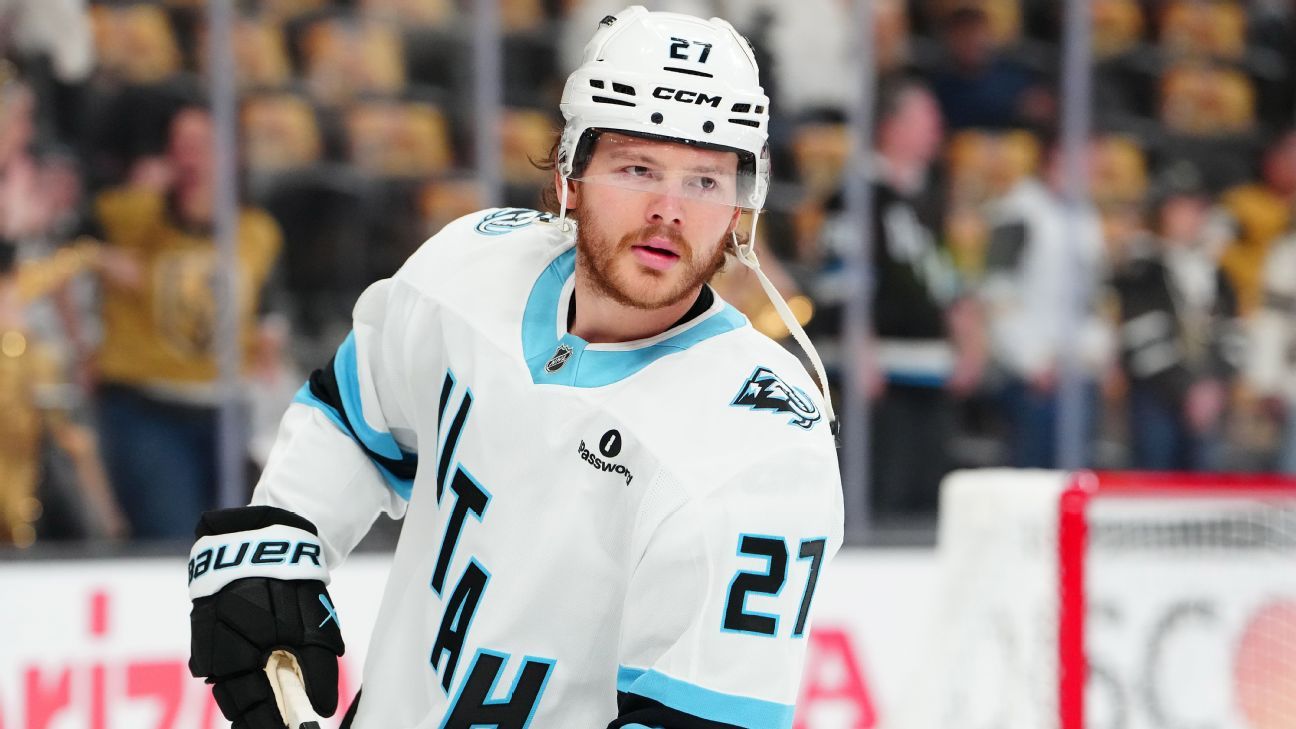
Utah matched New Jersey's offer sheet for Barrett Hayton on Wednesday, signing the 26-year-old center to a one-year, $4.775 million contract. The move keeps Hayton in the Mammoth lineup and prevents the Devils from acquiring a penalty-killing, face-off specialist for the middle six. However, the matched offer sheet carries a critical restriction: Utah cannot trade Hayton for one calendar year, a contractual lock that extends through July 8, 2027. Hayton becomes a free agent on July 1, 2027, opening an immediate window for departure the moment the trade restriction lifts.
The Devils' general manager Sunny Mehta swung aggressively at Hayton as a depth anchor, but New Jersey's decision to let the contract slide preserves roughly $7.6 million in cap space for the 2026-27 season. That flexibility matters more than acquiring a 10-goal, 25-point contributor in 2025-26—a step back from his 20-goal, 46-point inaugural season in Utah. Mehta's restraint suggests the Devils are prioritizing cap architecture over incremental production, a signal that New Jersey views its existing forward group as sufficient and is hedging for bigger moves later in the offseason.
Hayton's one-year deal also creates a timing oddity. He becomes extension-eligible on January 1, 2027—six months into the contract—but the Mammoth's inability to move him until July 8, 2027 limits their negotiating leverage. If Hayton has a strong first half, Utah either extends him or watches him walk. If he underperforms, they're stuck holding a cap charge on a player they cannot move. The franchise's commitment to retaining him is genuine (general manager Bill Armstrong called him "a key piece"), but the contract structure suggests one year of proof before a longer-term commitment.
For prop bettors, Hayton's role inside Utah's forward group remains stable, but his individual production trajectory is worth monitoring. His shot volume in 2025-26 (67 games, 10 goals) averaged to roughly 0.15 goals per game—a decline from 0.29 per game in 2024-25. If that drop reflects a usage or opportunity shift rather than variance, his anytime goal prices and game totals may be overpriced relative to his actual scoring frequency. Utah's overall team projection for next season doesn't hinge on Hayton's retention (they retained him), but his individual ceiling on shots and assists appears modest given the recent production slide. Betting against Hayton accumulating high assist or shot totals aligns with the underlying efficiency drop, particularly early in the 2026-27 season before extension negotiations heat up.