NHL · injury
Zub's Knee Injury Forces Ottawa Into Defensive Rotation; Top-Pairing Stability Shifts
The Senators lose their most productive defenseman weeks before the regular season starts, opening the depth chart and reshaping their 5-on-5 control metrics.
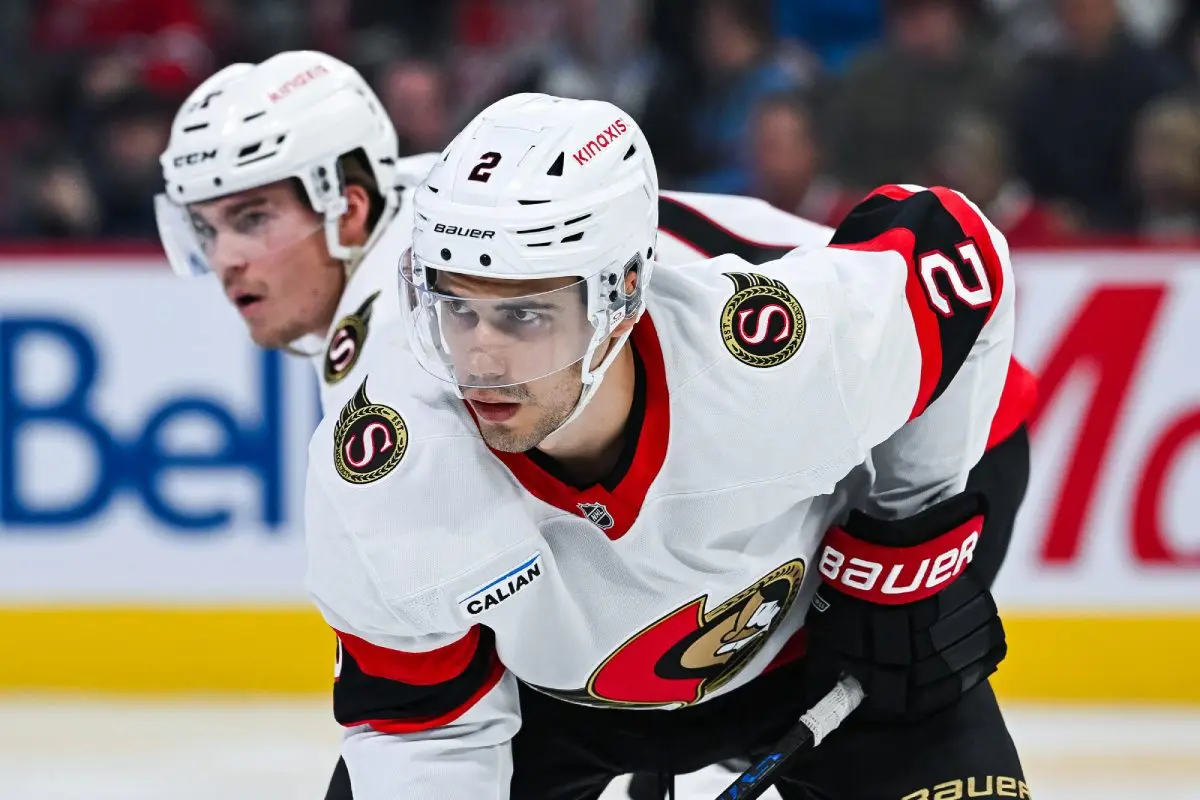
Artem Zub won't be ready when Ottawa opens its season October 3 against Toronto. The 30-year-old right defenseman is still recovering from a knee injury sustained during the first-round playoff loss to Carolina this past spring, and head coach Travis Green confirmed the injury will cost him the opening stretch of the regular season.
The loss stings because Zub had finally found offensive consistency. Last season he posted 30 points—5 goals and 25 assists across 81 games—while maintaining the defensive infrastructure the Senators built around him. When Zub skated at 5-on-5, Ottawa controlled 51.58% of expected goals and 51.67% of high-danger chances. That's the kind of foundational stability that doesn't replace itself overnight. For a team clawing toward a playoff series win after two consecutive postseason appearances without a single series victory, losing your best right-side defenseman to injury is exactly the kind of self-inflicted wound the organization can't absorb.
Green does have competent depth on the right flank. Jordan Spence and prospect Carter Yakemchuk provide legitimate alternatives, but neither has the track record Zub established last season. Spence is solid but not a top-pairing stabilizer, and Yakemchuk remains an upside play. That means the Senators will either shuffle the pairings or accept lower territorial control metrics in those early games—and since Zub's presence correlated directly with Ottawa's shot suppression and chance generation, losing him creates a measurable efficiency gap.
For bettors, the calculus is straightforward: watch Ottawa's shots-on-goal totals and spread movement in the first 5-7 games. Without Zub's puck-management overhead, the Senators' defensive unit will be more porous at 5-on-5. Opponents will generate cleaner looks and more volume. Concurrently, Ottawa's own shot output may stabilize—or even decline—because the team loses a defenseman who contributed 26 assists last year, meaning fewer secondary scoring chances off the point. Early-season lines have likely already priced in Zub's absence since the injury timeline leaked, but if you're tracking shot totals game-to-game, the first matchup against Toronto provides a clean test. Lean toward overs on opponent SOG when the Senators play teams with high-leverage offensive weapons, because Ottawa's defensive pairing depth will be under strain until Zub returns.