NHL · transaction
Rangers Defense Trade Gamble: Durzi and Pettersson Pair Solves Depth, Not the Fox Problem
New York's twin defensive acquisitions promise stability on the second pairing, but the real test is whether depth can keep them competitive when their star anchor inevitably returns to injury.
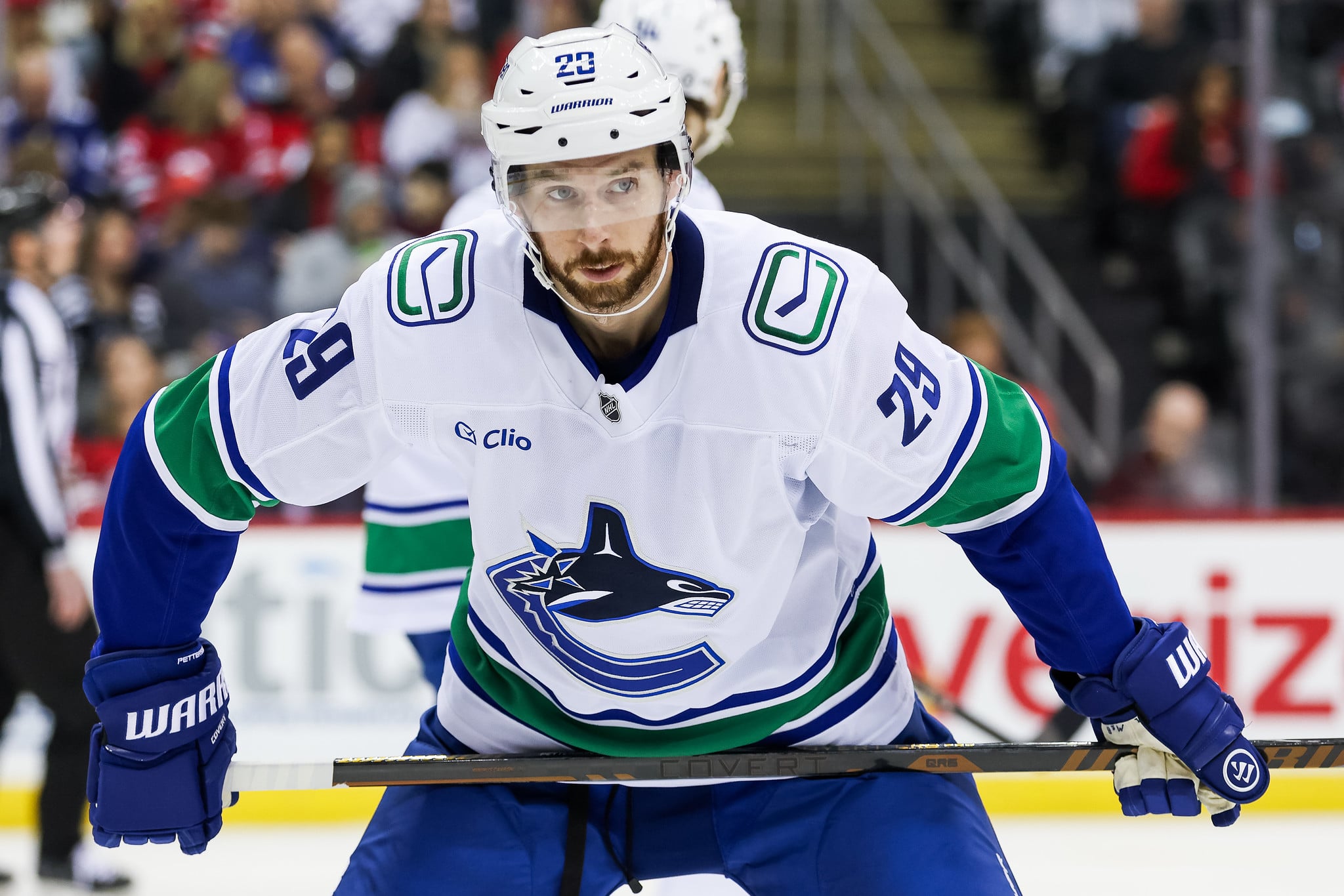
The Rangers have committed to a defensive overhaul. Sean Durzi and Marcus Pettersson arrived via separate trades this offseason—Durzi bundled into the Vincent Trocheck deal heading to Utah, Pettersson acquired from Vancouver—and will line up as the team's second defensive pair. On paper, the pairing makes structural sense: Durzi (27, right-shot, playmaker) provides offensive thrust; Pettersson (30, left-shot, 6-foot-5 shutdown defender) locks down positioning. Together, they represent the Rangers' attempt to solve a specific failure from 2025-26: when Adam Fox landed on long-term injured reserve twice, the defense crumbled. Without Fox's offensive engine and Fox-Gavrikov combination, the Rangers cycled through Matthew Robertson, Will Borgen, Braden Schneider, and Carson Soucy—a parade of defensive specialists who could not generate secondary scoring. The team fell out of playoff contention.
The mechanic here is simple but stark: New York's offense relies too heavily on one pairing. Vladislav Gavrikov stepped up when Fox was out, but he made uncharacteristic defensive mistakes trying to play above his role. Durzi's offensive profile (41 points in 76 games with Arizona in 2023-24, 27 points in 60 games last season with Utah) suggests he can chip in 30-40 points annually—enough to ease pressure on Fox to carry defensive-zone exits and transition play single-handedly. Pettersson's intelligence and reach (6-foot-5 frame, strong stick-check fundamentals) theoretically allows Durzi to take more offensive chances without the pairing becoming a liability in the defensive zone.
But depth trades rarely fix structural fragility. The Rangers' offensive load still funnels through Fox; they acquired Pavel Dorofeyev as a scoring upgrade at forward, but their blue-line architecture remains vulnerable to injury cascade. If Fox lands on LTIR a third time—and defensemen his usage level face persistent health risk—Pettersson and Durzi will inherit the same burden Gavrikov carried: playoff-caliber responsibility on a second-pairing salary. Pettersson's offensive upside (26 points in 82 games with Pittsburgh in 2023-24, though he dropped to 18 points last year with Vancouver) does not guarantee he can play above his level defensively AND generate scoring in an emergency situation.
For betting purposes, this trade reshapes how to model Rangers defensive-pair contribution margins. Durzi's 0.51 points-per-game rate across his last 136 games (20-21 point pace over 82 games) should stabilize or improve with New York's superior offensive system; his assist rate in Utah (22 in 60 games last season) shows he can operate as a transition passer. Lean toward the over on Durzi's individual assists total if it lands in the 24-28 range for 2026-27; his ice time will rise with a stronger forward complement, and Pettersson's defensive architecture should create more exit opportunities. Conversely, this trade does NOT solve the Rangers' vulnerability to top-pairing injury, so hedge any long-season bet on their playoff odds against a Fox injury clause. Single-game spreads and moneylines in games where Fox appears healthy represent better value than season-long projections until we see how this pairing weathers extended playoff hockey.
The Rangers should be better than last season's disappointment, but betting their future on a 27-year-old playmaker and a 30-year-old shutdown veteran to patch a structural hole in the salary cap is optimistic math.