Schneider's Arbitration Gambit Signals Rangers Defensive Instability Heading Into 2026-27
By PropBetEdge Editorial Team ·
The Rangers defenseman's filing for salary arbitration exposes depth concerns on the blue line and suggests contract resolution may drag into preseason.
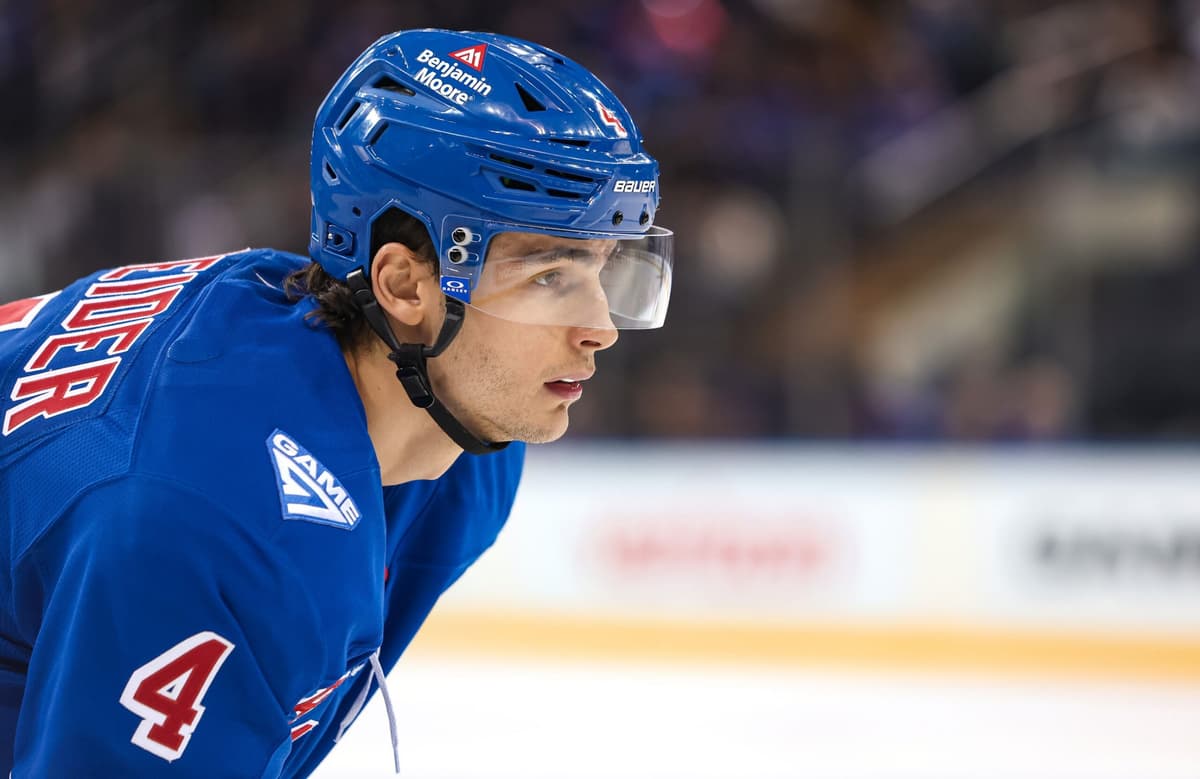
Braden Schneider filed for arbitration on Sunday, joining Dallas winger Jason Robertson in pushing his contract dispute toward a hearing rather than settling with New York before the deadline. The move forecloses offer-sheet opportunities—Schneider is now ineligible to sign elsewhere at a discount—but it also signals negotiations between player and club have stalled. Schneider produced 18 points across 82 games last season, a modest offensive return for a defenseman in his prime, yet the dispute over compensation suggests the Rangers' salary structure or willingness to pay has created friction.
The arbitration filing matters for roster construction timing. A hearing typically resolves within weeks, but if the two sides remain far apart, it can stretch into late July or early August. Until Schneider's contract is settled, New York cannot comfortably allocate cap space to other signings, forcing the front office into a holding pattern precisely when free-agent inventory thins and older players remain unsigned. The Rangers enter 2026-27 with defensive questions—Erik Karlsson and Adam Fox anchor the group, but production outside that pairing has been inconsistent. Schneider's 18 points in 82 games reflects a player capable of steady minutes but not the offensive production teams expect from a top-four contributor.
From a betting lens, the arbitration uncertainty creates volatility in Rangers defensive metrics for October. A resolved contract, finalized early in the offseason, allows coaching staff time to integrate Schneider into a settled lineup construction and establish role clarity. Delayed resolution—if arbitration extends into August—compresses that runway and forces the Rangers into a reactive rather than proactive preseason deployment. Schneider's ice-time distribution and partner assignments will feel experimental in early-season games as the team calibrates. Additionally, arbitration creates cap pressure. If an arbitrator awards Schneider a salary north of what the Rangers projected, the club may need to shuffle lower-tier signings, potentially affecting depth-line construction and special-teams composition.
On the measurable side, Rangers team totals and defensive prop pools should face downward pressure early in the season if Schneider's resolution lingers into late summer. A defenseman settling into a new contract mid-camp often sees shot-volume and assist lines soft-capped in early betting markets—books will discount production until roster roles and ice-time certitude materialize. The arbitration filing itself doesn't change Schneider's underlying talent, but it creates a data vacuum that oddsmakers will price conservatively. If Schneider's deal closes before mid-August, the angle evaporates quickly. If arbitration hearing occurs in late July and plays into preseason preparation, his ice-time volatility becomes a real prop fade.
Watch for contract resolution timing. A settlement announced before July 20 means normal prep; any hearing or extension past that date introduces September noise that translates to October prop uncertainty. For sharp bettors, it's a short-shelf angle—meaningful only if Schneider remains unsigned into late July, then neutralized once the contract is finalized and camp begins. The Rangers' willingness to go to arbitration on a defenseman with mediocre offensive production also hints at internal cap constraint, a detail worth tracking as other RFAs across the league file and resolve.