NHL · transaction
Free Agency Eve: Markstrom to Florida, Nurse to Boston, and Toronto's Cap-Space Gamble
With 24 hours until the market opens, three major trades are in motion—and the Maple Leafs' aggression could reshape Eastern Conference goaltending and defensive depth for years.
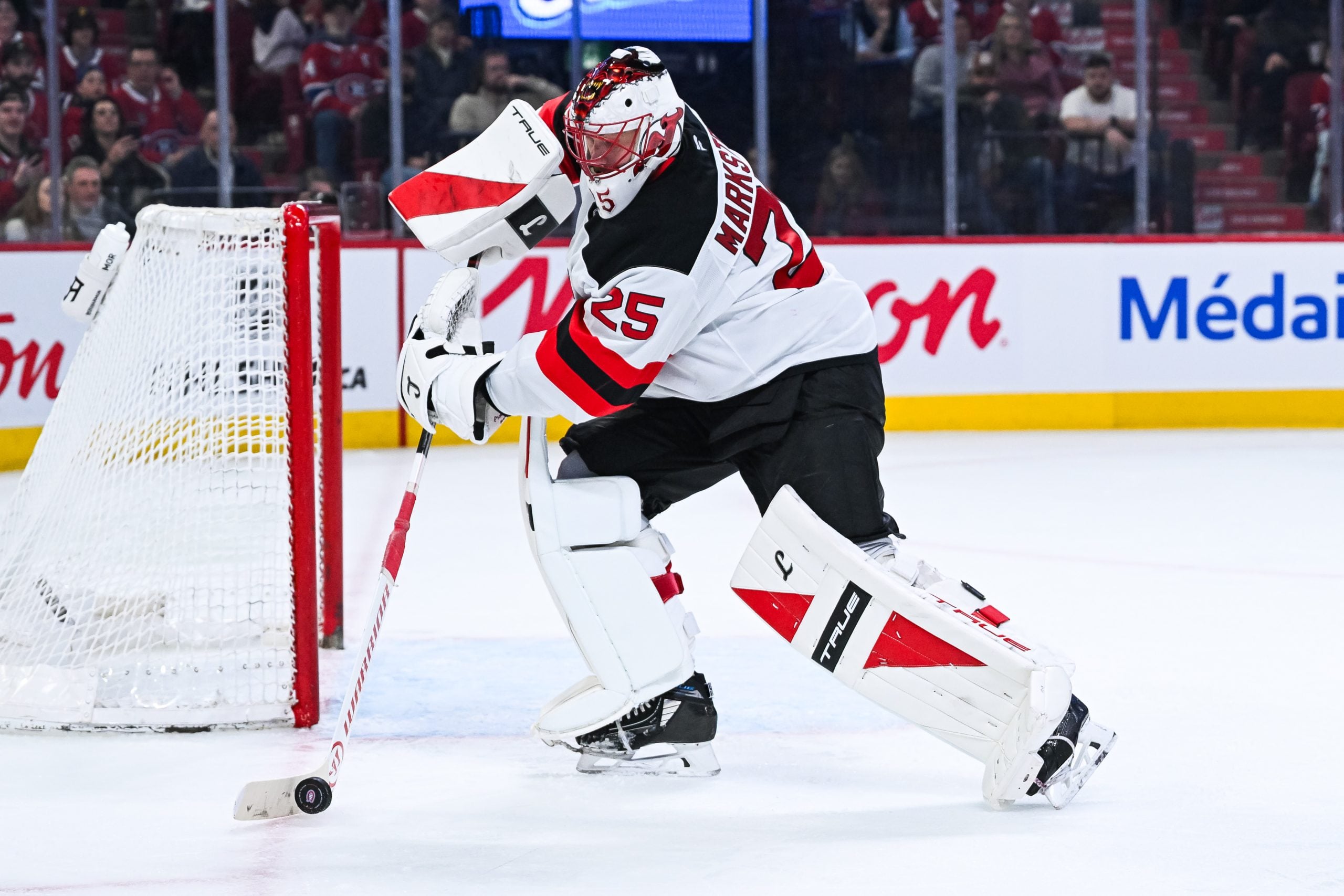
The NHL's offseason machinery accelerates into its final mechanical hour. Free agency opens Wednesday, June 30, and the rumor mill has crystallized into three concrete trade scenarios: Jacob Markstrom to the Florida Panthers, Darnell Nurse to the Boston Bruins, and—most speculatively—Zach Werenski's potential exodus from Columbus. Each move carries immediate cap and roster consequences that will ripple through opening-day lineups and net-front positioning.
Start with Markstrom and Florida. The Panthers are reportedly closing in on a trade to acquire the veteran goalie from New Jersey, likely bundling Evan Rodrigues in the deal. Sergei Bobrovsky's departure has left a $10 million+ hole in the crease, and while Markstrom's 2025-26 season in New Jersey showed volatility—inconsistent start, mid-season adjustments—he's a known commodity with playoff experience. From a cap perspective, this is palatable. Florida gains a goaltender with a lower hit than Bobrovsky's deal while maintaining financial flexibility to address forward depth. The mechanical edge: Markstrom faced a defense-first, low-volume team in New Jersey; the Panthers' more aggressive offensive structure may increase his save volume and thus his save-percentage baseline. His 2.89 GAA and .903 Sv% in the regular season will likely creep upward if his team generates more chances and reduces Grade-A chances against through better transition play.
In Boston, the Bruins and Oilers are finalizing terms around Darnell Nurse. The ask: Mason Lohrei plus retained cap. Nurse's $9.5 million salary is a drag on Edmonton's cap floor, and the defenseman has signaled a preference to move. Boston's interest hinges on Lohrei—a young, right-shot defenseman with upside—being the centerpiece. This is a swap that benefits both. For the Bruins, Nurse adds a veteran left-side presence to pair with Charlie McAvoy; the defensive pairing gains grit and playoff experience. For the Oilers, Lohrei represents a cost-controlled future asset and the salary retention maneuver creates breathing room for other moves. The betting angle is subtle but sharp: Nurse's blocked-shot and hit totals will likely decline in Boston's system compared to Edmonton's more defensive structure, but his assist rate may rise if paired with McAvoy on the power play. Take the under on Nurse's combined blocks+hits props at open, then monitor power-play ice time allocation over the first 10 games.
Toronto's position is the wildcard. With $20 million+ in cap space and public acknowledgment of willingness to make "bigger swings," the Maple Leafs are the only team with structural flexibility to absorb an elite rental or take on a long-term contract swap. The Werenski pursuit reveals the ambition: a Norris-caliber defenseman would immediately boost their power-play point ceiling and top-four defensive minutes. But the cost is prohibitive—Columbus is demanding multiple first-round picks, which Toronto lacks. This matters because it suggests the Leafs will instead target middle-six forwards (Patrick Kane is mentioned) or explore center upgrades. Their aggressive posture will inflate defenseman prices across the market, creating downstream effects on depth acquisition costs for playoff contenders. If Toronto signals hard interest in any under-23 defenseman with upside, expect that player's rookie-season shots and assists props to move sharply upward, reflecting both increased team shot volume and elevated leverage minutes.
Drouin's buyout in St. Louis is noise—a 31-year-old free agent hitting the market. The real leverage play is watching how quickly the Leafs, Panthers, and Bruins move their cap numbers post-Wednesday. Markstrom's save percentage should stabilize upward in Florida's system; Nurse's peripheral scoring (blocks, hits) will compress but power-play points should climb; and Toronto's desperation will inflate prices on any available depth asset. For prop bettors, the early-season edge is reverse-engineering team talent allocation from these moves. If the Leafs add a legitimate power-play contributor, their team total rises by 5–7 goals over 82 games. If Markstrom is paired with a defensive system that's significantly tighter than New Jersey's, his GAA floor drops to 2.65+. Watch opening lines for these trades, because markets rarely price directional adjustment with full confidence when trades close fewer than 36 hours before puck drop.