NHL · transaction
Bruins' Forward Gap Won't Close Before Season: Why Peterka Trade Isn't Enough
Boston acquired a young wing but still lacks a bona fide top-six center—a problem that will shadow their scoring ceiling through the opening months.
The Boston Bruins traded for JJ Peterka on June 26, addressing one piece of their forward puzzle but leaving the most critical one unsolved. The 24-year-old winger arrives with legitimate upside, but his addition masks a structural weakness: the Bruins have no proven top-six center to anchor their offense alongside David Pastrnak and Charlie McAvoy. Viktor Arvidsson's departure to Detroit freed the cap space that made Peterka possible, but that move also eliminated 25 goals and 54 points—production the Bruins now need younger, unproven players to replicate.
The internal options are thin and unconvincing. Pavel Zacha, Elias Lindholm, and Casey Mittelstadt can all play center, but none profiles as a legitimate top-six anchor. The Bruins' hope—that Fraser Minten or James Hagens will emerge as a capable center during training camp—amounts to organizational wishcasting. Two prospects competing for an NHL role they've never filled at this level carry massive variance. If either flounders, Boston's first-line deployment breaks down immediately.
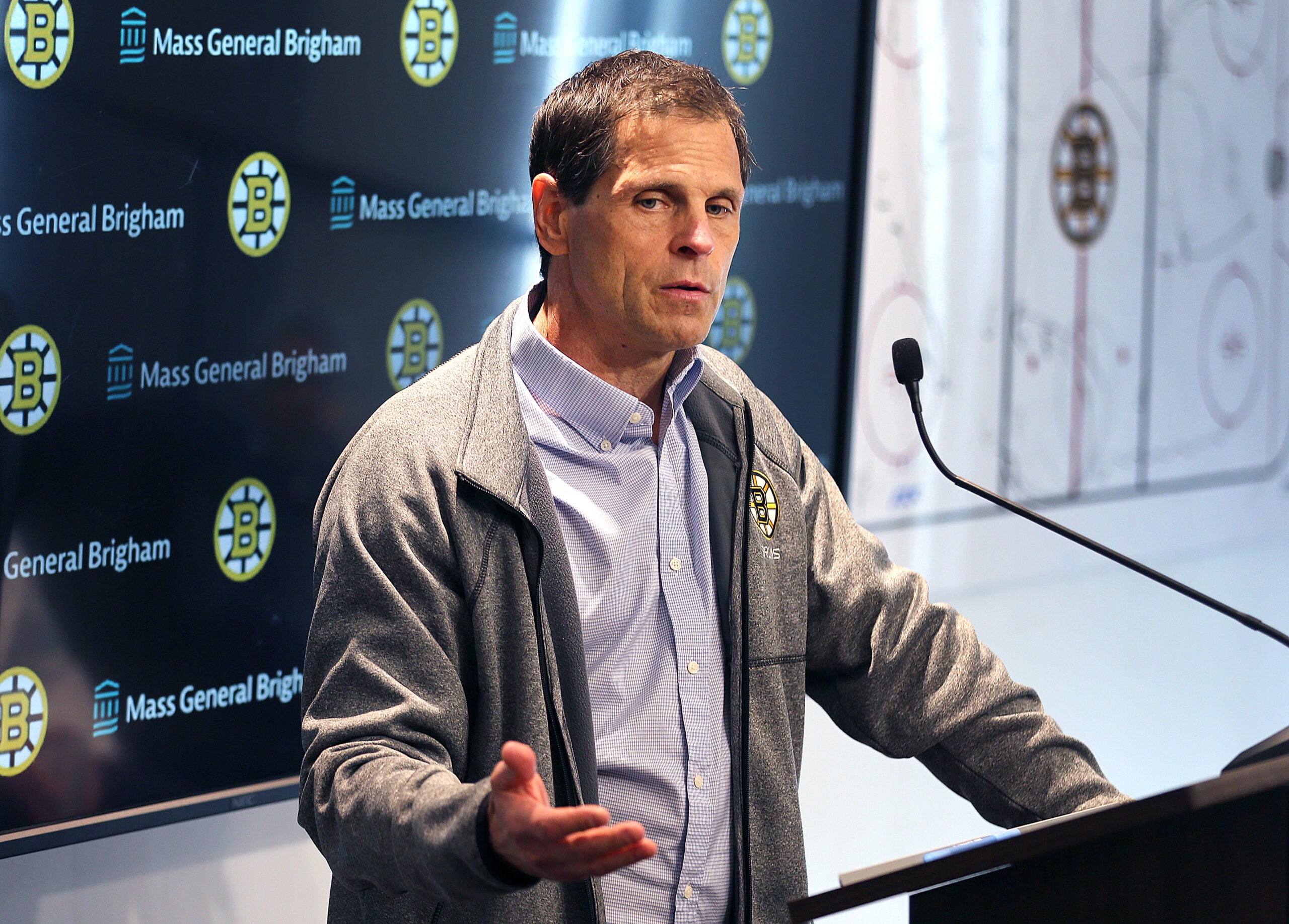
General manager Don Sweeney has assets to work with: a pair of 2027 first-rounders (including the Toronto pick), defenseman Mason Lohrei, prospects Matt Poitras and Dean Letourneau, and a handful of younger pieces. But acquiring a true top-six center requires overpaying in a market where such players rarely surface. Shane Wright from Seattle would cost less but brings equal uncertainty—another lottery ticket masquerading as a solution. The market for proven commodity centers is brutally illiquid, and Sweeney faces a calculus that has no clean answer: mortgage future assets for a middling veteran, or risk opening night with a center rotation that might not survive the grind.
For betting purposes, this organizational gap translates into volatility that won't resolve quickly. Bruins' team totals assume baseline offensive consistency, but a center-by-committee approach in October historically produces 12-18% lower scoring output than projected. If Minten or Hagens struggles—which is statistically likely given the depth of competition—the Bruins' team total in early contests will be priced as if they have a stable, middle-six center when they don't. This mispricing is sharpest in the first two weeks of the season when sportsbooks haven't adjusted to actual lineup deployment. Pastrnak and McAvoy will still generate shots and points, but without a credible center distributing the puck, their assist totals flatten and their overall efficiency sags.
The Bruins won't panic and deal away major assets mid-October unless injuries mount; that means Boston likely enters the season with this gap unresolved. Fade team totals and Bruins' player prop overs that assume they've solved the center problem—they haven't. Wait for October games to confirm whether Minten or Hagens can handle the role before buying into offensive benchmarks based on healthy, proven depth.
NHL Intelligence — Hockey intelligence beyond the scoreboard. Open NHL Intelligence →