Rielly's Trade Clock Tightens: How Defensive Liabilities Create Offensive Value in a Salary-Strapped Market
By PropBetEdge Editorial Team ·
Toronto's 32-year-old defenseman is a cap casualty with genuine offensive upside—but his defensive shortcomings will shape both the return and the betting profile of three contenders fighting for depth.
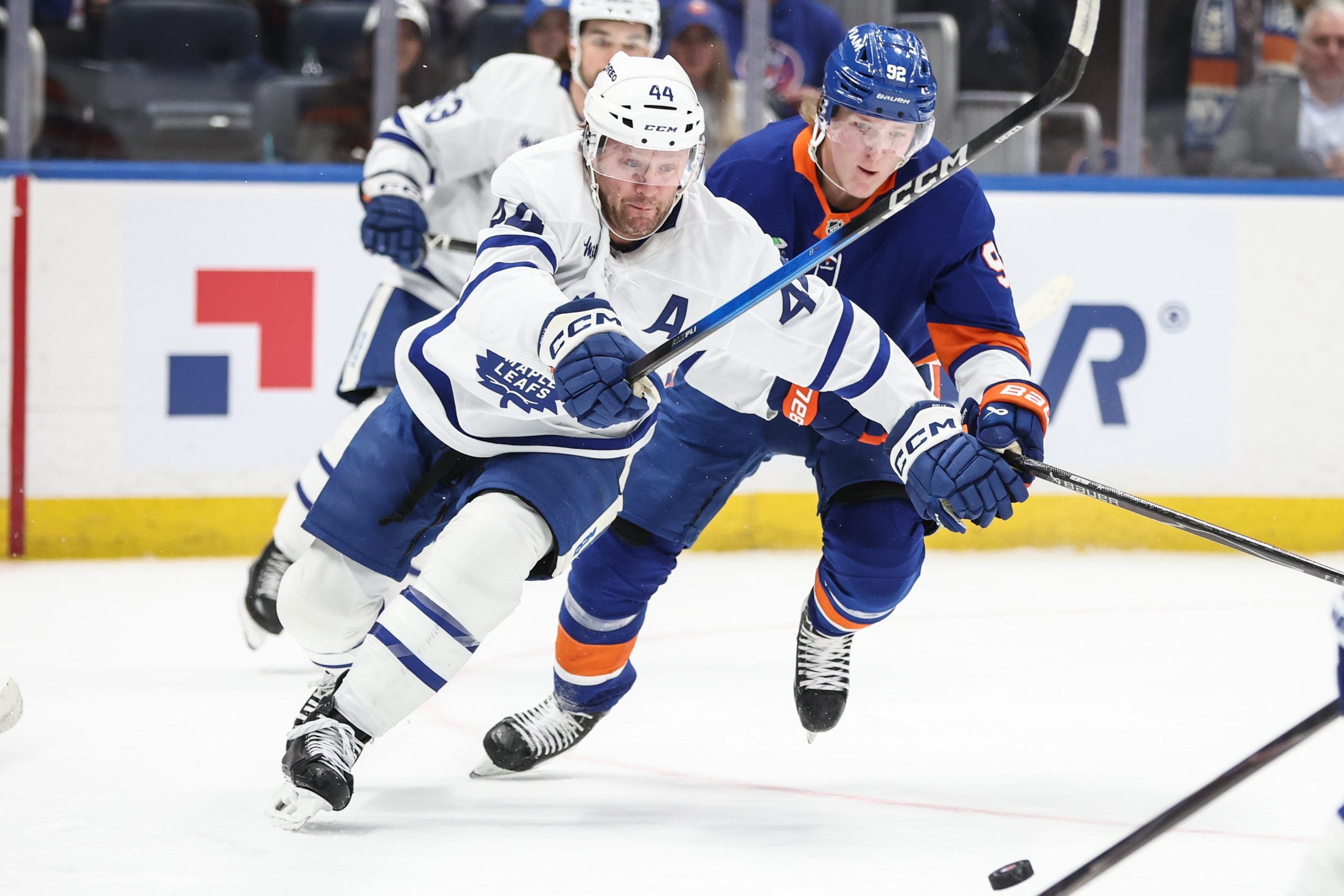
The Toronto Maple Leafs are out of runway. After a summer of roster surgery—coaching changes, personnel additions that swallowed cap space—Morgan Rielly has become an expendable commodity despite his $7.5 million salary extending through 2029-30. At 32, with 549 career points across 951 games, the veteran defenseman remains a facilitator with the puck but has carried a reputation as a liability in his own end for his entire professional arc. The Maple Leafs' front office has signaled plainly: Rielly will move, and the window is closing.
Three realistic destinations have surfaced. Anaheim faces a choice between matching Leo Carlsson's offer sheet from Philadelphia or pivoting resources elsewhere; the Ducks' blue line is among the league's thinnest, and Rielly's playmaking could bolster their offensive depth from the back end. Boston, still hunting postseason credentials, was in on Darnell Nurse before that deal landed in San Jose; the Bruins would likely demand Toronto absorb some salary, but an offensive defenseman fits their needs. Philadelphia, meanwhile, has cap flexibility even if Carlsson arrives, and their blue line requires reinforcement despite recent additions. All three teams share the same calculus: add veteran offensive production while accepting defensive risk as the trade-off.
Here's where the betting angle emerges: whichever team acquires Rielly will see a measurable spike in primary shot volume from the blue line, particularly on the power play. His career assist rate is 0.47 per game across a large sample; on the PP, that figure climbs closer to 0.15 assists per game. If he lands in Anaheim or Boston—both teams with middle-tier power plays hunting incremental gains—expect their power-play point totals to move. A single elite playmaker who touches the puck on 40-50% of power-play possessions can drive both assist lines and team PP point props upward by 0.3 to 0.6 per game over a full season. The market will initially price in the full statistical upside without adequately accounting for the defensive gaps he'll create at even strength, which often compress offensive opportunities elsewhere. For bettors, the edge lives in targeting the power-play-specific props (assists, points) for whichever team lands him, rather than blanket 5v5 offense lines that will correct faster as teams adjust positioning. Conversely, expect a modest dip in even-strength point totals for the acquiring team in the first 10-15 games as coaching staffs implement coverage adjustments to mitigate his defensive exposure.