NHL
Nashville's Power-Play Overhaul Pays Immediate Dividend in 2-1 Win Over Dallas
After a catastrophic man-advantage collapse against Minnesota, the Predators rewired their top unit and converted 2-of-3 opportunities against Dallas—a corrective spike that won't last, but reveals where early-season unders are most vulnerable.
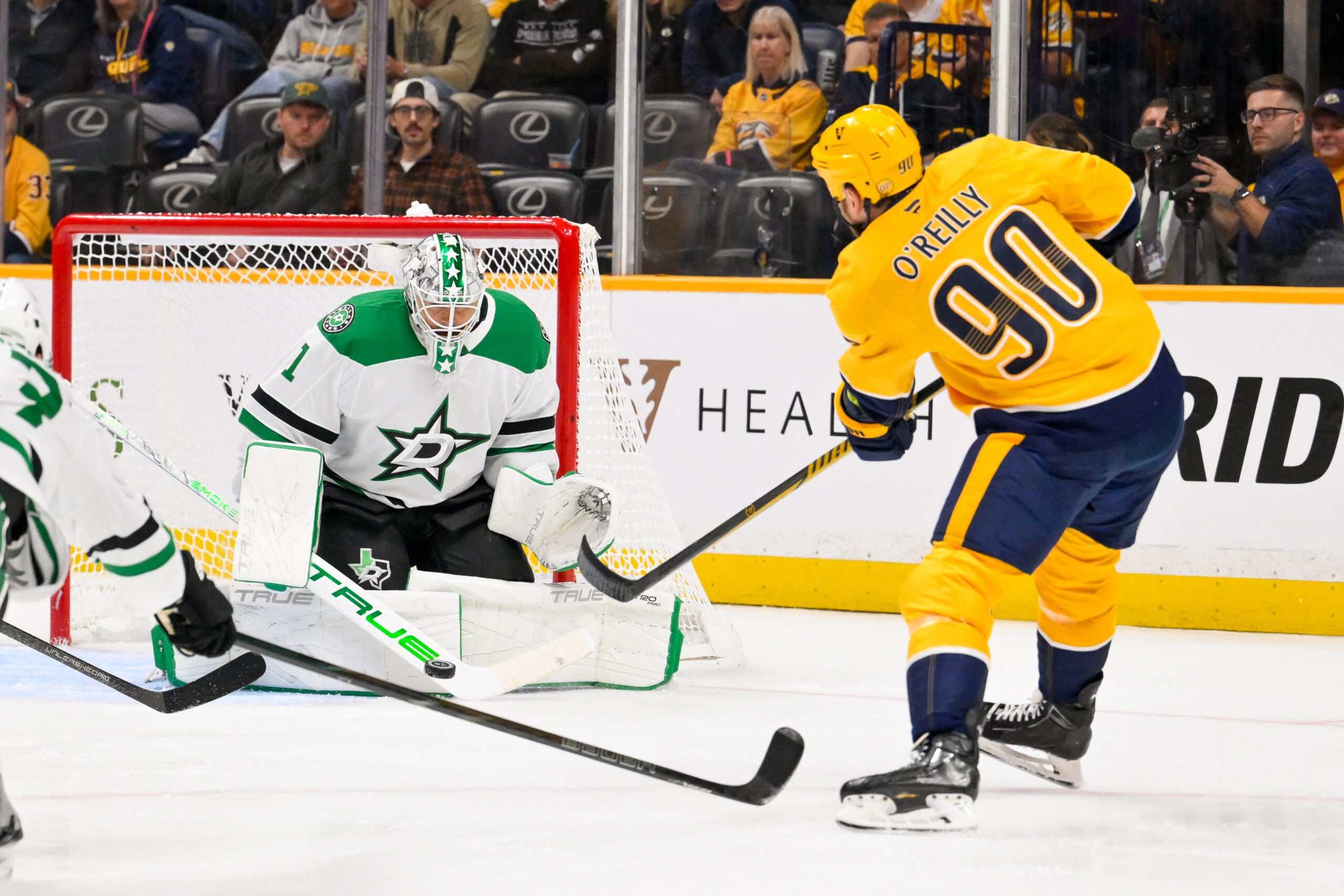
The Nashville Predators' 2-1 victory over Dallas on Sunday was decided entirely in the first period—all three goals scored between the opening minute and the 9:19 mark—and the throughline was power-play execution. Miro Heiskanen opened the scoring for Dallas at 0:52, but Steven Stamkos equalized on the man advantage at 4:46 after Artru Hyry drew interference, then Nils Hoglander capitalized on Nashville's third power-play opportunity to seal it at 9:19. The Predators finished 2-for-3 on the advantage; Dallas, 0-for-4 in their season opener, stayed scoreless. For context: Nashville entered this game 0-for-4 on the power play against Minnesota three days earlier, a blackout that coach Andrew Brunette publicly identified as a structural problem.
What happened between games wasn't mystical. Brunette and his staff dismantled the unit's personnel and approach, and the rebuild worked. "Last game we had some pretty good looks. I just think we were one and done a little bit," Brunette said post-game. "It's control, because once we get it set, once we get moving, we're pretty dangerous." The first-period dominance extended beyond the power play: Nashville outshot Dallas 15-9 in the opening frame and then shut out the Stars for the final 40 minutes. Juuse Saros finished with 29 saves on 30 shots (.967 save percentage), while Casey DeSmith recorded 24 saves on 26 for Dallas.
From a betting mechanics perspective, this is a classic regression candidate. A power-play conversion rate of 66.7% (2-for-3) does not persist; the NHL average hovers near 20%, and Nashville's true line based on the past three seasons sits closer to 18-22%. The market will likely overweight the Dallas game and under-price future Nashville opponent totals—particularly Monday and Tuesday lines that price in elevated Predators scoring. Conversely, Predators team totals will spike, and early-week action into Dallas props (DeSmith's next start, or Dallas team total) will compress unnecessarily. The edge exists in fading the power-play narrative before sharps recognizing reversion do the adjustment work for you.
Dallas, meanwhile, remains winless at 0-2-0 after two games. Their underlying shot share and chance creation suggest they are not a bottom-five team, but the power-play failure (0-for-4 in game one, 0-for-4 again on Sunday) is a real structural issue worth monitoring. If the Stars enter their next game as favorites in a home matchup and the power-play line is still priced as a secondary factor in team total construction, there is value in leaning under. Nashville's save percentage spike—.967 is well north of Saros' career norm of .913—is also unsustainable and unlikely to replicate in back-to-backs or on the road. The first-period blitz was real; the scoring volume it produced is not a repeatable baseline.
NHL Intelligence — Hockey intelligence beyond the scoreboard. Open NHL Intelligence →