Nashville's Höglander Bet: High Motor, Low Volume—Can the Predators Spark a Depth Scorer?
By Ty Whitney ·
The Predators bet a 2029 third-rounder that a change of scenery can revive a winger who's underperformed for two straight seasons, but his scoring drought and injury history raise questions about lineup stability.
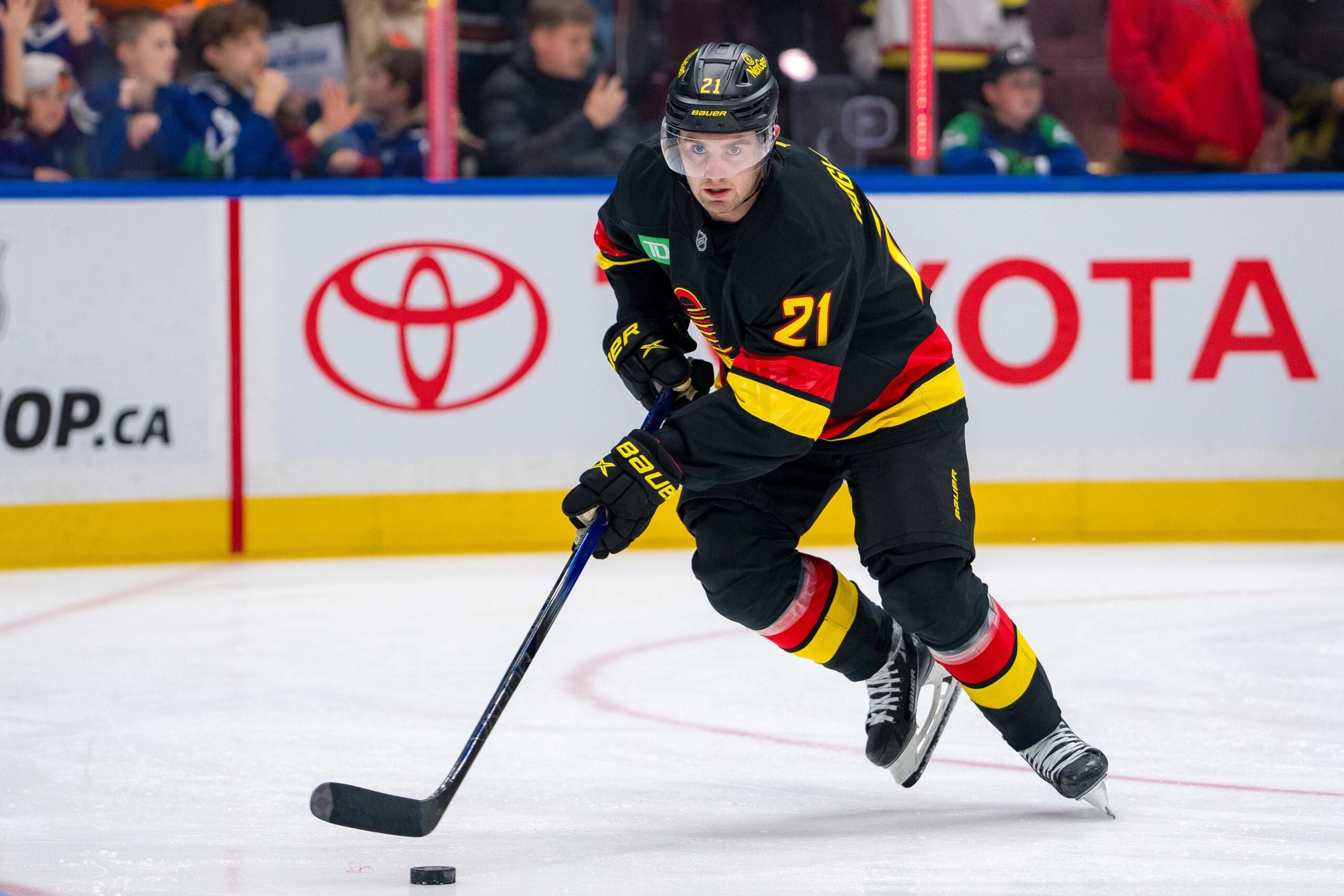
Nashville acquired 25-year-old winger Nils Höglander from Vancouver on June 29 in exchange for a 2029 third-round pick, continuing general manager Chris MacFarland's quiet rebuild of the bottom six. The move pairs Höglander with earlier additions Jack Drury and Ross Colton—all between 25 and 29, all positioned to fill out secondary scoring depth. Höglander, a 2019 second-round pick, carries reputation as a two-way grinder with above-average hands and reliable defensive positioning, but the tape over his last two seasons tells a different story than the GM's optimistic framing.
The numbers are brutal. After posting 24 goals in 2023-24, Höglander managed just 8 goals and 17 assists across 72 games in 2024-25—already a steep decline. This past season, 2025-26, he bottomed out: 2 goals and 3 assists in 38 games before missing significant time to an ankle injury and drawing multiple healthy scratches. His career shooting percentage sits at 11.6%, solid for a depth forward, but volume has disappeared. The ankle injury is the immediate red flag; soft-tissue damage in the lower extremities frequently dogs players into their next season, especially wingers who rely on edge work and quick cuts. Höglander's minus-4 rating this season (against a career plus-10) suggests both declining production and deteriorating underlying play.
What Nashville is actually betting on is that environment—not skill erosion—caused the collapse. The Canucks' lineup shuffling and the loss of confidence that comes with healthy scratches can calcify a young player's approach. A fresh start in a new organization, minimal pressure in the third-line mix, and consistent deployment might restore some of his 20-goal, 50-point floor. His contract is friendly: $3 million annually through 2027-28 with no trade protection, giving the Predators an out if the reset doesn't work. MacFarland also now carries $16.8 million in cap space, room to sign restricted free agents like Luke Evangelista and absorb additional salary if needed.
For prop purposes, the bet here is conditional. Höglander's shot volume and assist rate depend entirely on deployment consistency and game health. If he slots into a third-line role with regular power-play time, his assists could tick toward 0.35 per game (a pace of 28-30 over a full season) based on his career baseline and the Predators' depth-chart stability. But that's contingent on two factors: (1) staying healthy through training camp and the preseason, and (2) earning trust quickly enough to avoid the scratch cycle that plagued him in Vancouver. Ankle injuries that carry into a new season often resurface under load, especially in a 82-game schedule. Any line projection that assumes full availability and consistent usage carries material downside risk.
The market will likely price Höglander's season prop totals (goals, assists, points) based on Vancouver's recent totals adjusted slightly upward for environment change. That's imprecise. The real edge comes from injury recurrence timing. If the ankle flares in October or November, fantasy and season-long totals will crater—and sportsbooks rarely price for reinjury windows tight enough to catch that. Conversely, if he plays 65+ healthy games and earns consistent usage, he could overperform season projection by 5-8 points. The variance is outsized for a third-line rental bet.