NHL
Chayka's Organizational Rebuild Reshapes Toronto's Path Forward—But Matthews Remains the Immovable Center
The Maple Leafs front office has been nearly rebuilt from top down this offseason, but the real test is whether systemic change translates to on-ice results when the season opens in two weeks.
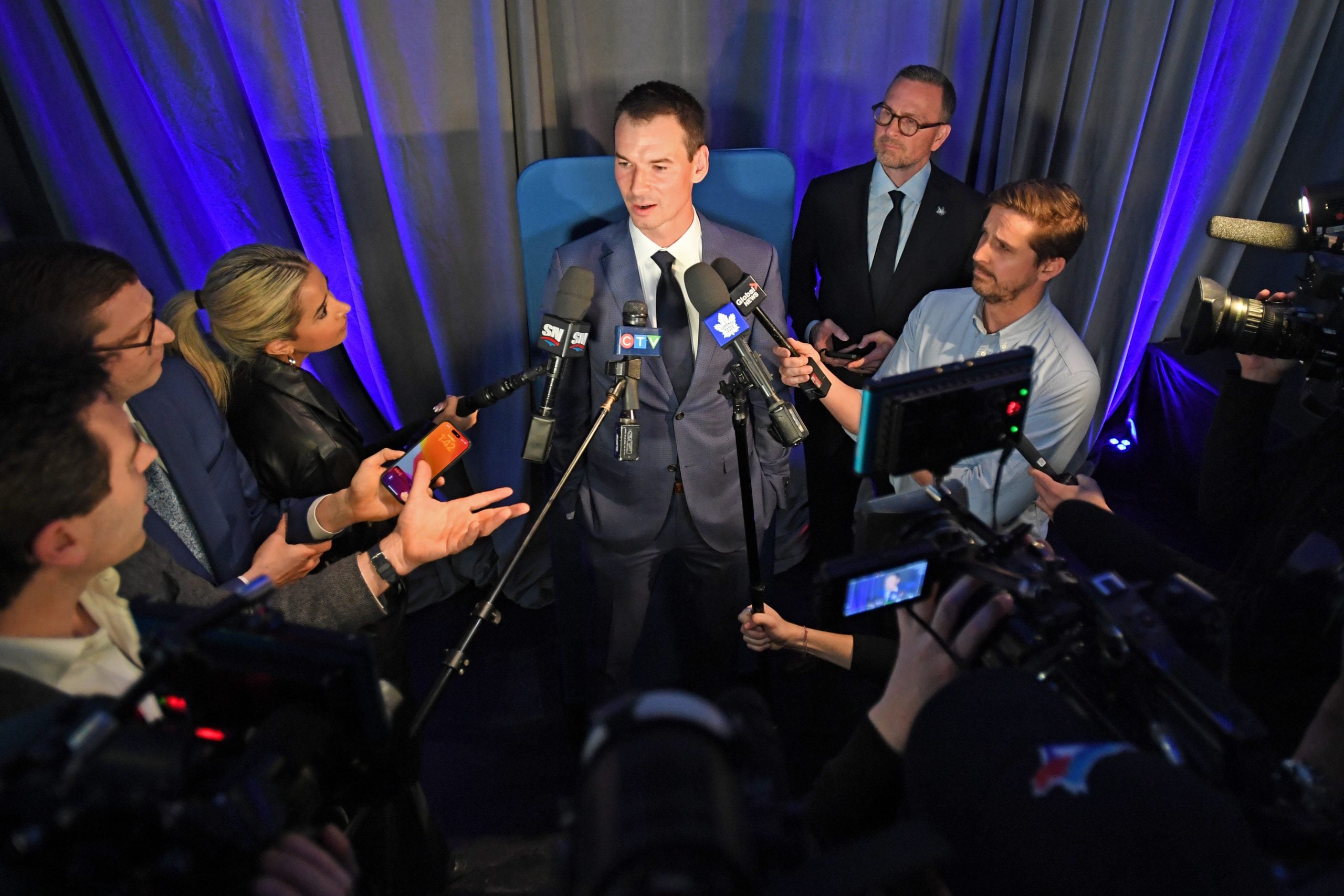
John Chayka didn't just swap roster pieces this summer. Per The Athletic's reporting, the new Maple Leafs GM orchestrated what amounts to an organizational purge, with more than 30 departures across the front office, analytics, scouting, medical staff, and player development. This wasn't triage. This was reconstruction. Sergei Bobrovsky now anchors the net. Darren Raddysh shores up the blue line. The forward group has been remade around Auston Matthews, William Nylander, and John Tavares. But the architecture shift matters more than any individual signing.
Toronto inherited a catastrophe: 78 points, 28th in the Atlantic, a single-season collapse from divisional contender to basement dweller. Brad Treliving was fired mid-season. Craig Berube lasted through the postmortem and was gone. Chayka and Mats Sundin arrived to find a team that had stopped functioning at an organizational level. The response was to flatten silos. Freddie Hamilton was installed as chief of staff to thread player development, research and development, analytics, coaching, and the minor-league operation into one feedback loop instead of discrete fiefdoms. Chayka explicitly referenced the Los Angeles Dodgers' information-sharing model—a franchise that has won through integration rather than isolated talent acquisition. The pitch is deliberate and long-term: this offseason sets the foundation for the next decade, not a one-year patch.
What's striking is that none of this guarantees immediate results. Organizational redesigns rarely produce linear improvement. New analytics departments often disagree with inherited coaching philosophy for an entire training camp. Medical staff changes can take months to establish credibility with players. The Maple Leafs are essentially asking fans and bettors to believe in process before outcome—a hard sell when the team just bottomed out.
But here's where the edge lives for prop bettors: the market is pricing Toronto as a punchline after one brutal season, yet the underlying machinery is being rebuilt by a front office (Chayka, Sundin, and the new infrastructure) that has won before. Matthews himself remains the anchor—a 100-point scorer who was merely struggling, not broken. When Chayka's first move was a philosophical alignment with Matthews about winning culture rather than contract posturing, it signaled internal confidence that the collapse was organizational, not core-talent. That distinction matters enormously for season-long player props. If the new coaching staff and analytics framework actually connect, Matthews should see more efficient offensive opportunities. Nylander, too, should benefit from simplified information flow between scouting and coaching. The over on team totals sits at elevated odds right now because the market is anchored to last season's 78-point disaster. But that team had a disconnected front office, conflicting medical guidance, and a coaching staff at odds with its own data. This team has one central nervous system. Early odds on Maple Leafs goals and assists props are built for a team that hasn't played a game yet under Chayka's system—and that's the precise moment inefficiency lives.
The risk is real: organizational change can fail, new coordinators can clash, and Matthews could be genuinely banged up. But the bettors already pricing Toronto as irredeemable are making a bet that 30 personnel changes won't move the needle—a bet that front-office infrastructure doesn't matter. If Chayka's track record and Sundin's credibility carry any weight, that's a bet priced too far in one direction.