Maple Leafs Hit the Contract Wall; Larkin Stays Put in Detroit
By Erik Schwartz ·
Toronto's roster freeze ahead of the season opener forces John Chayka's hand on trades, while Dylan Larkin's veto of Montreal tightens the Red Wings captain's market.
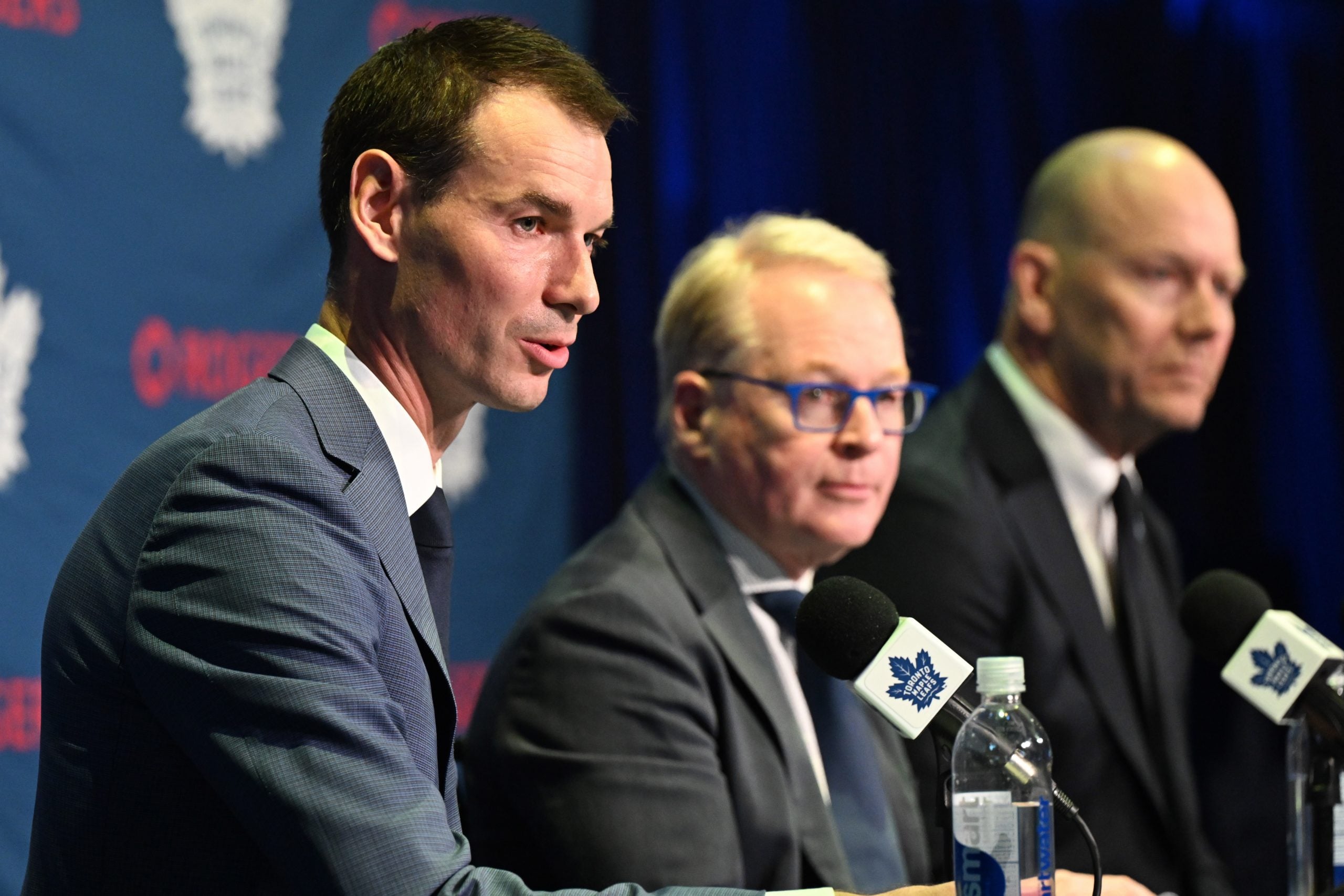
The Toronto Maple Leafs have painted themselves into a roster-construction corner by signing Brendan Brisson to a two-way deal, exhausting the league's 50-contract limit and eliminating any wiggle room for last-minute additions. The timing is sharp: with no open slots, Chayka now has to move a contract if he wants to make another roster move before puck drop. Brisson, who logged one NHL game for New York last season, carries minimal cap risk ($850K at the NHL level), but his addition signals Toronto is comfortable with organizational depth over major-league upgrades—a subtle bet that their current core is sufficient.
The Ottawa Senators, meanwhile, have quietly closed the door on Patrik Laine. Despite the unrestricted free agent's 224-goal resume and bonus-laden contract flexibility, the Senators' brass determined Laine doesn't fit their window. Ottawa is banking on Alexander Burakovsky rediscovering his game rather than gambling on Laine's 44-goal upside from two seasons ago. This is a roster-building philosophy tell: the Senators are optimizing for fit and depth over marquee upside, which suggests they view their forward group as sufficient for a playoff push without a pure scorer.
The Dylan Larkin situation has hardened. Montreal, widely viewed as a natural landing spot for the Red Wings captain given the Canadiens' prospect depth and cap flexibility, remains off Larkin's approved trade list. Renaud Lavoie's reporting confirms what Detroit's front office now must reckon with: Larkin's full no-trade clause (through 2028) gives him veto power over any move, and he's already exercised it on the most logical suitor. Minnesota continues to circle, but Quinn Hughes' own uncertainty about long-term commitment to the Wild complicates that path. Detroit is running out of viable dance partners.
For prop bettors, the Leafs' contract crunch matters most. Toronto cannot add offensive depth without subtracting, which tightens their margin for injury or variance over a full 82-game season. Their team total for the regular season—likely set around 99-102 points given their core talent—now carries embedded risk because roster flexibility is zero. If Auston Matthews, Mitch Marner, or William Nylander misses meaningful time, Toronto has no plug-and-play replacement waiting in the wings. The Brisson signing was organizational prudence; it was not an offensive upgrade. Fade Leafs team overs early in the season if they open above 100 points, particularly through the first 30 games when bench depth gets exposed. The Senators' Laine rejection is lower-impact—Laine will likely land elsewhere—but it reinforces that Ottawa is betting on internal development over external star power, a posture that typically underperforms Vegas' opening projections.
Larkin's veto of Montreal, by contrast, is a long-term arbitrage signal. If Detroit cannot move him to a contender, pressure mounts on the Red Wings to either extend him (costly) or watch his value erode. Red Wings totals for the 2026-27 season should be monitored closely; if Detroit stays the course without acquiring secondary scoring help, their offensive ceiling compresses, and team unders become valuable as the season unfolds.