NHL · transaction
Seattle Locks In AHL Depth: Roed and Avon Extensions Signal Firebirds Stability Over Immediate NHL Impact
The Kraken's re-signings of two AHL veterans on modest deals reveal a franchise comfortable with developmental patience rather than pushing cheap talent into the NHL rotation.
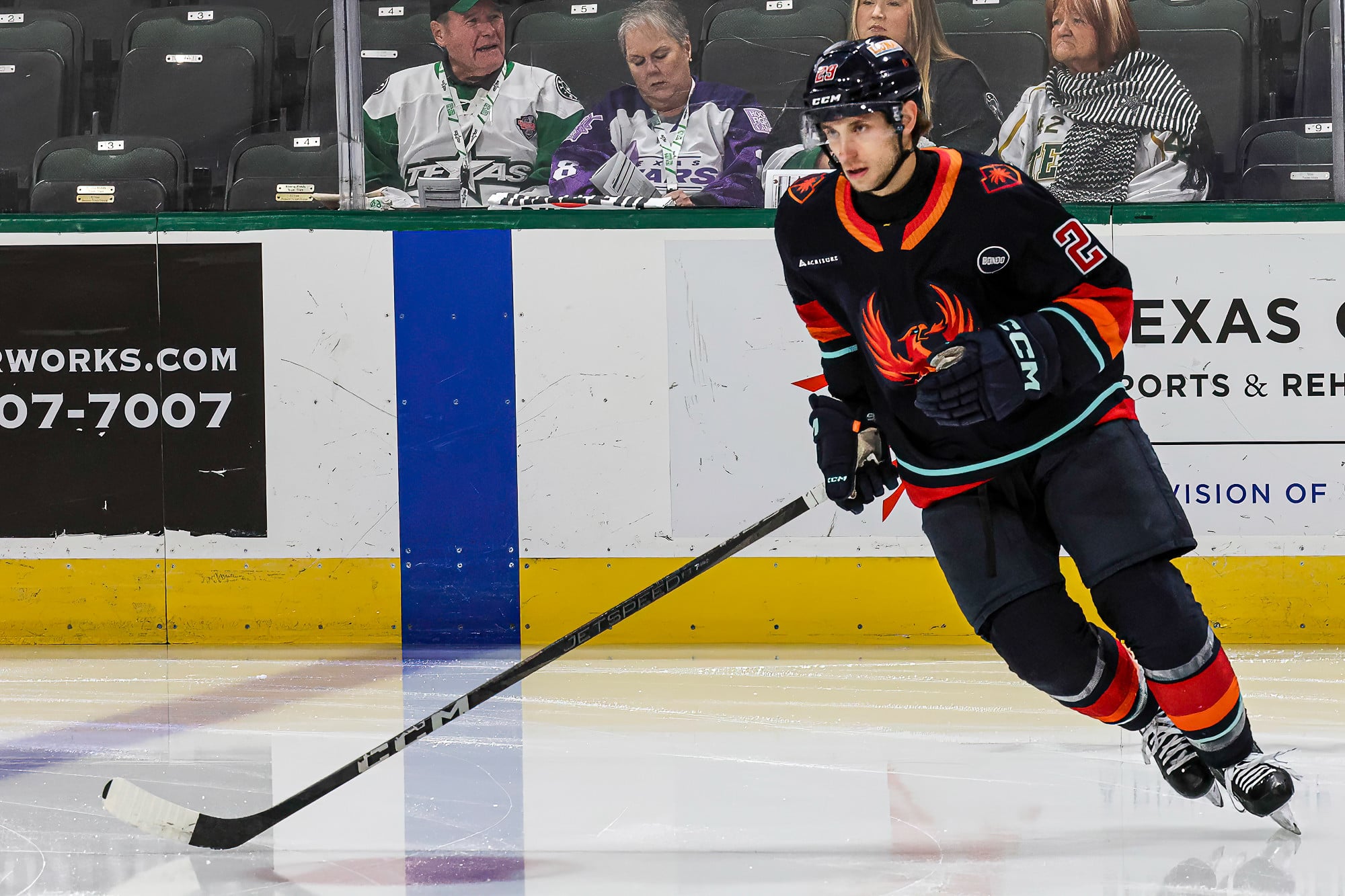
Seattle announced Monday that it had re-signed forwards Lleyton Roed and J.R. Avon to one-year NHL contracts at $850,000 AAV each—a quiet move that landed with all the fanfare of a routine AHL transaction, because functionally, that's what it is. Both players remain fixtures in the Coachella Valley Firebirds organization, the Kraken's AHL affiliate, with zero NHL games between them. Yet the extensions matter for what they reveal about Seattle's roster construction philosophy heading into 2026-27.
Roed came undrafted out of Bemidji State and signed with Coachella Valley as a free agent in 2023. His development arc has been steady: 26 points in 56 games (2024-25), then 38 points across 65 games in 2025-26—his career high. He added seven assists in 12 postseason games, contributing to the Firebirds' playoff run. Avon arrived via trade in the offseason (the Kraken sent Tucker Robertson to acquire him) and posted a career-best 24 points in 45 games before the playoffs, where he went 7-1 in 12 contests. Both are offensive-minded depth forwards with tangible improvement trajectories.
What matters for betting purposes is the absence of urgency in Seattle's approach. At $850K per player on one-year deals, the Kraken aren't signaling that either is lined up for immediate NHL minutes or a shot at the opening roster. These are insurance contracts—keep the option alive while the players sharpen in the AHL. Neither has played an NHL game, and the modest salary cap hit ($1.7M combined against a ceiling of $88M) suggests Seattle views them as spare parts, not playoff contributors. If either had been pegged for a call-up or 30-game NHL stretch, the deal would likely have carried higher-end salary or a two-year structure to lock in lower-bracket role players.
For prop bettors, this has direct implications for Kraken season-total scoring and depth scoring props. Seattle is explicitly signaling it plans to compete on the back of its existing NHL roster and proven trades rather than on internal depth development in 2026-27. That means total Kraken goals and over-unders at the season level should reflect a roster that was already set before today; the Roed and Avon extensions don't add offensive ceiling. Conversely, if you're wagering on team total goals or franchise offensive output, you should treat this as confirmation that Seattle's scoring will be carried by its named players (whoever the core is after the draft and free agency), not by surprise AHL callup production. The one-year structure also means both players are potential trade chips at the deadline, not long-term organizational commitments. If the Firebirds make a deeper playoff run next season and either Roed or Avon shows hot-hand performance, Seattle could move them before the trade deadline rather than integrate them into the NHL lineup. That's a depth bet against long-term Kraken scoring growth.