NHL · transaction
Anders Lee's UFA Exit Reshapes Islanders Lineup Economics
New York loses its captain to free agency, forcing rapid recalibration of depth scoring and power-play architecture heading into the 2026-27 season.
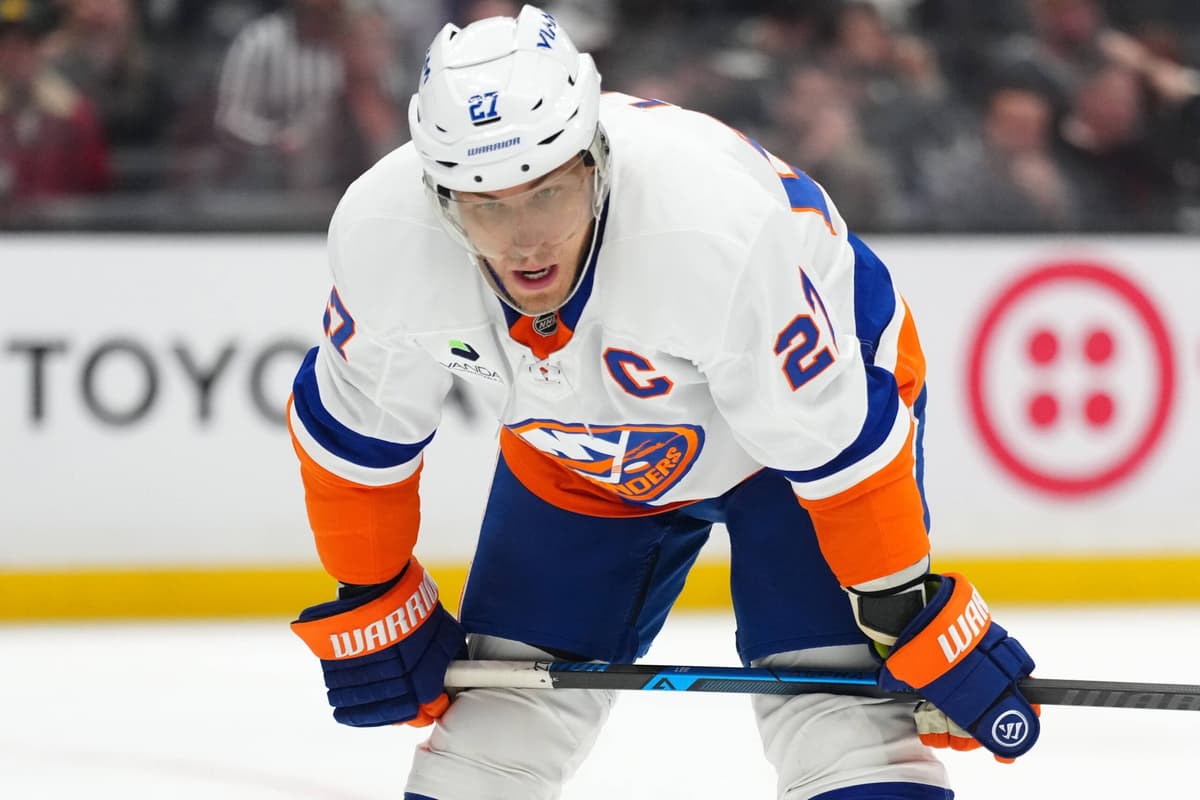
Anders Lee becomes an unrestricted free agent when the market opens Wednesday, July 1, ending his tenure as Islanders captain after negotiations between the two sides failed to produce a deal. Per TSN's Pierre LeBrun, the team improved its late-stage offer but couldn't close the gap—a signal that either the ask exceeded what management was willing to commit long-term, or Lee's market value outside New York warranted testing the open market.
Lee's departure creates immediate structural questions for an Islanders franchise already operating in a constrained cap environment. At 36 years old, he remains a net-positive contributor—a left-wing presence who averaged 0.73 points per game last season and maintains above-replacement value on the power play. But the calculus here isn't purely about his individual production. It's about what the Islanders can afford to allocate to a veteran forward when younger, cheaper talent occupies the same positional slots. The team's silence since LeBrun's report suggests they're prepared to absorb his departure rather than chase a retention bid in a crowded UFA class.
From a roster construction standpoint, Lee's exit opens cap space the Islanders can redeploy toward depth scoring or blue-line reinforcement—two chronic weak points. His power-play minutes and late-game experience will be absorbed by younger forwards, which historically reduces efficiency in the first adjustment season. New York's man-advantage conversion rate could suffer early; Lee ranked in the 62nd percentile for power-play goals per 60 minutes among qualified forwards last season.
For prop players, this matters in measurable ways. The Islanders' team power-play totals for next season should price in a temporary dip—likely 2-3 percentage points below their three-year rolling average—as replacement-level forwards cycle into Lee's old leverage situations. If the market hasn't yet adjusted the Islanders' team power-play goals prop downward from its preseason card, the edge lies on unders until the team demonstrates it can generate the same conversion rate without him. This isn't a single-game spike; it's a multi-month structural shift. Even if New York signs a comparable veteran, replacement players don't inherit the same ice-time allocation or late-game trust immediately. That friction persists through at least October and November.