Utah's Forward Coup: Lee and Trocheck Reshape Mammoth Depth Chart on Day One of Free Agency
By PropBetEdge Editorial Team ·
Utah landed a former Islanders captain and an All-Star center in the same Wednesday—a two-move blitz that resets expectations for a franchise's first season in Salt Lake City.
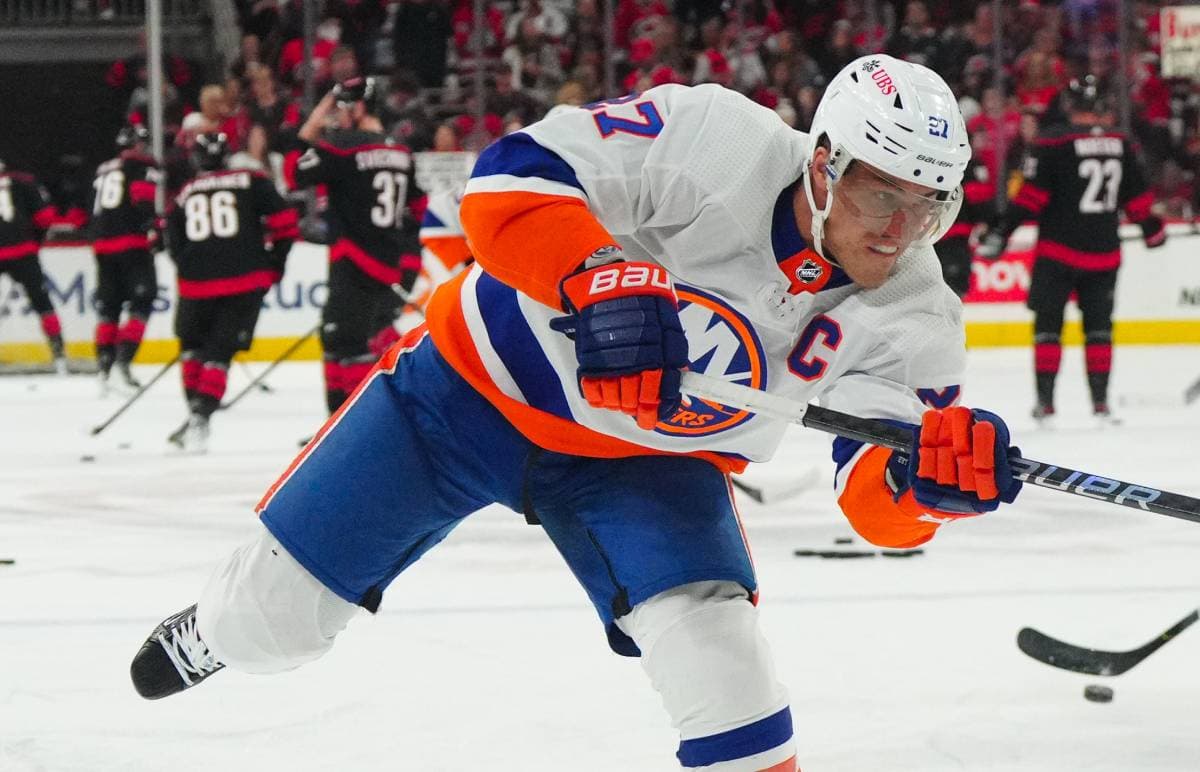
The Utah Mammoth didn't wait long to announce their arrival in the NHL. On the opening day of free agency, July 1, the organization signed former New York Islanders captain Anders Lee to a three-year deal carrying a $5.4 million cap hit—and separately acquired center Vincent Trocheck from the New York Rangers in a separate transaction. Both moves target the same operational gap: the need for proven American-bred forwards with playoff pedigree who can anchor depth lines and carry secondary offensive load.
Lee, 36, produced 42 points in 82 games last season, a decline from his historical 50-point floor but still representative of a veteran who remains useful in a checking role with secondary power-play duty. His contract—$5.4 million for three years—prices him as a depth contributor, not a star. That valuation signals Utah's front office doesn't expect Lee to drive primary scoring; instead, he's positioned as a stabilizing presence on the third or fourth line and a veteran voice in the locker room during an expansion franchise's formative months. The Trocheck acquisition, announced the same day, suggests Utah is building a center-heavy forward corps designed to create multiple scoring lanes rather than concentrate offensive burden on a single franchise player.
Lee's cap-hit structure—roughly $1.8 million per year—leaves Utah room to layer in complementary talent during the remainder of the free-agent window. His age and recent production trend indicate diminishing offensive ceiling; teams rarely commit $5.4 million across three years to players in their mid-30s without anchoring that investment to intangibles: leadership, playoff experience, or role flexibility. Lee checks all three boxes. His 15-year tenure as an Islander and extended captaincy lend credibility to a franchise trying to establish immediate organizational culture. The fact that Utah acquired both Lee and Trocheck on the same day suggests a deliberate strategy to avoid overweighting any single scoring line—a blueprint commonly deployed by expansion franchises trying to build balanced depth rather than gamble on star power.
For prop bettors, Lee's landing spot and offensive floor carry modest implications. His 42-point, 82-game season projects to roughly 0.51 points per game—well below the 0.65 PPG threshold that typically triggers meaningful over-under interest on assist and point totals. Utah's forward depth, now anchored by both Lee and Trocheck, means Lee will see secondary line minutes, likely 12–14 minutes per night, reducing his touch rate in high-leverage situations. The prop market will price Lee's individual totals conservatively; backers would need him to outproduce a 50-point pace to find value on season-long over propositions. More actionable: watch Utah's team total goals prop as the season approaches. The addition of Trocheck and Lee in one day signals management confidence in forward volume. If early-season team goal totals price below the franchise's implied offensive ceiling—which two veteran centers should enable—there's an edge on Utah team unders fading in the first 10 games. However, that edge is contingent on the market overreacting to the headline signings; if linemakers already factor these moves into their preseason models, the advantage erodes.
Lee's contract is a low-risk, modest-upside bet for Utah. The team paid for experience and depth, not scoring production. Bettors should treat his individual props the same way: conservative projections, limited leverage, and value only if the market prices him as a secondary scoring option (which it likely will). The real betting story is whether Utah's two-acquisition strategy in one day signals a front office that will continue adding depth into the season—a personnel pattern worth monitoring for team-total and line movement trends.