NHL · transaction
Vegas Locks in Lindbom at $900K: A Depth Move That Signals Goalie Market Efficiency
The Golden Knights extended Carl Lindbom on a bargain contract, cementing a goaltending depth strategy that shields Vegas from injury volatility and cap strain.
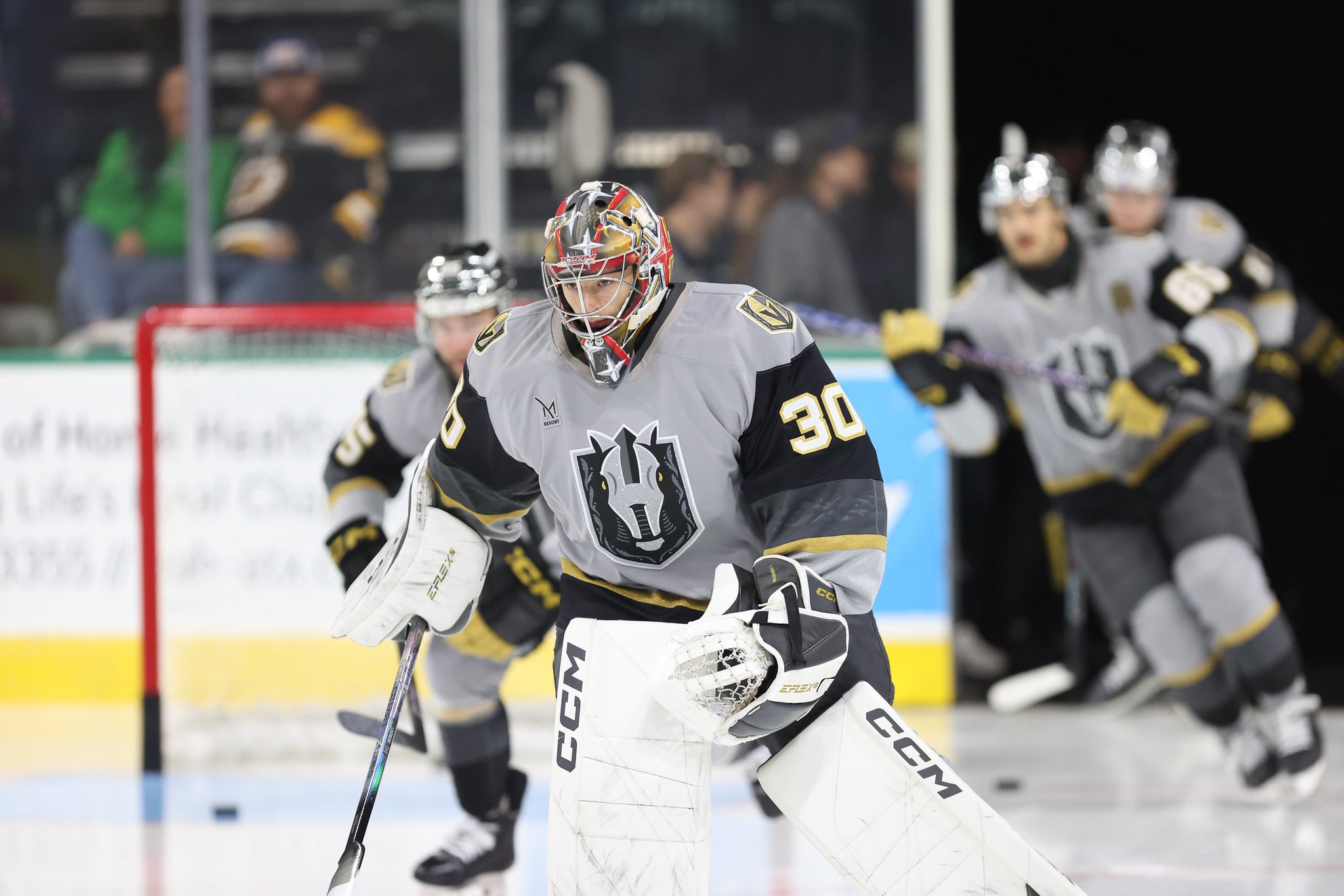
The Vegas Golden Knights extended goaltender Carl Lindbom to a three-year deal at $900,000 AAV through 2028-29, securing the 23-year-old Swedish netminder as a cost-controlled piece of their organizational depth. The extension rewards a breakout 2025-26 AHL campaign in which Lindbom posted a 24-5-8 record, 2.16 goals-against average, and .926 save percentage with the Henderson Silver Knights while earning AHL Second All-Star Team honors and an All-Star Game selection. He also logged his first NHL appearances this season, providing the organization a window into how his game translates at the highest level.
Lindbom's trajectory is the kind that separates well-run organizations from the rest. Drafted seventh-round in 2021—the draft equivalent of finding $20 in an old coat—he has systematically overdelivered at each rung of the development ladder. His final 20 appearances last season (18-0-2) demonstrated both consistency under heavy workload and the calm, positional-play foundation that translates to the NHL. At 23, he's still years away from peak performance, but the arc is unmistakable. Vegas isn't betting on him as an immediate solution; they're betting on organizational depth as an insurance product. With Adin Hill locked long-term and Carter Hart signed through 2026-27, the team has established redundancy in a market where starter injuries can collapse a season's margin.
The $900K AAV is the real signal here. That cap hit is effectively negligible for a franchise with Hill and Hart already on the books, yet it represents genuine value extraction. Lindbom's extension at this price point suggests Vegas front office views him as a future depth piece or potential backup option—a goalie who could stabilize a backup role or serve as injury insurance without cap consequence. This contract structure is increasingly common across NHL organizations: lock down promising young goalies at entry-level rates before the arbitration ladder inflates their cost. Lindbom could emerge as a 1B or established backup within the contract window; he could also remain organizational depth. Either way, Vegas paid the floor price.
For bettors, the direct impact is modest but measurable. Lindbom's presence on the depth chart doesn't immediately move Vegas goalie props—Hill and Hart remain the primary starters. However, this extension deepens Vegas's win-probability and injury-resilience profile in ways that compound across a season. When goalies carry injury history (Hill has logged missed time; Hart's recent seasons show durability variance), organizational depth is the hidden variable in team total overs. Vegas' goaltending pipeline now includes a legitimate NHL-capable alternative, which reduces the risk profile of betting team totals or win projections that assume starter continuity. If either Hill or Hart faces a multi-week absence, Lindbom becomes the de facto starter—a scenario the market doesn't currently price into Vegas season-long props. His AHL save percentage (.926) would rank in the bottom quartile of NHL starters, but as a depth-and-injury hedge rather than a season-long primary, the organizational resilience improves measurably.
The strategic implication is that Vegas is signaling confidence in their goaltending ecosystem stability. In a sport where backup goalie performance can swing 4-6 wins over a season (the difference between .900 and .915 SV% over 20 appearances), securing a proven AHL alternative who can transition to NHL action reduces tail-risk scenarios for team totals and playoff odds. This isn't a moonshot pick—Lindbom remains a prospect—but it's organizational competence materializing in contract terms that the sportsbooks haven't yet fully weighted into Vegas' season-long resilience pricing.