Vegas Faces Elimination Without Karlsson; Injury Depth Test Reshapes Stanley Cup Game 6
By Erik Schwartz ·
William Karlsson's departure from Game 5 removes a foundational midfielder from Vegas's best chance to force Game 7, forcing dependence on secondary scorers in a must-win scenario.
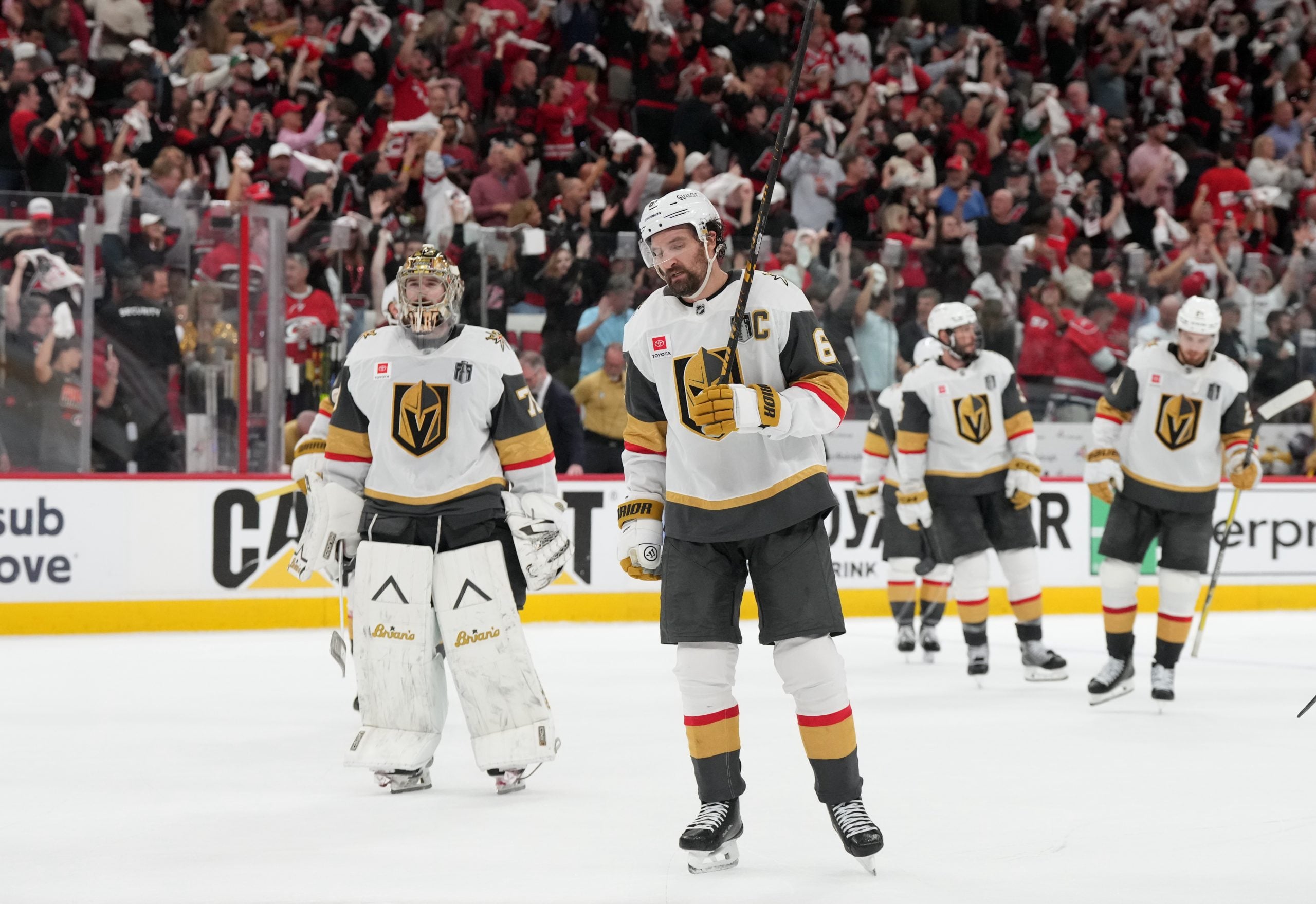
The Vegas Golden Knights are one loss away from their Stanley Cup. They host the Carolina Hurricanes in Game 6 on Sunday night trailing 3-2, and the math is unforgiving: win or watch the series end in T-Mobile Arena. But Vegas's path narrowed further when William Karlsson left Game 5 in the second period after contact with Sean Walker, his left arm striking the glass on impact. Coach John Tortorella confirmed Karlsson would not play in Game 6, marking another chapter in a brutal injury history that limited him to just 14 regular-season games.
Karlsson's absence matters more than roster depth suggests. He is a 200-foot center who anchors the team's neutral-zone structure and kill work—the unglamorous foundation that allows Mitch Marner, Brett Howden, and Jack Eichel to operate in transition. In the playoffs, that ancillary role becomes critical during elimination-game desperation; teams that lose battle integrity in their own end tend to surrender high-danger chances at exactly the moments when goaltending can't absorb mistakes. Brandon Saad enters in Karlsson's slot, a capable forward but one without the positional leverage or playoff pedigree Karlsson brings to a third-line workload.
Cartoon Hart's postseason performance compounds the pressure shift. Through 21 games, Hart carries a .909 save percentage and 2.59 goals-against average—respectable but not dominant. Against Andrei Svechnikov (who scored twice on the power play in Game 5) and a Hurricanes team that has now won three of the last four games, Hart cannot afford any defensive slippage in front of him. Brandon Bussi, the Carolina starter, posted 23 saves in Game 5 and has steadily outplayed Hart as the series progressed. Vegas's historical record in elimination games tells the story: 3-6 across eight seasons, with only one non-Game 7 win (Game 6 at home in 2024). The one precedent is thin encouragement.
For bettors, the Karlsson injury creates a subtle but durable angle. Vegas's team total (currently positioned around 2.5-3.0 goals depending on book) should face selling pressure because secondary scoring—Howden (14 playoff goals) and Marner (29 playoff points)—now must operate without the positional support that enables their timing. The Hurricanes' defensive structure, which has shown the discipline to neutralize Vegas's transition game, becomes even more favorable when a depth center exits the fold. More importantly, Carolina's power-play conversion should remain elevated; a Vegas penalty-kill unit missing Karlsson's positional discipline surrenders more high-leverage chances. The series-clinching mentality cuts both ways, but Vegas's injury list and goaltending consistency suggest the Hurricanes have the structural advantage in a do-or-die game where depth and discipline matter as much as individual skill.
The Stanley Cup sits in the T-Mobile Arena. Vegas has one chance to send it back on the ice. But losing Karlsson—even for one game—removes a component of the team's defensive architecture precisely when elimination-game pressure makes that architecture essential.