NHL
Suniev's Preseason Surge Tests Calgary's Opening-Night Calculus
The Flames' Russian prospect has scored in back-to-back exhibitions with clinical efficiency, forcing management to weigh a lottery-bound rebuild's development timeline against immediate roster impact.
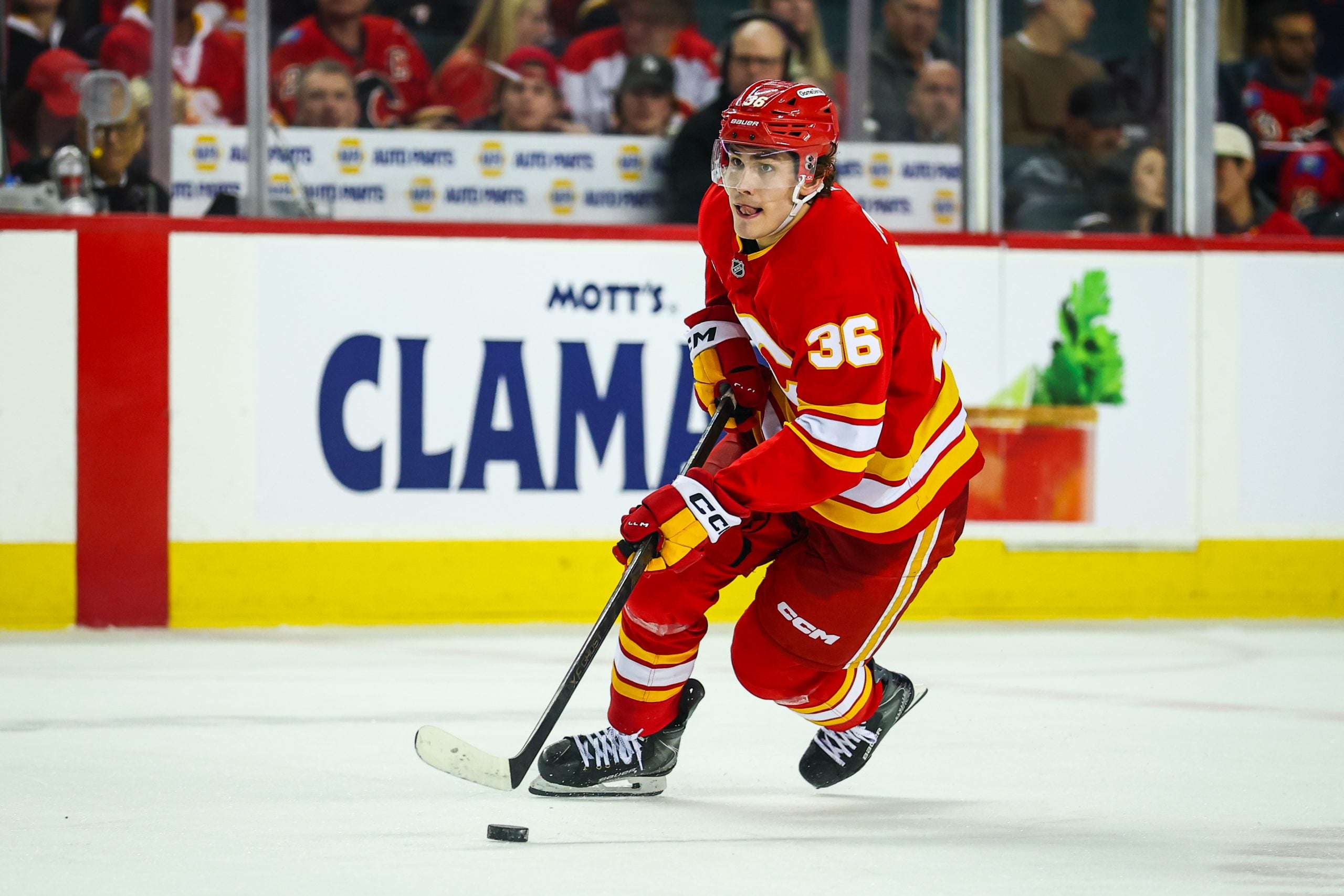
Aydar Suniev scored twice on four shots against Seattle on September 20, two days after being Calgary's lone bright spot in a prospect-game loss to Edmonton. Head coach Ryan Huska acknowledged the obvious: the kid can finish. "When he gets opportunities, it's nice to see him have success," Huska said post-game. For a Flames organization navigating a rebuild, that efficiency matters—and Suniev's sudden preseason visibility creates a real roster decision with downstream consequences for how Calgary allocates ice time and leverage situations.
Suniev's path from CSKA Moscow youth ranks through the BCHL to UMass and now the NHL's doorstep reads like a conventional prospect arc, except for one detail: his scoring trajectory has been relentlessly upward. At Penticton (2022–23), he led the BCHL in goals; at UMass, his freshman-to-sophomore jump saw his points-per-game rate climb from 0.69 to 1.08. He signed his entry-level deal in spring 2025, made his NHL debut on April 17, 2025, and spent his first pro season in the AHL affiliate Calgary Wranglers, where a slow start—pointless in seven games—gave way to 16 goals and 24 points across 56 games. The volatility early in that AHL season is instructive: young offensive players often need runway before their shot selection and off-puck spacing stabilize. Suniev's cold stretches came from defensive positioning and game-reading gaps, not a lack of ability to bury opportunities when they came.
This preseason he looks materially different—faster at the blue line, more composed in transition, and crucially, occupying prime scoring real estate (the danger zones where he can deploy that lethal shot). The speed he showed burning Seattle's defensemen is the same speed that was latent last preseason, when he didn't register a shot on net. The difference is ice time confidence and coaching staff's willingness to slot him into forward rotations where he'll face real defensive pressure. If Huska gives him opening-night minutes in Calgary's bottom-six rotation—a likely scenario given the Flames' rebuild status and cap flexibility—Suniev's shot volume and goal-scoring rate carry genuine volatility. A player who went from invisible to two goals on four shots in one game is signaling the kind of variance that can inflate scoring lines over a 10–20-game sample before regression or defensive adjustment catches up.
From a prop betting angle, Suniev's inclusion on the opening-night roster matters less for his individual lines (which will be thin, if available at all) and more for how Calgary's forward production reshuffles. If he locks into a consistent slot and plays 15+ minutes a night over the first week, Flames team totals and related shot-volume props could move in unexpected directions. The mechanism is straightforward: a young scorer who was borderline last season is now creating shooting opportunities at a rate that top-flight goal-scoring talent generates (2 goals in 19 combined minutes across the last two games). Sportsbooks won't have a handle on his playing time yet—that's determined at training camp and coaches' decisions, not historical volume. If Calgary's coaching staff is as impressed as the preseason tape suggests, and Suniev gets consistent leverage in the bottom-six, his presence adds a secondary scoring element that wasn't priced into early-season Flames offensive lines. The edge exists only if Suniev makes the roster and gets ice time; if he splits the season between Calgary and the AHL, the variance argument collapses.
Watch the opening-night lineup announcement. If Suniev draws into the regular-season rotation with 15+ minutes allocated, Flames team totals and shot-volume props warrant a second look before the market absorbs his consistent inclusion. The preseason signal is too sharp to ignore, but it's a single-event spark—one that fades if his first-week NHL output regresses toward his AHL average or if coaching staff pulls back his ice time in response to defensive pressure he hasn't yet seen at the NHL pace. The edge exists in the next 48–96 hours, before line-setters lock in their opener pricing.