NHL · transaction
Reinbacher's Window Narrows as Montreal Stacks the Right Side
The Canadiens' prospect pipeline just got crowded, and a fifth-overall pick who has barely played is running out of runway to justify his draft capital.
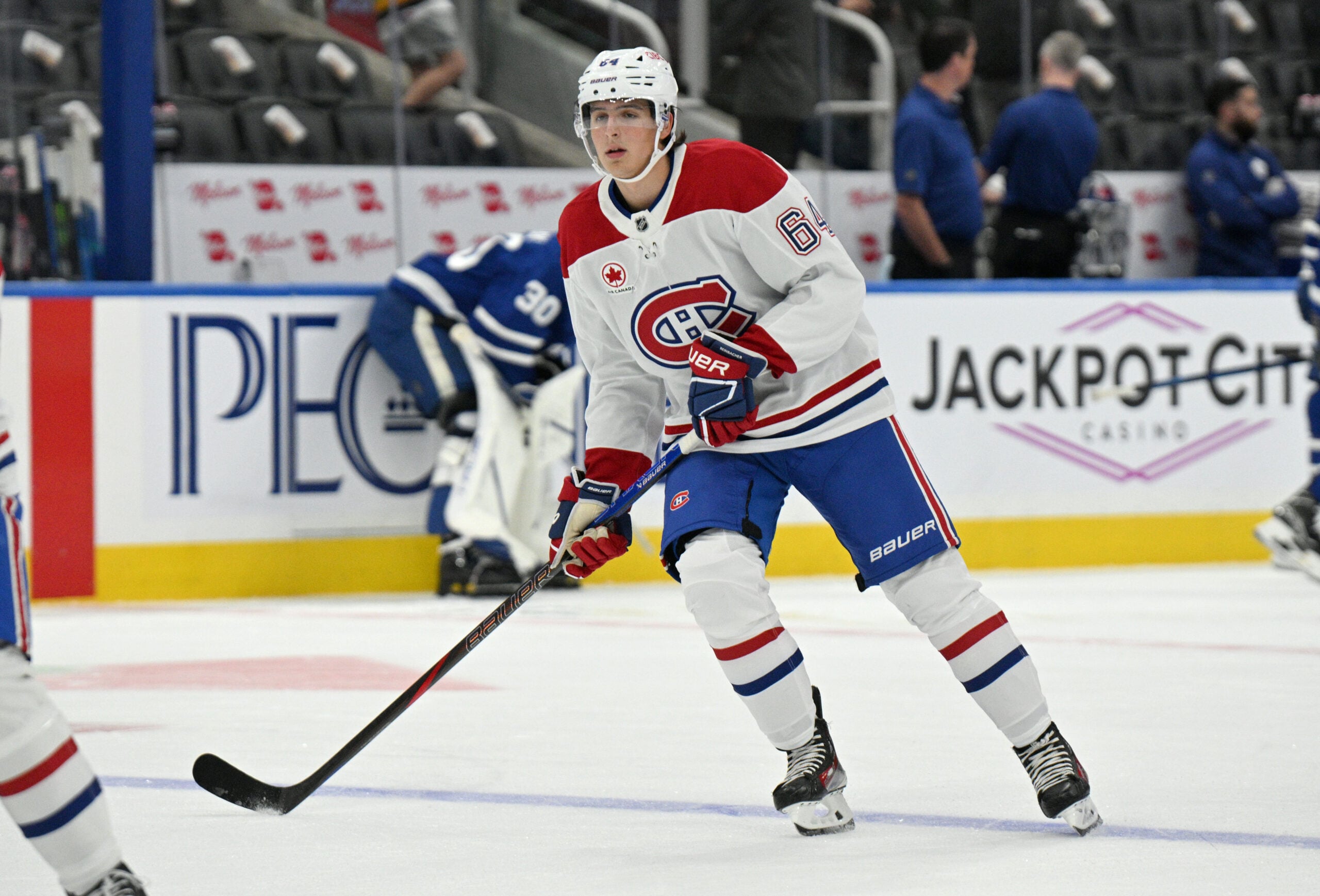
David Reinbacher's margin for error in Montreal just collapsed. The Canadiens signed prospect Bogdan Konyushkov to an entry-level deal on Friday, the latest in a series of right-side defensive depth moves that have squeezed the Austrian defenseman toward the organizational margins. With Ethan Sampson and Reilly Walsh already signed as depth pieces, and recent draft selections Timofei Runtso and Cooper Cleaves joining the pipeline, Reinbacher faces a crowded audition at the moment he can least afford it—after playing just two NHL games in five years since being drafted fifth overall in 2023.
The composition of Montreal's right-side additions reveals how the organization actually perceives Reinbacher's ceiling. Konyushkov, a 23-year-old fourth-rounder from the 2023 draft, projects as an offensive-minded depth piece at 171 pounds—a different archetype than the 6-foot-3, 207-pound Reinbacher, who was drafted to anchor top-pair minutes with occasional offensive contribution. The Canadiens aren't replacing him; they're building around him. But in doing so, they've also signaled a loss of patience. The more alarming indicator came during the playoffs: Montreal deferred to a left-handed defenseman played on the right side rather than give Reinbacher even spot minutes during a surprising third-round run. That wasn't a tactical preference—that was an organizational statement about relative trust.
Reinbacher's injury history compounds the urgency. Three consecutive seasons derailed by injury—the last two sustained in NHL preseason alone—have left him with fewer games played than any other top-10 pick from 2023. His nearest comparable, Dmitry Simashev (Utah Mammoth, 12th overall), has 28 NHL games. Reinbacher has two. The Canadiens have publicly committed to his development and promised a genuine competition opportunity in training camp this fall, but framing matters: a spot to "win" is not the same as a spot to lose. That distinction tells you the organization views him as a prospect still fighting for credibility, not a prospect fighting for ice time.
For betting purposes, this pipeline jam translates into a meaningful shift in Reinbacher's role probability over the next 18 months. The market had built in a path where he earns 150–200 NHL games by the end of the 2026–27 season on the back of his draft pedigree and Dobson injury precedent. That pathway has compressed. If Reinbacher doesn't secure consistent minutes in camp and early season (roughly September through November), the organizational depth chart gives Montreal cover to slide him toward a restricted free agency path without major cap consequences. The pressing need—proven performance at the NHL level within a compressed timeline—is now his to prove. For anyone modeling Canadiens defensive deployment next season, Reinbacher's ice time floors have dropped; the organization will pivot to safer depth options if he stumbles early.