NHL
Reinbacher's AHL Runway Signals Montreal's Next Defensive Pivot
The Canadiens' playoff run exposed a structural weakness on defense, but David Reinbacher's development timeline offers a clearer read on when—and how—the team's blue line composition will shift.
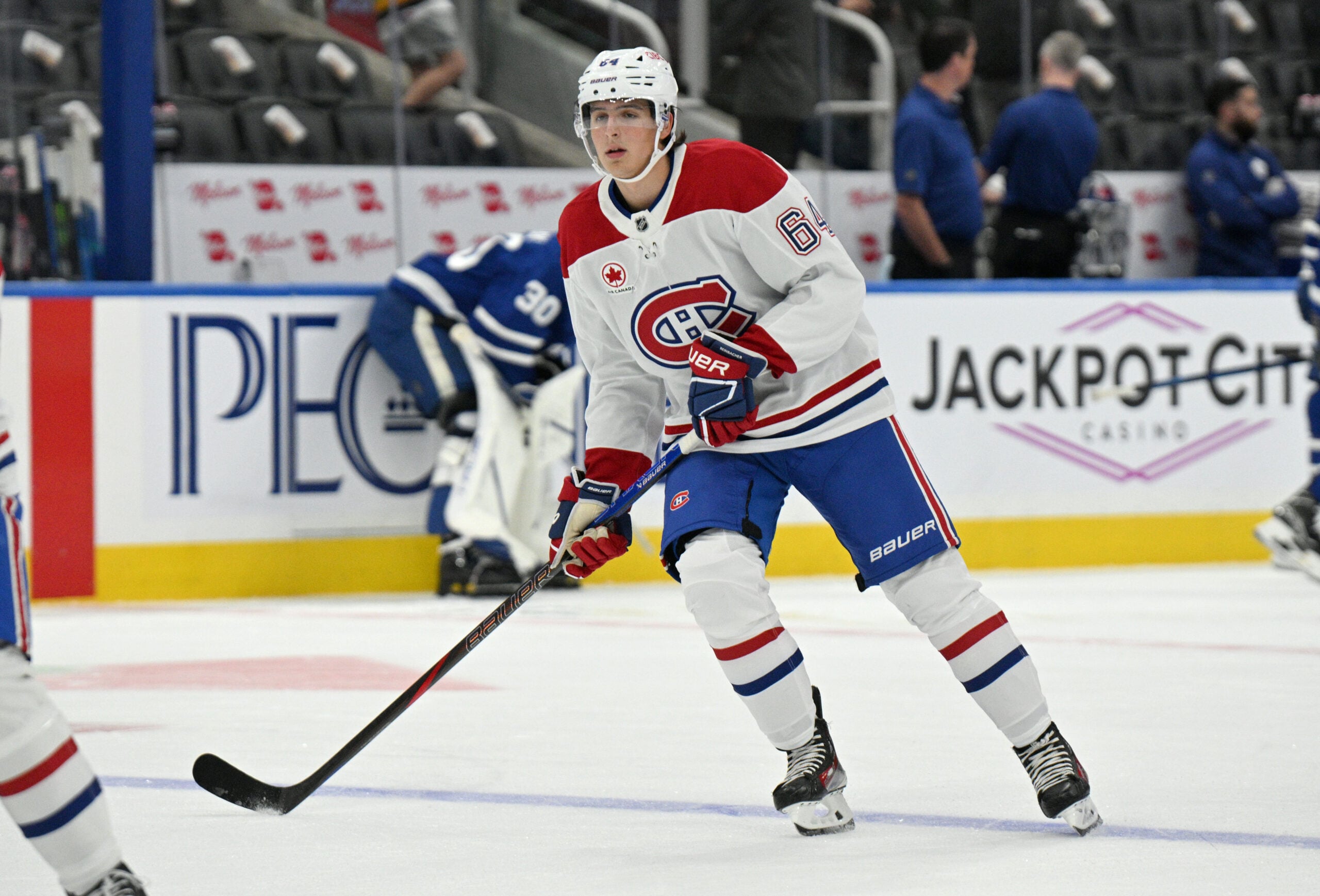
The Montreal Canadiens have defied expectations to reach the Eastern Conference Final, yet their loss to Carolina has crystallized a hard truth: their current defensive roster is overextended at the top. As ESPN reported, the Hurricanes exposed gaps in Montreal's structure that routine playoff hockey had masked through earlier rounds. When Noah Dobson missed time in Round 1, Arber Xhekaj and Jayden Struble rose to the occasion. But those backup minutes masked a deeper problem—the team lacks a credible third puck-moving defenseman to relieve pressure on Lane Hutson and Dobson, who have carried a disproportionate deployment load.
Head coach Martin St. Louis has anchored his system around Hutson and Dobson as primary facilitators, a heavy ask against elite Carolina forwards. Kaiden Guhle has posted elite advanced metrics this postseason—eight points through 16 games, all at even strength—yet he's cycled through partners without establishing durable chemistry. Alexandre Carrier and Mike Matheson have absorbed heavy minutes at the wrong times, and the unit's coherence has fractured under sustained pressure. The structural issue is simple: Montreal needs a third NHL-caliber operator who can defend with conviction and move pucks without defaulting to Hutson or Dobson every shift.
Enter David Reinbacher. The 21-year-old defenseman, developing with Laval in the AHL, represents Montreal's answer to that gap—but the timeline matters enormously. The Canadiens have locked their core four (Hutson, Dobson, Matheson, Guhle) through at least 2031 at elite cap rates, unusual cost control for a contender. Reinbacher's current trajectory suggests a full NHL integration within the next 12-18 months, not an immediate playoff impact. His development curve—marked by adversity and deliberate AHL reps—isn't designed to produce short-term fill-in games; it's built to create long-term positional competition and partnership optionality.
For prop bettors, this has immediate tactical implications. Montreal's defensive coverage patterns will remain volatile through next season as the team manages a rotating third pair. Games where Carrier or Matheson log heavy penalty-kill minutes carry elevated risk for shots against and goals against props—the team will be riding two elite defensemen into exhaustion nights they're overmatched. Conversely, nights where Xhekaj's energy is redirected to shorter, more focused stretches (avoiding the penalty-minute drift he showed this postseason, tied for most minors among remaining defenders) could compress Montreal's defensive chaos. The Canadiens' defensive structure won't stabilize until Reinbacher or Engström forces real pairing choices. Until then, focus on short-sample volatility in goaltender workload and team defensive efficiency rather than assuming consistency.