Guhle's Injury Opens the Left-Side Logjam for Montreal—and Unlocks Hutson's Natural Game
By PropBetEdge Editorial Team ·
With Kaiden Guhle sidelined for 4-5 weeks, the Canadiens may finally deploy Lane Hutson on his dominant left side, a structural shift that carries real implications for Montreal's top-pair production.
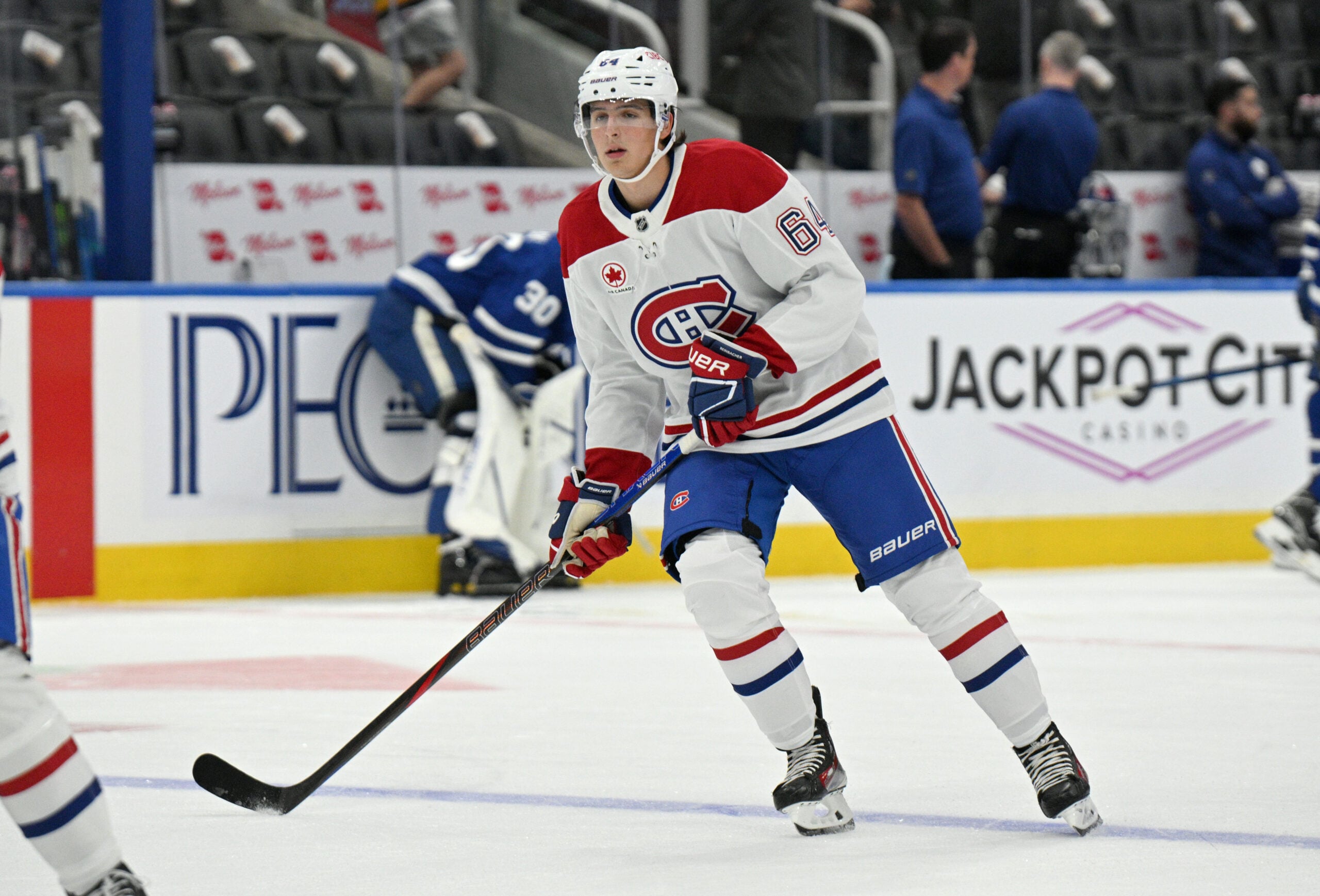
Kaiden Guhle will miss the start of the 2026-27 season following offseason surgery, leaving the Montreal Canadiens' left-side defense depth thinner than planned. The injury—expected to sideline him 4-5 weeks—arrives at an awkward moment: preseason roster construction, when depth moves matter most. For David Reinbacher, the fifth-overall pick from 2023, the absence creates an immediate path to the opening-day roster. But the real structural play lies deeper: Guhle's absence may force head coach Martin St. Louis to finally deploy Lane Hutson on his natural left side, a positional correction that has shadowed Montreal's top-pair play for two seasons.
Hutson, the Canadiens' best defenseman and a 78-point contributor last season, has spent much of his time on the right side to accommodate the left-handed Guhle, who typically anchors the left in Montreal's system. Last year, Hutson's most frequent partner was Jayden Struble (also left-handed), yet St. Louis placed Hutson on his off side even in that pairing. The Canadiens' left-defense logjam—Guhle, Hutson, Arber Xhekaj, and prospect Adam Engstrom all competing for minutes—forced the team to play roster Tetris rather than optimize individual positioning. The club even deployed Hutson on the left during last spring's playoffs when the stakes were highest, partnering him with Noah Dobson (who returned from a broken thumb). That shift produced cleaner play. St. Louis clearly recognizes the value of Hutson on his natural side but has lacked the organizational flexibility to implement it full-time.
With Guhle absent and the depth chart resetting, the door opens for Hutson to play left consistently and for Dobson (the offseason acquisition who signed to replace retiring David Savard) to cement the right side. A Hutson-Dobson pairing was trial-tested in the playoffs despite Dobson's offensive redundancy next to an elite 78-point defenseman—the Habs went nuclear with it anyway, suggesting St. Louis sees value in the pairing when matchups demand it. Reinbacher, meanwhile, slots into lower-pair minutes or sits as the healthy scratch, giving the organization a developmental cushion without forcing a sub-optimal top-six arrangement.
For bettors, this structural change carries modest but measurable implications. Hutson on his natural left side should correlate with marginally higher assist and point totals—he's posted better underlying possession numbers (Corsi, expected goals) when deployed correctly in past seasons, and his shot volume typically increases when he's in rhythm with his partner. Over a full season, the positional shift could add 2-4 points to his total relative to playing his off side. That edge is not explosive, but it's persistent across his career. Additionally, Montreal's top-pair blue-line production (Hutson and Dobson combined points) may stabilize after two seasons of lineup shuffling; consistency in positioning often correlates with consistency in output. The market may not yet price in the full value of Guhle's absence as a forcing function for better pairing deployment, especially since casual observers see only the loss of a player rather than the gain of structural clarity.
Reinbacher's roster spot is now his to lose, but the deeper story is Hutson's return to his natural position—a non-glamorous adjustment that compounds over 82 games.