NHL · discipline
McAvoy's Six-Game Suspension Voids Boston's Defensive Core to Start 2026-27
The Bruins lose their best defenseman for the first month of next season, forcing a restructured penalty kill and opening night deployment that fundamentally changes their defensive liability surface.
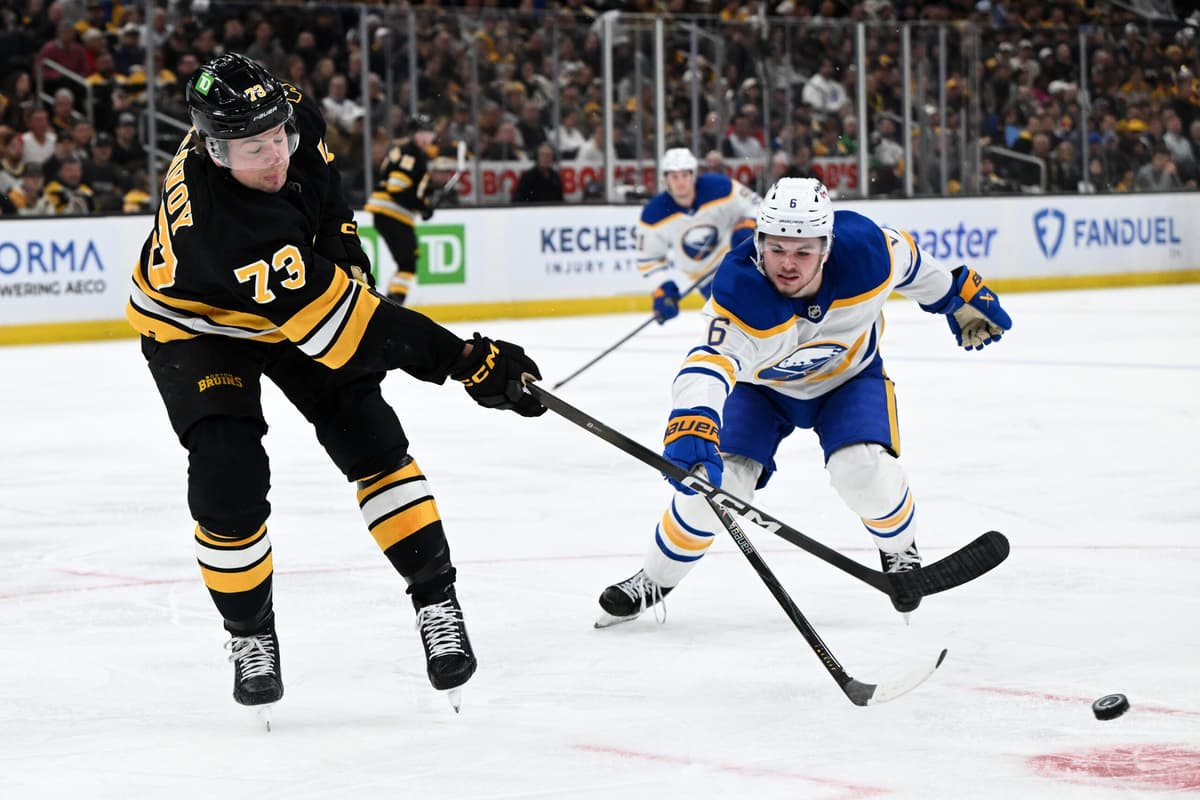
Charlie McAvoy will serve a six-game suspension to begin the 2026-27 season after the NHL Department of Player Safety suspended the Boston Bruins defenseman Monday for a two-handed slash across Zach Benson's midsection in the closing minutes of Game 6 of their Atlantic Division Semifinal matchup. The incident capped a contentious series loss—Buffalo won 4-1 in that final game—but the disciplinary consequence extends well beyond the playoffs. McAvoy's absence at the start of next season strips Boston of its primary shutdown defender and first-unit power-play quarterback during the league's traditional October hockey surge.
The slash itself carried the desperation of a team already eliminated, but context matters less than roster consequence. McAvoy led the Bruins in ice time during the regular season and anchored their penalty kill at 5-on-4 situations. Over a full season, he averaged 25:14 TOI per game—elite usage for a defenseman tasked with shutting down opposing first lines and managing puck flux in the defensive zone. Six games without him forces interim deployments that will lean on either overworking his backup (likely Brandon Carlo or Hampus Lindholm) or deploying a younger defender in higher-leverage minutes than his typical workload. Boston's penalty-kill efficiency and even-strength goal differential will both absorb measurable pressure through Thanksgiving.
The timing also creates a secondary ripple: McAvoy's suspension overlaps the Bruins' toughest opening-month schedule. New teams rarely have their best personnel available during lineup reshuffles; defensive depth units become glaring weak points in October when opponent scouting is sharpest. The Bruins' defensemen not named McAvoy will face elevated offensive shots against them early, and their save percentage behind the bench will reflect it. Jeremy Swapin or whoever carries the crease will inherit an overworked, under-supplemented blue line for one-sixth of the season's sample.
For prop bettors, McAvoy's absence creates two distinct edges. First, the Bruins' team unders on wins during games 1-6 of 2026-27 carry value—not because the team is bad, but because their defensive structure will be fundamentally compromised. Fewer shots allowed should not be expected; more chaos should. Second, individual Bruins defensemen not McAvoy face elevated blocked-shot totals as they compensate by playing tighter, more desperate defensive minutes. Carlo and Lindholm will see bump-ups in peripheral defensive volume. The market will overshoot slightly on the team's total win count by assuming seamless continuity; it won't exist.
Boston will absorb this six-game hole and likely still contend, but the opening month becomes a referendum on their depth, not their ceiling. Bettors pricing Bruins futures and early-season win totals without accounting for McAvoy's absence and the defensive redeployment cost are betting on a more stable roster than actually takes the ice.
NHL Intelligence — Hockey intelligence beyond the scoreboard. Open NHL Intelligence →