Borgen Trade Signals Bruins' Defensive Pivot—But Limits His Fantasy/Prop Ceiling
By Erik Schwartz ·
Boston paid two draft picks to acquire a third-pairing defenseman; the real read is what that gambit says about their blue-line depth and how it shapes individual prop expectations.
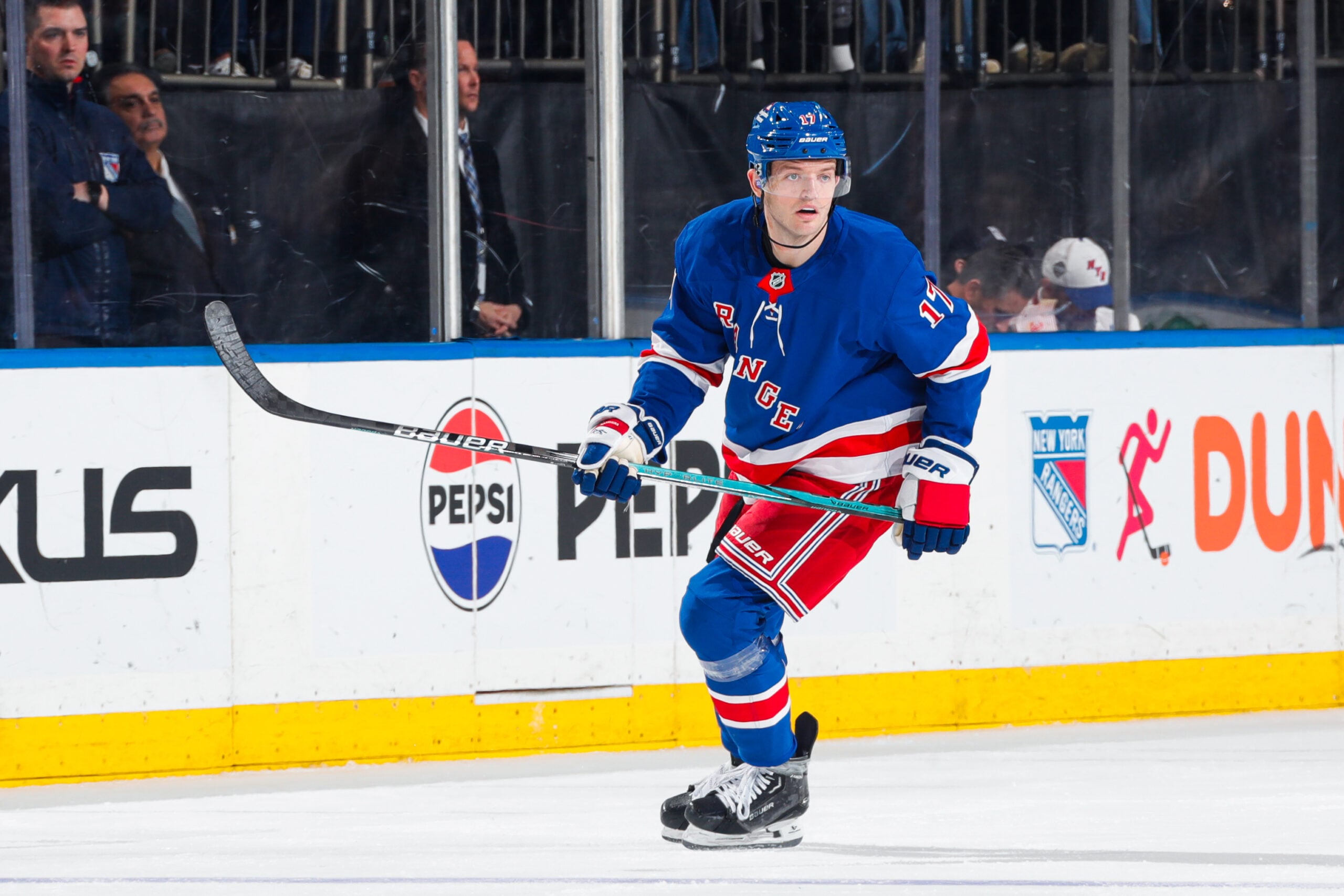
The Boston Bruins traded a 2027 second-round pick and 2028 third-round pick to the New York Rangers for defenseman Will Borgen this offseason, betting that adding muscle and defensive structure to their right side would shore up a shaky backend. The move arrives after Andrew Peeke's departure in free agency left a gap; Peeke had posted a career 45.7 Corsi For percentage (CF%) and offered physicality without consistent puck possession, recording 33 points in 168 games as a Bruin. Borgen, nicknamed "Belligerent Bill" for his aggressive edge, is meant to be a functional alternative—not a franchise anchor.
Borgen's profile in New York tells the story of a depth defenseman doing exactly what the organization asked. Across 126 games with the Rangers, he compiled 28 points with a plus-12 rating. Last season he appeared in 75 games, posting 15 points, 99 blocks, and 111 hits while playing an average 18:03 time-on-ice and 2:13 on the penalty kill. His offensive zone starts hovered at 30 percent, a clear signal that Rangers coach Mike Sullivan deployed him in a restricted, defense-first role. When the Rangers did give him runway in the second half—11 points in 23 games after January 26—the uplift was modest; he remains a complementary defender, not a playmaker.
Boston's investment of two mid-round picks suggests the club views Borgen as a stabilizing presence rather than a needle-mover. At $4.1 million per year over the term through 2028-29 (total $16.4 million), his deployment mirrors his New York assignment: pairing alongside a top-four left-side anchor like Charlie McAvoy or Hampus Lindholm, eating defensive minutes, limiting dangerous scoring chances. His blocked-shot volume (99 last season, 203 during his 2022-23 stint with Seattle) and physical hit total (111 in 2024-25) will provide depth-lineup value in specific formats, but his assist and points floor remains low—his offense is incidental, not intentional.
For prop bettors, Borgen's deployment has clear edges and clear warnings. His blocked shots are the most reliable touchstone: 99 in 75 games last season projects to 1.32 per game, and if Boston uses him in a top-four shell (likely against tougher opponents), the volume could tick toward 1.5 per game in meaningful matchups. However, daily fantasy and player prop sheets will likely overprice his points and assists based on draft-pick attachment; markets assume trade consideration correlates with offensive output, when in fact Boston paid for durability and shot suppression. Borgen's assists over a 10-game sample will frustrate bettors accustomed to seeing defensemen on power play units; the Bruins will use him sparingly in those spots. The play is to fade any "Borgen 1+ assist" or "Borgen 2+ points" props at conventional odds, and hunt blocked-shot unders when he's slotted in a favorable defensive scheme—not because he'll underperform, but because market pricing hasn't yet calibrated to his limited offensive mandate.
One final lens: Borgen's arrival implicitly signals that Boston views their third-pairing slot as a rotation play, not a springboard for a young defender to reach top-four minutes. That structural choice ripples through the entire blue line and affects what you should expect from McAvoy, Lindholm, and the supporting cast in terms of ice-time distribution and shooting volume. If Borgen stabilizes the third pairing, top-four workloads may actually decrease, compressing the total points-per-game available across Boston's defense. That deflation is invisible in headline trades but crucial to capturing prop value—or avoiding its erosion.