NHL
Blackhawks' Blue Line Reset: Byram's Arrival Reshapes Chicago's Defensive Foundation and Betting Leverage
Chicago's $12.5M commitment to Bowen Byram and the pairing architecture it forces create measurable shifts in shot volume, transition efficiency, and goalie workload entering 2026-27.
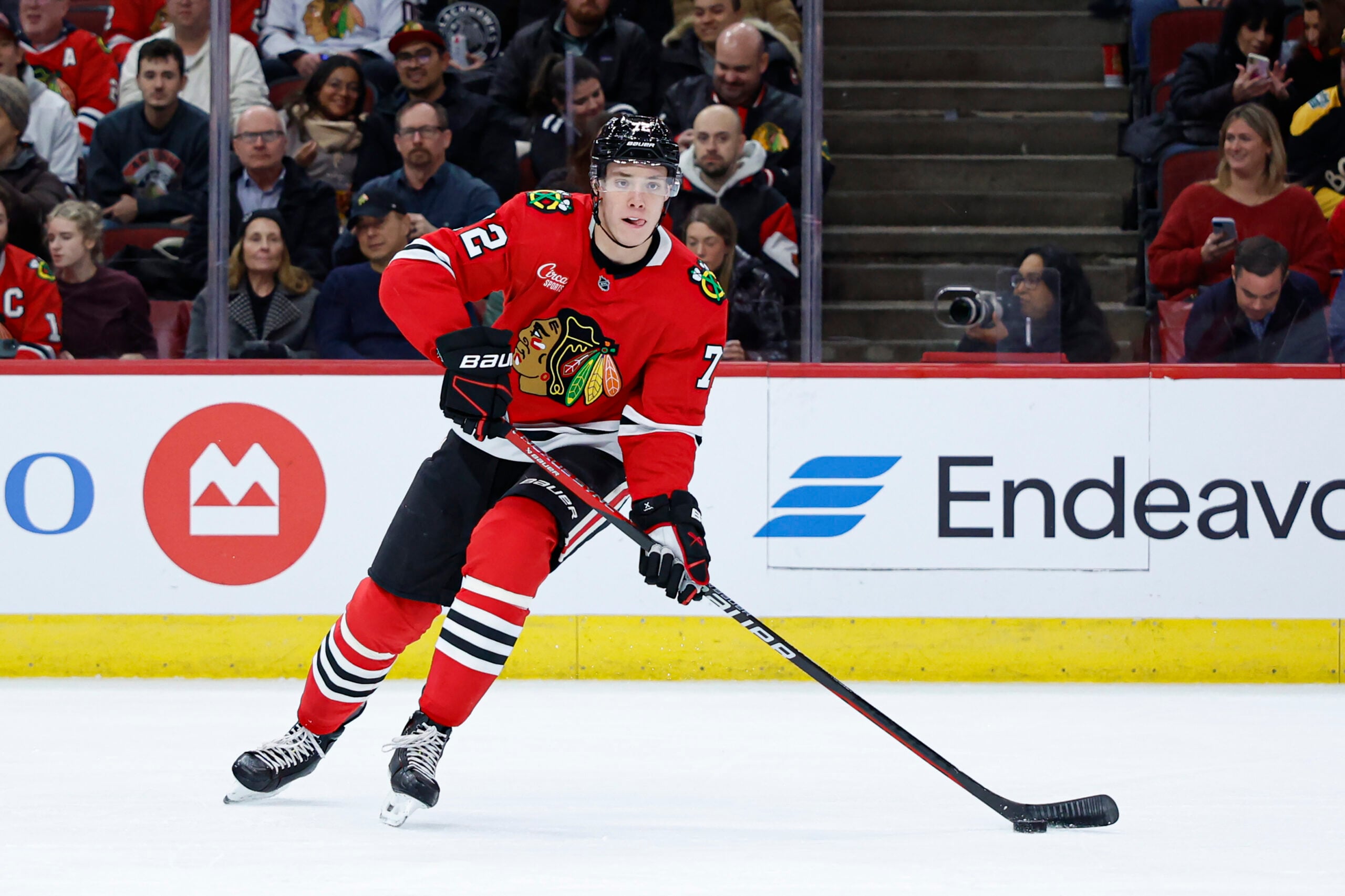
The Blackhawks finalized their off-season defensive reconstruction on July 1 when Bowen Byram inked a six-year, $12.5 million AAV deal following his playoff-push season with Buffalo. The move cost Chicago its fourth-overall pick, a 45th-round selection, and defenseman Louis Crevier—a trade premium that signals how internally bullish general manager Kyle Davidson is on Byram's No. 1 ceiling. Byram posted a career-high 42 points (11 goals, 31 assists) last season and was instrumental in Buffalo's first playoff appearance since 2011, immediately addressing a structural gap on the Blackhawks' back end that plagued the rebuild through Blashill's first season.
The salary commitment and draft capital spent reveal the team's valuation: Byram represents the rare defenseman the market prices as a franchise anchor. The projected pairing of Byram with Alex Vlasic—a 6-foot-6 frame who led all Blackhawks defensemen in blocked shots for three consecutive seasons—creates a defensive tandem built for shot suppression and transition neutralization. Vlasic's defensive-zone positioning and active stick work complement Byram's offensive firepower and heavy shooter release, a composition that typically correlates with higher save percentages for the goalie behind them. The secondary pair of Wyatt Kaiser and Artyom Levshunov (the 2024 second-overall pick) projects as a development pairing; Levshunov showed offensive flashes in limited third-line duty last season but requires consistent ice time to eliminate the inconsistency that plagued his rookie campaign.
The betting surface hasn't fully absorbed the defensive personnel upgrade yet. Vlasic's three-year streak leading the team in blocked shots—a metric directly tied to goalie workload reduction—suggests the Byram-Vlasic pairing will suppress high-danger chances more effectively than the fragmented pairings Blashill cycled through in 2025-26. Blocked shots are a proxy for active, intelligent positioning; they shrink the denominator of dangerous attempts. When the Blackhawks face teams with shoot-first offenses or high-volume shot approaches, the elevated block rate under the new pairing structure will lower the volume of shots Spencer Knight (or whoever starts in net) faces per game, directly suppressing his raw shots-against totals and creating overs-averse leverage.
Conversely, Byram's offensive profile—a heavy point-producer with 11 goals last season and elite shot-from-the-point mechanics—will elevate Chicago's power-play shot volume. The projected lineup features Byram on the point with secondary creators around him; his 31 assists last year, paired with a team-worst power-play conversion rate in Chicago, suggests the Blackhawks are entering the season with untapped offensive upside on the man-advantage. This creates a durable angle: Chicago's power-play shot-on-goal totals will exceed their historical baseline, and Byram's own shot volume (a component of his assist rate) will trend high when the team enjoys numerical advantages. That edge persists across the season because it rests on persistent offensive personnel placement, not a single-game anomaly.
The defensive pairings also matter for transition volume. Vlasic's documented skating ability in open ice combined with Byram's offensive instincts means the Blackhawks will launch more rushes from their own zone and generate more transition scoring chances—a shift that inflates point and assist opportunities for the trio of forwards cycling in the top-six. The market will eventually price this in, but early-season lines on Blackhawks team totals and individual forward point props remain vulnerable to underestimation because the defensive upgrade hasn't yet been monetized into season-long models.