NHL
Buffalo's Star Power Collapse in Montreal Series: Why Thompson and Tuch Props Are Sinking
The Sabres trail 3–2 because their franchise anchors have vanished; Game 6 betting angles tilt sharply against them unless the plus-minus deficit flips.
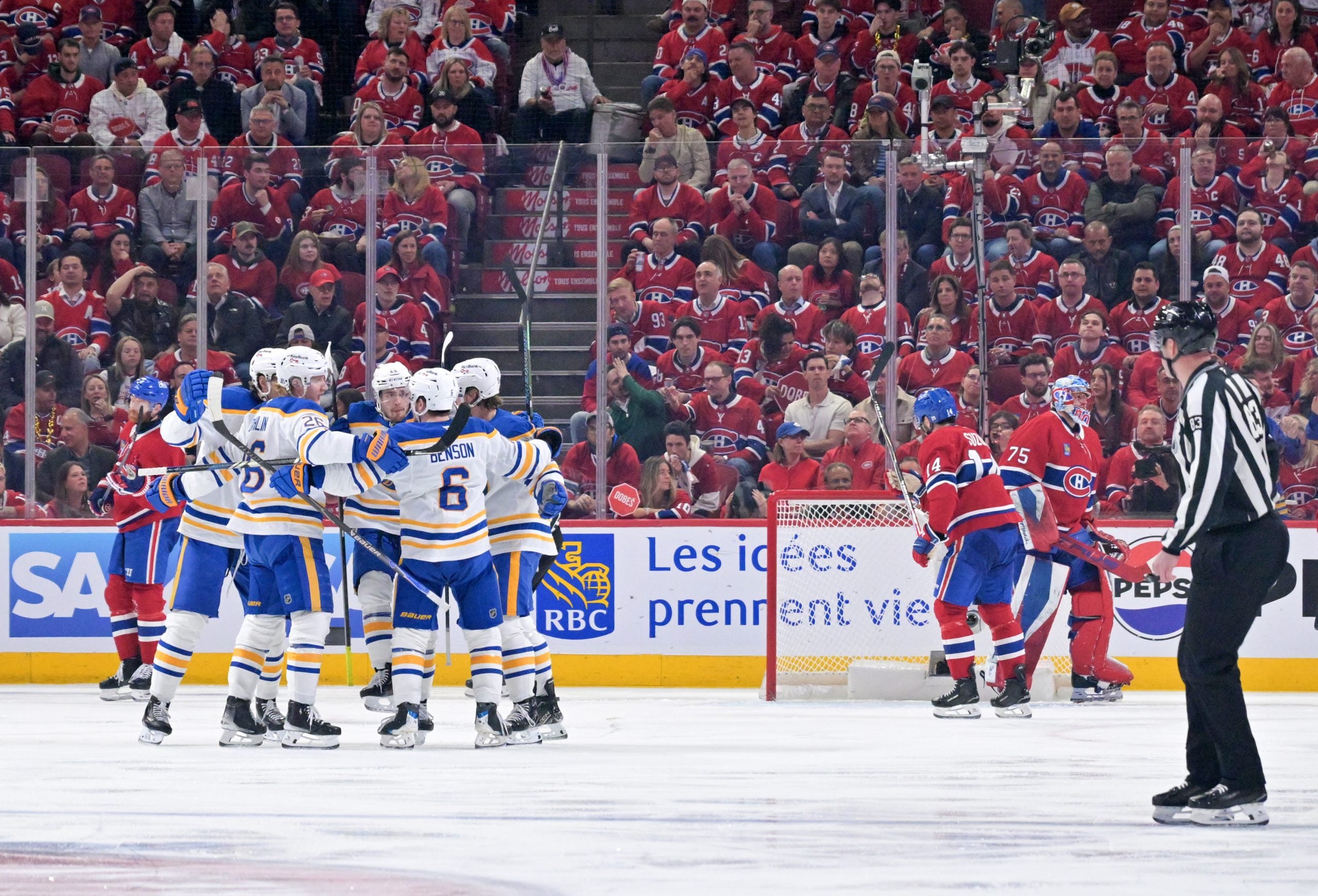
Buffalo finds itself one loss away from elimination after breaking a 13-year playoff drought, a narrative that dissolves the moment you examine the box scores. The Sabres beat Boston convincingly in Round 1, but against Montreal in Round 2, their star players have simply disappeared. Tage Thompson and Alex Tuch—the two forwards tasked with carrying the offense—arrive at Game 6 combined minus-17, a deficit that no secondary scoring can overcome in a best-of-seven. The Canadiens' defensive structure has exposed a critical vulnerability: Buffalo's heavy hitters cannot generate consistent offense when forced to play straight hockey instead of their run-and-gun rhythm.
Tuch's underlying numbers paint the bleakest picture. Through five games, he sits at exactly even on shot chances—97 for, 97 against—a statistical dead zone that signals complete neutralization. More damaging, he has zero points in the series despite all-season success as a multi-dimensional forward. His xGF% hasn't climbed above 50% in a single game, meaning Montreal's defense has dictated matchups and space. Thompson fares marginally better with a 105-84 chance ratio, yet his two-way structure that defined the regular season has eroded under Montreal's forechecking intensity. He has four points through five games, but the quality-of-chance profile lags what's required from a franchise centerpiece in a playoff series trailing 3–2.
Defensive breakdown in Buffalo's own zone compounds the star-power drought. The Sabres have leaked turnovers, gifted prime real estate to Montreal's forwards, and left their goaltenders exposed far too often. Game 5's 6–3 loss typified the pattern: perimeter miscues creating grade-A scoring chances off sloppy transitions. This isn't random variance—it's structural failure that no single Thompson eruption can fix in a single game. When a team's defense collapses and its primary scorers underperform, the margin for error in an elimination game shrinks to zero.
The betting implication cuts two directions simultaneously. Thompson's shots-on-goal prop, likely hovering around 2.5–3.5, carries inflated value on the under side because Montreal will continue to disrupt his offensive rhythm in high-leverage moments. His xGF% trend suggests he's not beating the defense, so shot volume won't compensate. Conversely, if you're backing Buffalo's moneyline or series odds, you're betting on a reversal so dramatic—Thompson and Tuch both suddenly playing 2014-2015 versions of themselves—that it's essentially a variance wager, not an edge play. The Canadiens' defensive scheme that generated this five-game advantage is unlikely to break down in Game 6, even on home ice for Buffalo.
Lindy Ruff faces a tactical choice that no coaching adjustment can fully resolve: he can dial up aggressive forechecking to create space for Thompson and Tuch, but that risks further defensive exposure against Montreal's skilled counterattack. The safer play—tightening structure and hoping the stars find plays in constraint—hasn't worked. Game 6 becomes a referendum on whether elite players can force production against a system designed to suffocate them, and history in playoff elimination games suggests they cannot.