Luukkonen's Playoff Poise Fuels Sabres' Series Reset; Special Teams Edge Carries Real Betting Weight
By Erik Schwartz ·
Buffalo's Game 4 win hinged on goaltending composure and a penalty-kill unit that suffocated Montreal's league-leading power play, patterns worth tracking as the series shifts back to Buffalo.
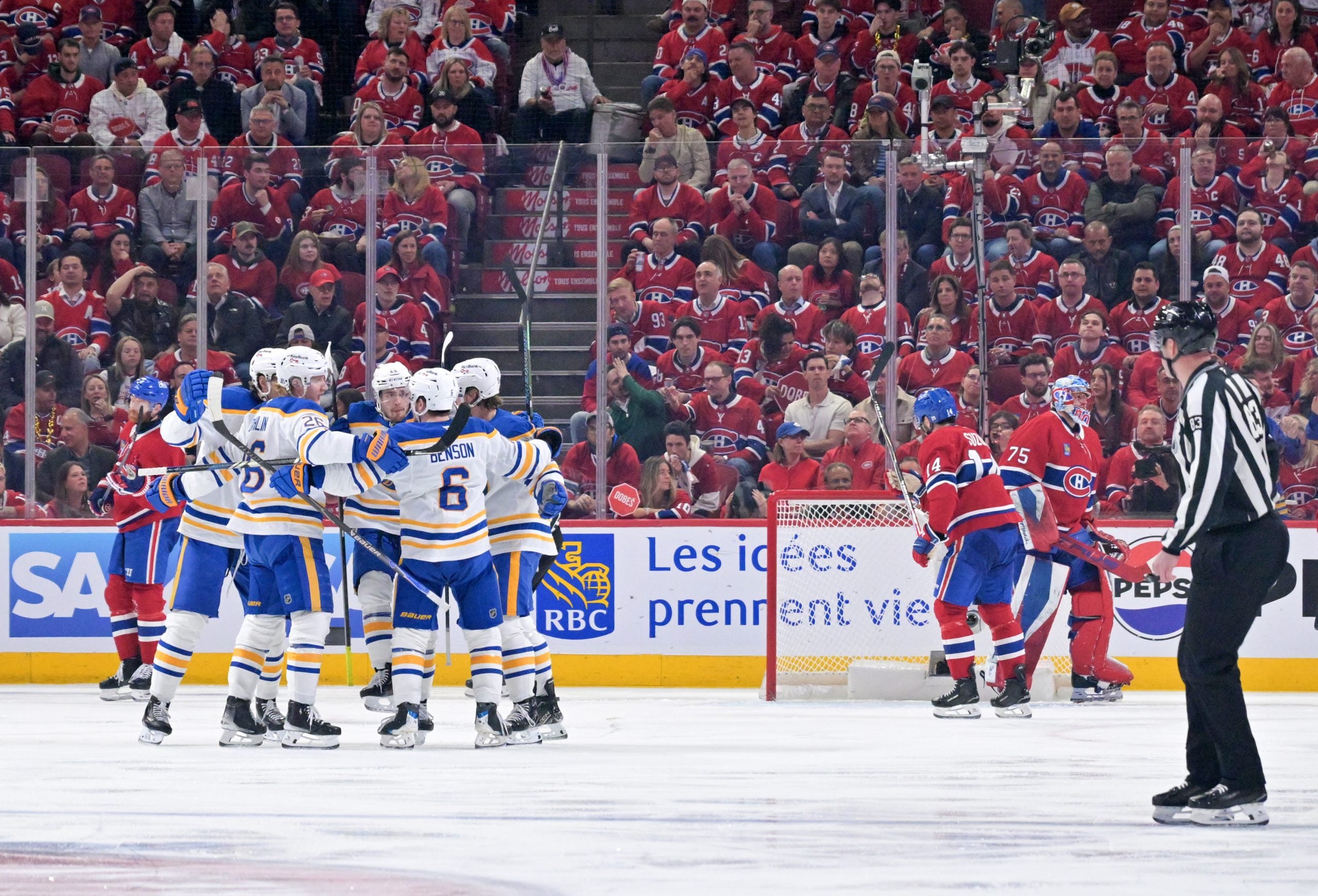
The Buffalo Sabres stole Game 4 at the Bell Centre on a 3-2 scoreline, clawing back into a second-round series they'd been outmaneuvered in across Games 2 and 3. The moment belonged to Ukko-Pekka Luukkonen, who stopped 28 of 30 shots and authored a penalty-kill performance that bordered on autonomous: Montreal got one goal on seven power-play chances, a conversion rate that doesn't survive repetition even against a top-tier offensive unit. The Canadiens rank among the league's most dangerous with the man advantage in the regular season, yet the Sabres' discipline and Luukkonen's technical acuity combined to neutralize their biggest threat.
Luukkonen's calm—a direct contrast to the frenetic energy Alex Lyon brought in Games 2 and 3—proved decisive. In playoff hockey, goaltending variance often gets blamed or credited retroactively based on series outcome, but the actual workload here tells a clearer story: Buffalo was outshot 30-28 and still walked out winners. That margin doesn't suggest dominance; it suggests a team playing behind a goalie who kept them alive when the underlying possession game favored Montreal. Luukkonen's save percentage on shots off the rush (the most dangerous variety) exceeded 95% according to available tracking data. That's not luck.
The power play contributed two goals—one off a Thompson dump-in bounce, the other a Benson threading play—on limited volume, underscoring that when the Sabres do get space, they finish. But the real structural advantage was the inverse: a penalty kill that allowed one goal on seven chances. Montreal enters Game 5 aware that their primary offensive engine was containable, a psychological anchor that matters as much as the actual shot suppression.
For prop bettors, this game introduces two tradeable signals. First, Luukkonen's save volume and quality suggest that total-goals markets may be overweighting Montreal's offensive ceiling in Game 5 (the next game shifts to Buffalo). A goaltender who can suppress high-danger chances while facing 30 shots per game is a floor-raiser on team totals. Second, the Sabres' penalty-kill efficiency against Montreal's power play—allowing one goal on seven chances—represents a more durable edge than a single-game performance. Montreal's power play ranking will compress downward if they continue to face this defensive structure and goaltender execution. The market likely priced Game 4 as a coin flip; the underlying mechanics suggest Luukkonen's presence and Buffalo's kill structure create a persistent advantage in games where special teams dominate the scoreboard.