NHL · roster-move
Kane's Market Window Narrows: Why Late-Summer PTO Reality Reshapes Depth Scoring Lines
With contenders tightening their rosters and Kane still unsigned at 34, the veteran forward's landing spot will likely carry reduced minutes and leverage—a dynamic that flattens his scoring ceiling for whoever takes the flyer.
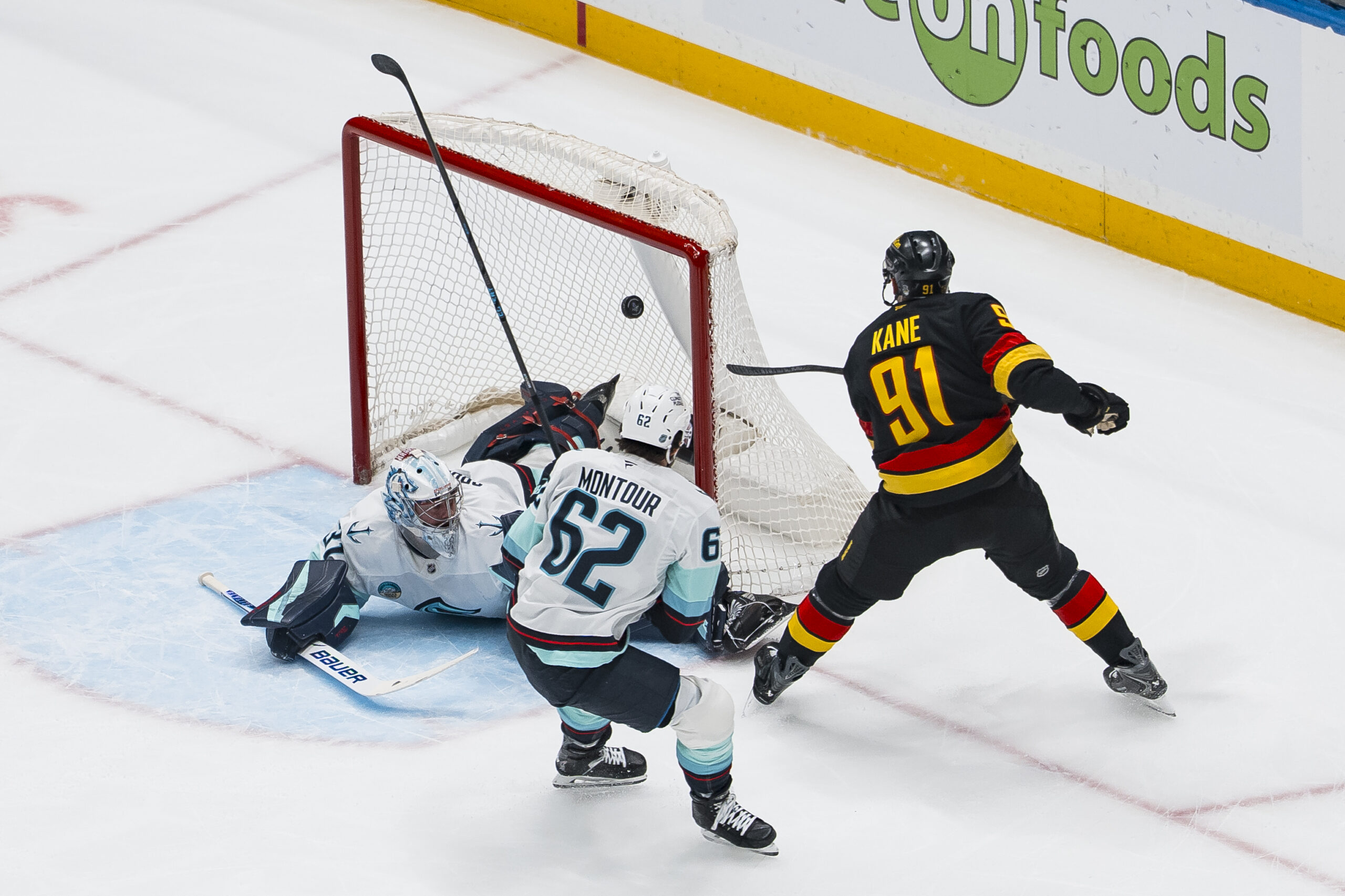
Evander Kane remains unsigned as July winds down, and the math is tightening. Anthony Mantha's signing earlier this offseason consumed one of the remaining forward slots teams were willing to fill with veteran talent, narrowing Kane's already-thin menu of options. At 34, coming off a year where he played 71 games for Vancouver and posted 13 goals and 18 assists, Kane is no longer a foundational piece. He's a depth bet—and one that most contenders will only take if the price collapses.
The source of Kane's surplus inventory is straightforward: injury recovery and age. A gruesome injury knocked him off stride last season, and while there's "gas left in the tank," as the scouting consensus holds, he's materially less reliable than his peak years with Edmonton or San Jose. Over his 1,001-game career, Kane scored 339 goals and 309 assists across six organizations. That pedigree opens doors, but it doesn't open them wide enough to command a multi-year deal or a premium role. Teams know what they're getting: a physical forward with experience, not a regression to his 40-goal seasons.
Three teams emerge as realistic landing spots, each for different structural reasons. Calgary, operating in rebuild mode, could sign Kane on a short-term discount and flip him at the deadline to a Cup contender seeking depth physicality—a low-cost arbitrage. Edmonton, where Kane's best hockey happened, could bring him back on a PTO to fill a bottom-six gap, banking on familiarity and the team's ability to waive him if the experiment fails. Philadelphia, flush with cap space after their failed offer-sheet gambit on Leo Carlsson, has the financial flexibility to absorb a one-year flyer if Kane's body cooperates. None of these scenarios positions Kane as a first-line contributor or a guaranteed roster lock.
For prop betting, this matters acutely. If Kane signs with Calgary or gets claimed on a PTO with Edmonton, his ice time will likely stabilize in the 12-15 minute range—bottom-six wing territory. That compressed workload suppresses his goals and assists totals. A 13-goal pace over 71 games extrapolates to roughly 18-20 goals over a full season, but only if he plays 82 games and holds top-six minutes. Reality will be closer to 10-14 goals if he's splitting shifts with healthier depth forwards. His shot volume per game may actually rise (fewer players = higher per-minute rate), but overall volume declines with benching risk. Philadelphia is the only market where he might sniff 15+ minutes nightly, given their forward depth gaps—but even then, Kane will be competing for ice time against younger depth options and veterans on shorter contracts.
Bettors should fade any props that assume a full-season, first-tier workload. Goals under his 71-game pace (13 goals), assists under 18, and team totals that price him as a secondary scoring option all carry sharper value than longer-term season projections. If and when Kane signs, the window to exploit inflated opening lines is 48 hours—before the market reprices his realistic minutes and role. Once training camp resumes and his actual deployment emerges, those edges will evaporate.