NFL · lineup
Week 4 Shadow Reports: Early Injuries Reshape the Workload Picture
With Green Bay's Reed sidelined and Miami's Achane done for the season, the Week 4 slate rewards teams willing to hunt vacated touches and defensive vulnerabilities.
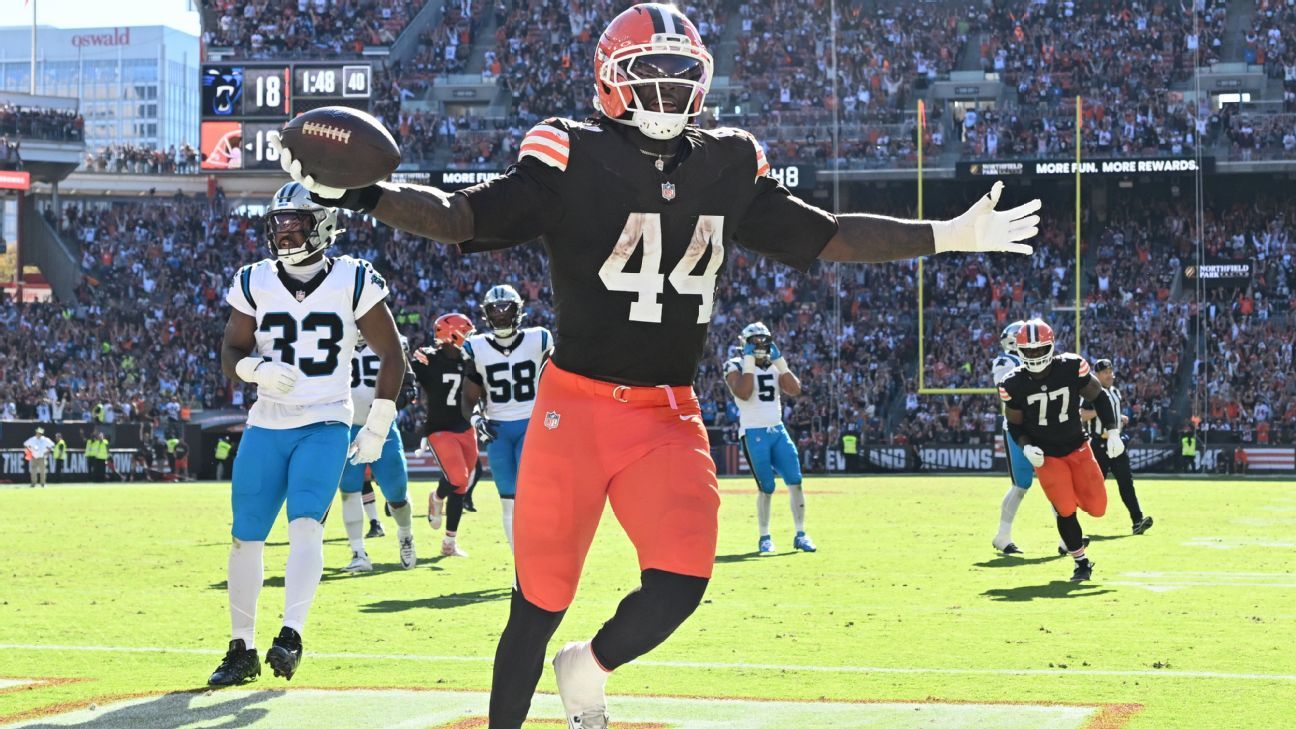
Green Bay Packers wide receiver Jaylin Reed will undergo season-ending neck surgery, removing one of the Packers' vertical threats ahead of Week 4. Tampa Bay Buccaneers wideout Mike Evans remains out, with the team placing Chris McMillan on injured reserve and promoting backup QB Rypien as insurance with Baker Mayfield nursing a shoulder injury. Miami Dolphins running back De'Von Achane tore his ACL and is lost for the season, forcing Miami to redistribute carries among remaining backs and altering one of the AFC South's most dangerous offenses. Minnesota Vikings star Justin Jefferson avoided serious injury and could return this week, a development that reshapes Minnesota's Week 4 ceiling against a secondary in flux.
These cascading absences create two divergent betting environments: teams losing key playmakers will lean heavier on remaining targets and secondary ball carriers, while defenses facing depleted opposing offenses gain coverage relief. The Steelers-Browns matchup Thursday night sets the tone for the week—both defenses have shown vulnerability in the secondary, making opposite quarterback efficiency and underneath passing lanes the early tells. When a receiving corps loses depth suddenly, target volume doesn't vanish; it concentrates among the remaining names, often outpacing the pregame projections that assumed a healthier roster.
De'Von Achane's ACL tear is the most consequential vacancy on the Week 4 slate. Miami's run-heavy attack under new offensive coordinator Bill Hightower relied on Achane's explosiveness to create explosive plays in the ground game and space in the passing game—Miami ranked fifth in rushing EPA before Achane's injury. His departure doesn't simply open 12-15 carries per week; it removes the threat that kept opposing linebackers honest in coverage, effectively reducing the yards-after-catch potential for Miami's pass catchers. Jaylen Warren, who assumes the lead role in Miami's backfield, projects to see 18-22 touches, but at a lower yards-per-carry rate than Achane commanded. Miami's team total should decline 0.5-1.0 points from pregame open. Any wager on Dolphins receivers this week trades on a fundamentally altered volume picture—target share increases on paper, but yardage efficiency falls as defenses no longer respect the explosive run threat.
The Packers' loss of Reed removes a red-zone option and vertical separator, forcing more reliance on slot work and underneath progressions. This directly benefits Aaron Rodgers' completion percentage (defenses can afford to stay in zone coverage without fear of the vertical shot) while potentially depressing his passing yards and touchdown upside. Green Bay's passing game will function through shorter, higher-frequency completions—a dynamic that props bettors should exploit by fading Rodgers' long-ball lines (20+ yards completion, 300+ passing yards) while considering his completion percentage and attempts as proxies for a grounded, efficiency-based gameplan. The market will likely overweight Rodgers' playoff pedigree and underweight the actual production change caused by losing a receiver who generated 1.2 yards of separation on average—one of the widest gaps in the league.
Jefferson's potential return injects volatility into Minnesota's spread and total. If he plays, Minnesota's passing attack restores its full-strength architecture, and Carl Zimmer's defense gets a coverage advantage against a weakened Houston secondary. If he remains out, Minnesota's receiving corps defaults to secondary weapons, and Houston's corner group can play tighter coverage. The line movement on Minnesota-Houston will hinge entirely on Jefferson's status, likely not settling until Friday. For prop bettors, this is a clarity-dependent decision: wait for official status before committing to Minnesota receiver props. The difference between Jefferson healthy and absent is roughly 40-60 yards of distribution among the other receivers—a gap too wide to risk on early-week pricing.
NFL Intelligence — Football intelligence beyond the final score. Open NFL Intelligence →