NFL · injury
McMillan's Recurrence Darkens Tampa Bay's Receiver Room
Jalen McMillan's same-knee injury in Week 3 against Minnesota resets the Buccaneers' receiving depth and forces immediate adjustments to their passing attack.
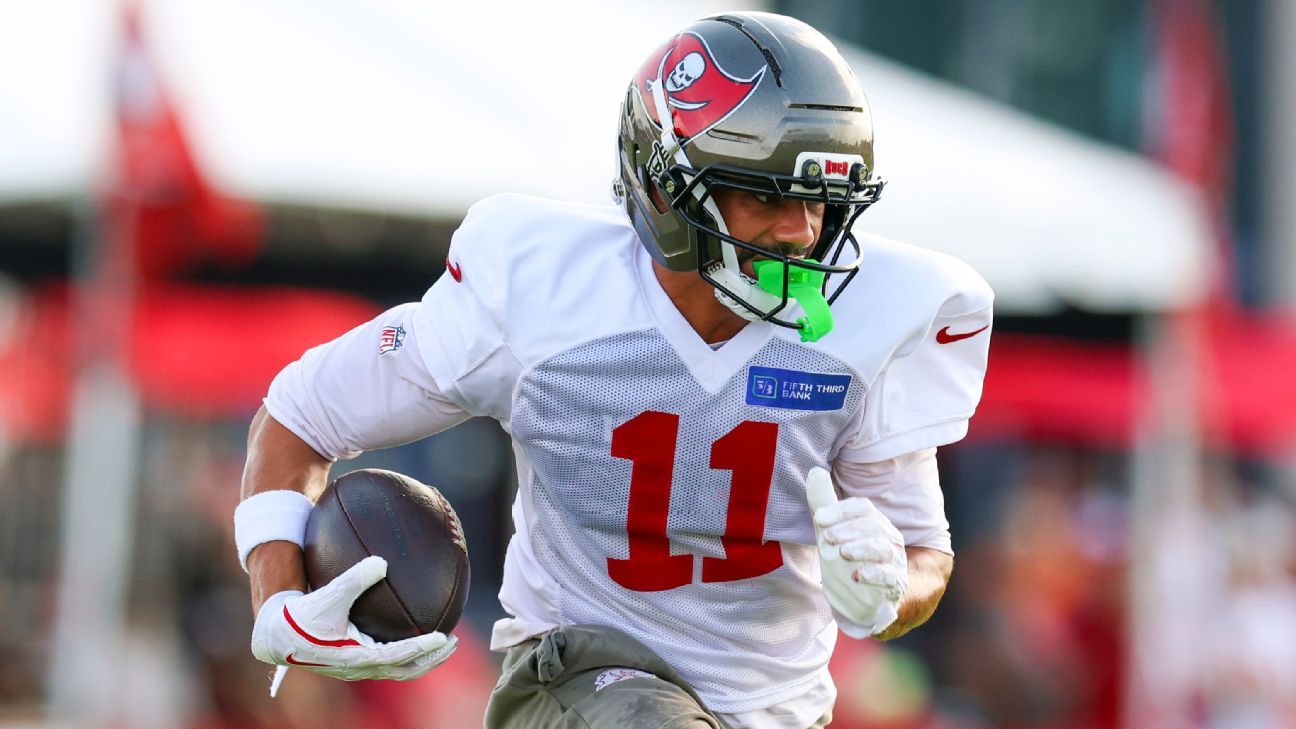
Jalen McMillan suffered a knee injury in the first quarter against the Minnesota Vikings on Sunday and has been ruled out, marking a brutal recurrence of the same injury that sidelined him during training camp and forced him to miss multiple weeks and the season opener. The collision with Vikings safety Josh Metellus occurred on a corner route as McMillan attempted to make a catch, though the precise mechanism—whether the injury came from pivoting or direct contact—remains unclear. He was able to limp off the field under his own power, a minor positive in an otherwise damaging development.
McMillan's second setback is particularly costly because he was expected to assume a larger role in Week 3 as Tampa Bay tried to escape an 0-2 start for the first time since 2014. His limited availability last week had already constrained the Buccaneers' offensive optionality. The timing of this injury removes depth from an already-taxed receiving corps precisely when the team needs offensive firepower to stop the bleeding.
For prop bettors, McMillan's absence has immediate and cascading effects on Tampa Bay's passing architecture. His removal opens receiving touches and target share to secondary receivers—primarily Mike Evans and Chris Godwin if healthy, but also role players filling gaps. The Buccaneers operate their core passing plays through a relatively fixed set of route combinations; when a designated receiver exits, those touches don't vanish, they redistribute. The Vikings defense, which allowed 312 passing yards and three touchdowns in Week 2 against the Colts, presents an opening for Tampa Bay to lean into what coverage adjustments they'll employ without McMillan's option on the perimeter.
Baker Mayfield's passing volume and completion percentage may hold steady or even increase (fewer moving parts can paradoxically improve on-time decisions), but touchdown dependency shifts upward for receivers who inherit the vacated snaps. Evans, who logged 11 targets in Week 2, becomes the de facto primary option outside the slot. His anytime touchdown line (typically -125 to -110 depending on book) represents short-term value because the offensive design will funnel more red-zone work through proven targets. Additionally, Godwin's receiving yards floor contracts because he'll see coverage relocation from safety help being reallocated away from McMillan's typical slot alignments.
The injury also constrains Tampa Bay's ability to scheme around Minnesota's pass rush. The Vikings recorded three sacks against Indianapolis; losing McMillan's route-running flexibility forces the Bucs into more conventional formations and rhythm-dependent calls. This tightens Mayfield's throwing windows and raises sack probability marginally. For bettors, this is a week-specific edge: avoid Tampa Bay passing yards unders at inflated totals (above 250) and target Vikings pass rush props (sacks, hits, pressures) as the primary beneficiary of McMillan's absence.
NFL Intelligence — Football intelligence beyond the final score. Open NFL Intelligence →