NFL
Week 3 Upset Alert: Penix's Return and Watson's Window Create Real Vulnerabilities for Favorites
Two of the NFL's biggest favorites face quarterback-driven collapse risk in Week 3, and the market hasn't fully priced the asymmetry between starter recovery and defensive depletion.
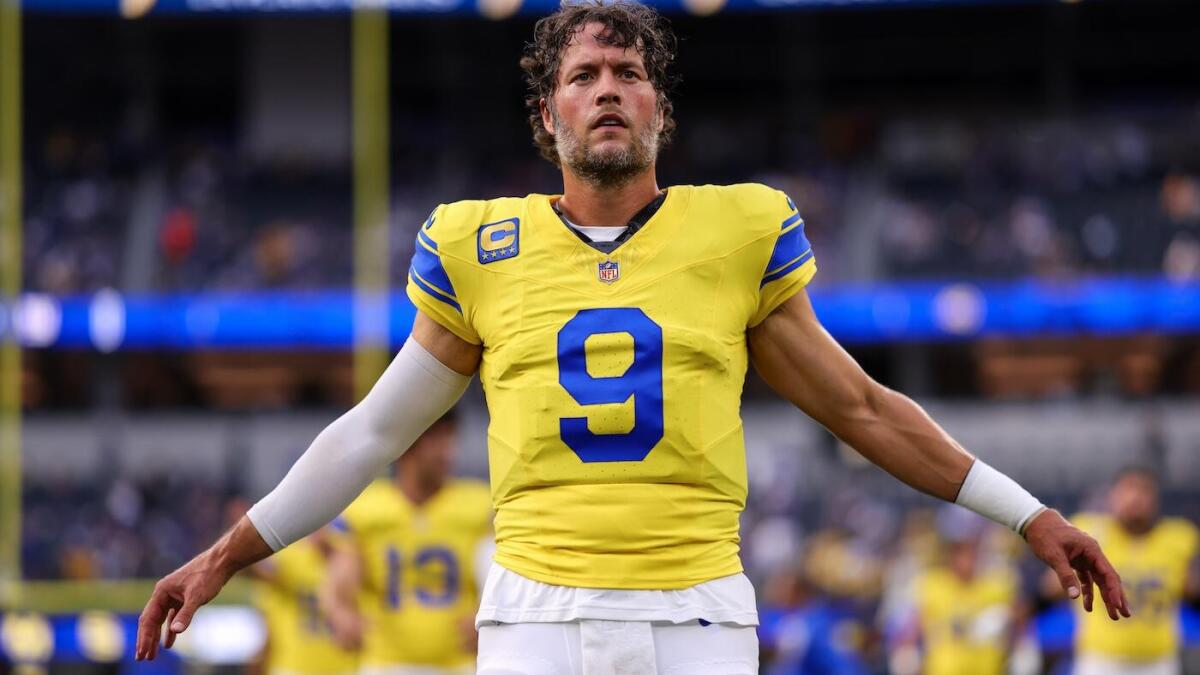
Week 2 delivered. Our upset radar flagged the Ravens and Bengals as vulnerable road underdogs, and both delivered outright wins. The Jets nearly made it three, pushing Green Bay to overtime before falling short on the spread. That track record carries into Week 3, where a peculiar convergence of quarterback transitions and injury cascades has created real edges in the betting market. The Falcons at Packers on Thursday night and the Panthers at Browns on Sunday each present the kind of asymmetric payout structures that reward early identification of collapsing favorites.
Start with Atlanta. Through two games, the Falcons have been historically incompetent: 0-2, a league-low 8.0 points per game, seven turnovers, and—stunningly—zero red-zone trips. Cooper Rush under center has been actively destructive. But Michael Penix Jr. returns this week, and while he is not a franchise savior, the mere substitution of competence for active damage creates an immediate floor for offensive output. The causality is mechanical: Penix's arrival doesn't transform the supporting cast, but it eliminates the self-inflicted wound of turnover-prone play-calling and decision-making that has sabotaged Atlanta's first two weeks. Green Bay, meanwhile, is cracking. The Packers barely survived New York in OT despite possession advantages, rank dead last in rushing (64.5 yards per game), and own the worst third-down conversion rate in football at 19 percent. Jordan Love is playing wounded—21.1 percent off-target throws, 31st among 32 qualifying quarterbacks—and now the team has lost both Jayden Reed to a back injury and right tackle Zach Bako-Bewele to a torn patellar tendon. Those are not depth-chart adjustments; they are structural impediments to an offense already struggling to generate positive yardage on early downs. At +5.5, the Falcons carry minimal chalk, but the trend is clear: Green Bay's defensive output will mask offensive fragility for one more week, and then the league will catch up.
Cleveland presents a different species of vulnerability. Deshaun Watson posted a 121.9 passer rating against Tampa last week—his third-best mark since arriving in 2022—and the Browns secured a genuine home-field advantage by avoiding an 0-2 start. That psychological shift matters for crowd noise and locker-room tenor, especially against Carolina. But the underlying mechanism that sets up the Browns as a fade is Carolina's offensive efficiency: the Panthers have posted 35.5 points per game through two weeks, the most in franchise history for any two-game stretch. Bryce Young is playing sharp football, and his receiving options are generating separation that Cleveland's secondary—already ranked 24th in pass DVOA—cannot sustain across 60 minutes. Watson's one-week reprieve does not erase his 0-6 record over his previous seven starts. That's not noise; it's a floor. The Panthers, despite Young's hot start, remain underdogs at +2.5 moneyline odds, a market inefficiency born from recency bias around Watson's single competent outing.
For bettors, the Week 3 variance trade is straightforward: favorites built on offensive depth charts that have suffered material subtraction (Green Bay losing Reed and Bako-Bewele, Atlanta's pre-Penix turnover rate) tend to overcorrect in market pricing within 48 hours of injury announcements. By Thursday night kickoff, the line movement on Falcons-Packers will have compressed some of that edge, but sharp action has likely already moved toward Atlanta. The moneyline at +205 contains real value for the next 24 hours; the spread at +5.5 is closer to fair. Carolina at Cleveland sits at +2.5, which undersells the Panthers' offensive firepower relative to Watson's fragility—a mismatch that persists longer because it requires belief in Young's sustainability rather than reliance on a single-week QB improvement.