NFL
The Broncos' Comeback Mirage: Why Denver's Fourth-Quarter Escapes Are Built on Luck, Not System
Four double-digit comebacks in three seasons under Payton looks like clutch execution; the math says it's a variance spike headed for correction against elite defenses.
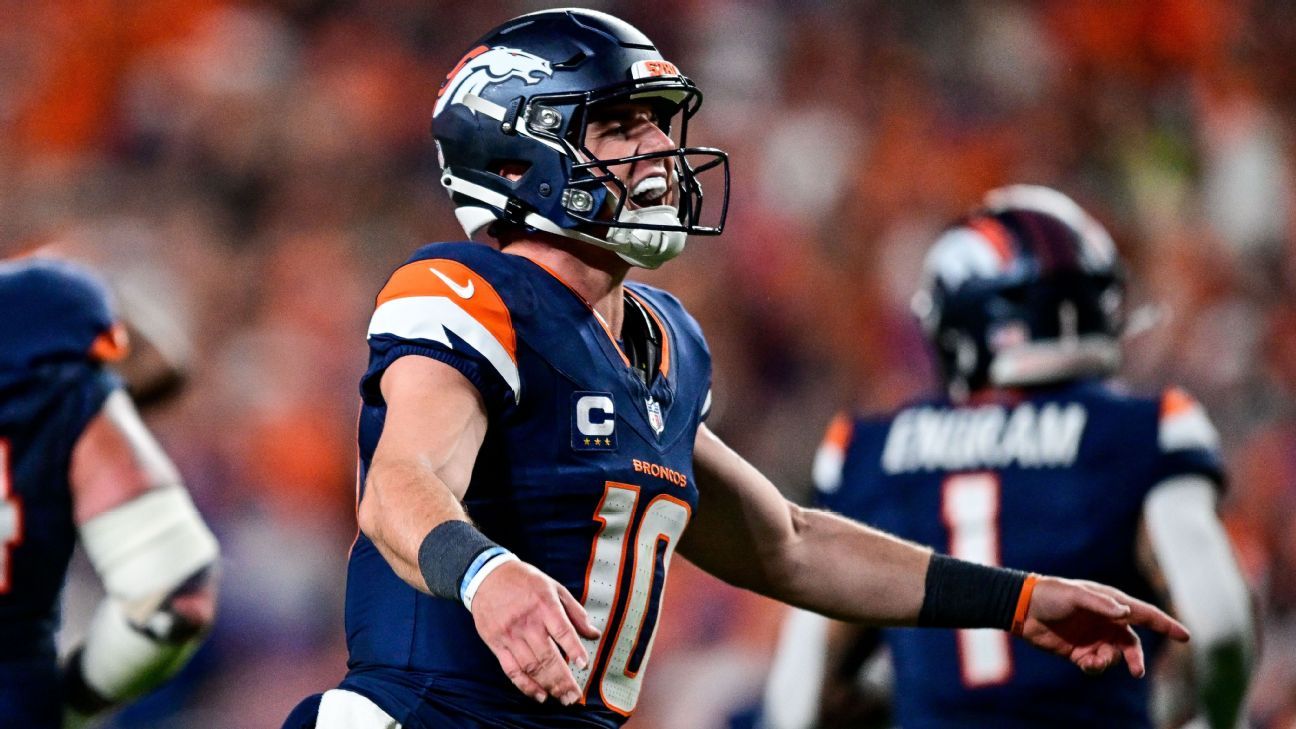
The Denver Broncos have won four games since 2023 after trailing by 14 or more points in the second half—a streak that has calcified into team identity. This past Sunday's 30-26 victory over the Los Angeles Rams marked the 10th fourth-quarter comeback win since Bo Nix arrived in 2024, and the franchise's first back-to-back double-digit second-half reversals (they beat Jacksonville by 10 in the third quarter in Week 2). Safety Talanoa Hufanga calls it "our DNA." Sean Payton, the architect of this improbable run, has deliberately pushed back against the noise. "We'll look at the tape and pull our hair out with some stuff," he said after the Rams game, signaling frustration with the holes that force comebacks rather than celebration of the comebacks themselves.
But the statistical reality deserves scrutiny. The Broncos scored only 10 first-half points across their first three games—a historic underperformance that has been corrected, not eliminated, by second-half execution. Against the Rams, they trailed 16-0 at halftime after being outgained 273-67, a deficit so severe their win probability bottomed at 6.0%. Against the Giants last season, Denver's win probability never exceeded 0.2% at its low point. These are not patterns of systematic improvement. They are outlier escapes. Payton himself acknowledged the unsustainability in the Thursday followup: "a start like that would be something we're frustrated about later if we don't get it cleaned up." The operative word is "later"—meaning this Sunday, when Denver travels to face San Francisco.
The 49ers (3-0) present a fundamentally different problem than the Rams did. Brock Purdy leads the NFL in QBR at 93.8 with nine touchdown passes and only one interception. San Francisco's offensive efficiency margin over the second-place Bills exceeds 14 points; the Bills, in turn, are closer to seventh place than to the Niners. By expected points added (EPA), the gap widens: San Francisco leads by more than 15 points, with the second-place team (Buffalo) sitting closer to eighth than to the leader. When a team executes at that level from the opening kickoff, the trailing team doesn't get a second-half reset. Elite offense + elite defense = foreclosure on comeback narratives.
For betting purposes, the Broncos' fourth-quarter heroics represent a variance phenomenon that has already been partially priced into the market via reputation recency. Public money has moved toward Denver in several recent windows because of the narrative: "This team always finds a way." That narrative dissolves against the 49ers' structural dominance. The core mechanism is simple: comebacks require the opponent to self-destruct or go conservative late. Against a 49ers team playing with a 14+ point efficiency margin, conservative game-management by San Francisco looks like a 35-17 blowout, not a nail-biter. Payton's offense, even when clicking in the second half, will struggle to generate the sustained drives necessary to overcome a first-half deficit against a team that doesn't allow them.
The Rams game was the Broncos' fourth outlier escape in a three-season window. It was also, likely, the last one we'll see against a top-tier defense before the market reprices Denver's "clutch gene" narrative downward. This Sunday's matchup is not a spot where past results—or team identity—offer edge.
NFL Intelligence — Football intelligence beyond the final score. Open NFL Intelligence →