NFL
Nix's Fourth-Quarter Heroics Mask Denver's First-Half Fragility—and It's a Betting Problem
The Broncos are 2-0 in one-score games this season, but Sean Payton is right to worry: teams that win through desperation rarely sustain it, and the market has started to notice.
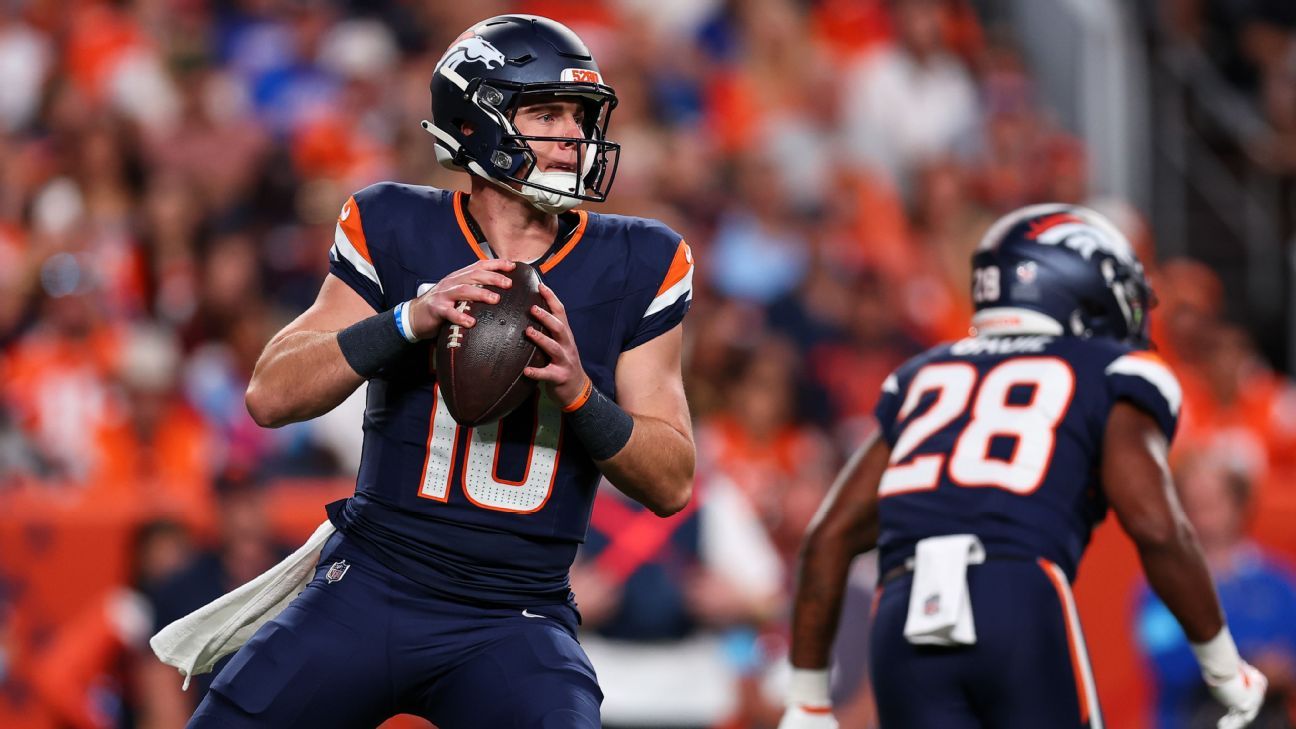
Denver's 30-26 victory over Los Angeles on Sunday night was the kind of game that creates false confidence. Down badly at halftime, the Broncos outscored the Rams 30-3 in the second half to escape with a one-score win—their second in as many weeks. Bo Nix engineered his 10th fourth-quarter comeback since the 2024 season began, more than any other NFL starter over that stretch. On the surface, it reads like resilience. In reality, it's a liability masquerading as clutch execution.
Sean Payton's postgame commentary cut to the heart of the problem. The Broncos generated just 67 net yards of offense in the first half—a 206-yard deficit relative to Los Angeles—and Payton made clear that fourth-quarter grit doesn't erase early-game incompetence. "That'll cost us in bigger games," he said. The coach is betting against his own team's trajectory, which tells you everything about the sustainability of this pattern. Comebacks require the opponent to cooperate; they cannot be a system.
Historically, teams that win consistently in one-score games do so because their baseline execution is sound and they finish tight contests cleanly. Denver is the inverse: they're leaking offensive yards in the first half, surrendering field position and momentum, then relying on fourth-quarter adjustments and Rams miscues to survive. The Broncos were a league-record 11-2 in one-score games last season, yet finished 9-8 and missed the playoffs. Regression is not a myth; it's math. Teams that win games they shouldn't at unsustainable rates compress toward their true talent level within a season.
For bettors, this creates a layering problem. The Broncos' opening lines have begun to soften relative to their record, as books have absorbed two consecutive one-score finishes and adjusted downward for volatility. But the real edge lies in the direction of that adjustment—and whether it has gone far enough. Denver's first-half offensive metrics (67 yards against a competent defense) suggest they are genuinely disadvantaged early in games. If they face a team that can sustain first-half pressure without gifting the Broncos a manageable deficit, the comeback script collapses entirely. Fade Broncos first-half spreads and team totals for the next 3-4 weeks; when Denver's early-game inefficiency meets a disciplined defense, the regression window opens.
Nix remains a talented passer, but his usage in fourth-quarter scenarios—where Denver has manufactured 10 comebacks in the past 23 months—inflates his prop lines disproportionately. His passing yards and touchdown totals reflect garbage-time volume that won't appear when the Broncos play competent opponents in better field position. Lean unders on Nix passing-yards totals against top-10 defenses until Denver proves they can execute in the first two quarters.
NFL Intelligence — Football intelligence beyond the final score. Open NFL Intelligence →