NFL · transaction
Kamara's Saints Stay Caps the Cap Bleed—But His Snap Share Remains the Real Risk
A restructured deal keeps the aging back in New Orleans, but the Saints' investment in two pricy running backs leaves little margin for error in Kamara's workload and efficiency.
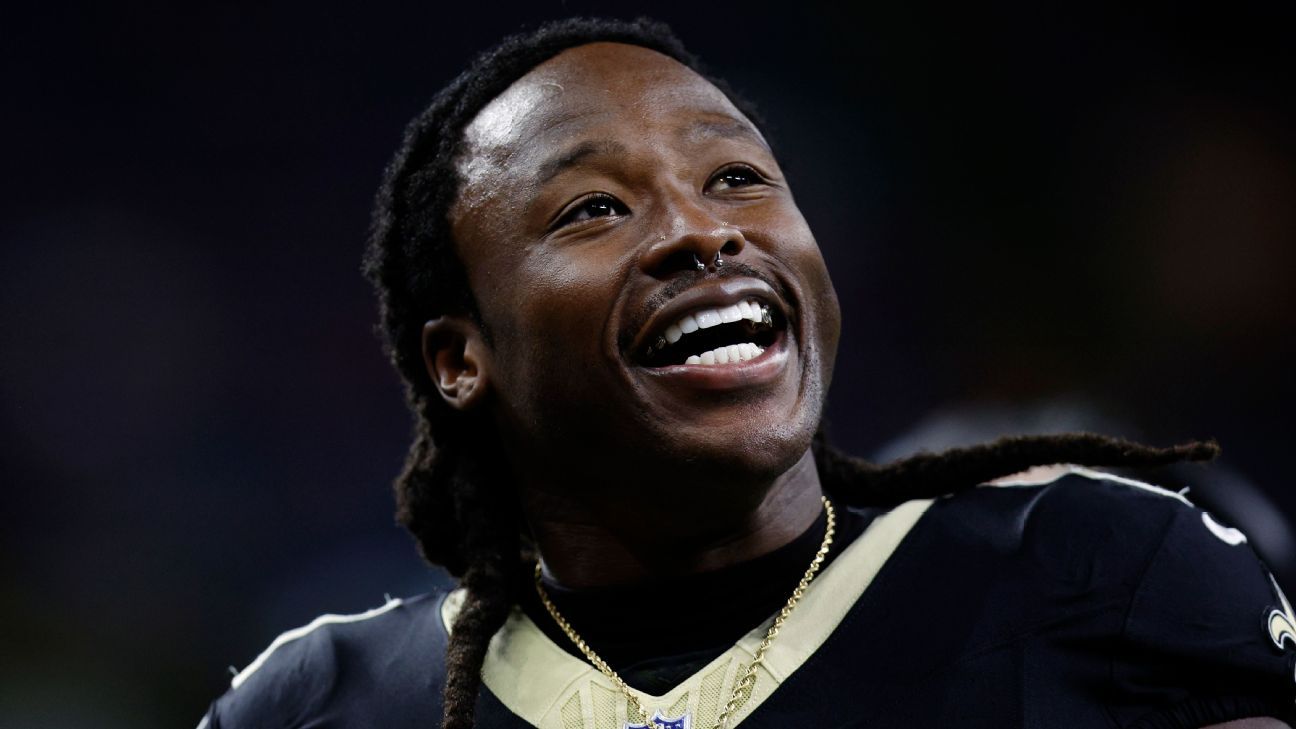
Alvin Kamara will remain a Saint in 2026 after the team reworked his contract on Wednesday, ending weeks of uncertainty about whether New Orleans would move on from the 30-year-old back. The restructure—details undisclosed—arrived as a salary-cap relief measure after Kamara was originally set to carry an $11.5 million base salary this season. That renegotiation, combined with a prior restructure in early March, signals the Saints are committed to keeping him despite the looming question of how much he'll actually touch the ball.
The math of the Saints' backfield has become claustrophobic. In March, New Orleans signed Travis Etienne Jr. to a four-year deal averaging over $12 million annually in its first three years—a serious commitment that overlaps directly with Kamara's presence. Before this rework, the two backs and the rest of the running back corps consumed $21 million in cap space, the most in the NFL. That kind of allocation only works if both players produce meaningfully and carry distinct roles. Kamara said during OTAs that he welcomed the pairing, citing past success alongside Mark Ingram and Latavius Murray. The compatibility argument is real; defenses do split focus when facing two capable backs. But Kamara's recent output complicates the narrative. Last season he posted career lows in rushing attempts and yards, a decline that partly drove the trade speculation that forced the Saints to repeatedly reassure him of his place.
The contract restructure itself doesn't change Kamara's snap allocation or route participation—it's purely accounting. What matters for betting is recognizing that the Saints' dual-back investment creates pressure on both players to demonstrate distinct, high-efficiency touches. Kamara turned 30 in December and enters training camp at 31, a threshold where running backs historically begin losing both volume and effectiveness. If the Saints' offense leans toward Etienne as the primary back (he's younger, fresher, and carries legitimate 1,000-yard upside), Kamara's touches could fall further, compressing both his yardage and scoring opportunities. Conversely, if the Saints actually deploy a true two-back system with meaningful snaps for both, Kamara benefits from fresh legs and defensive attention split. The restructure buys New Orleans cap relief, but it doesn't resolve the core constraint: there's one football and two hungry backs fighting for it.
For prop bettors, the angle hinges on work volume, not talent. Kamara's per-touch efficiency remains solid—his yards-per-carry average hasn't deteriorated, just the number of carries themselves. If snap-count projections point to 40-50% of offensive snaps (down from his historical 55-70%), his season totals could miss over-targets built on prior workload. Conversely, if the Saints use him heavily on passing routes and short targets—where he's always thrived—his receiving production could outpace rushing props. Early-season games will clarify the split. Bet against Kamara's total rushing yardage over for the season if you believe Etienne absorbs the heavier back role, but don't fade his receiving or anytime touchdown props if the Saints deploy him as a satellite weapon. The restructure keeps him in the building; the snap sheet determines whether that's a path to production or a slow decline.
NFL Intelligence — Football intelligence beyond the final score. Open NFL Intelligence →