Kamara's Contract Rework Signals Saints' Two-Back Gambit; Receiving Volume Faces Compression
By PropBetEdge Editorial Team ·
Alvin Kamara reworked his deal to stay in New Orleans alongside newly signed Travis Etienne Jr., but the arrangement threatens the receiving-back workload that has anchored his fantasy and prop value for nearly a decade.
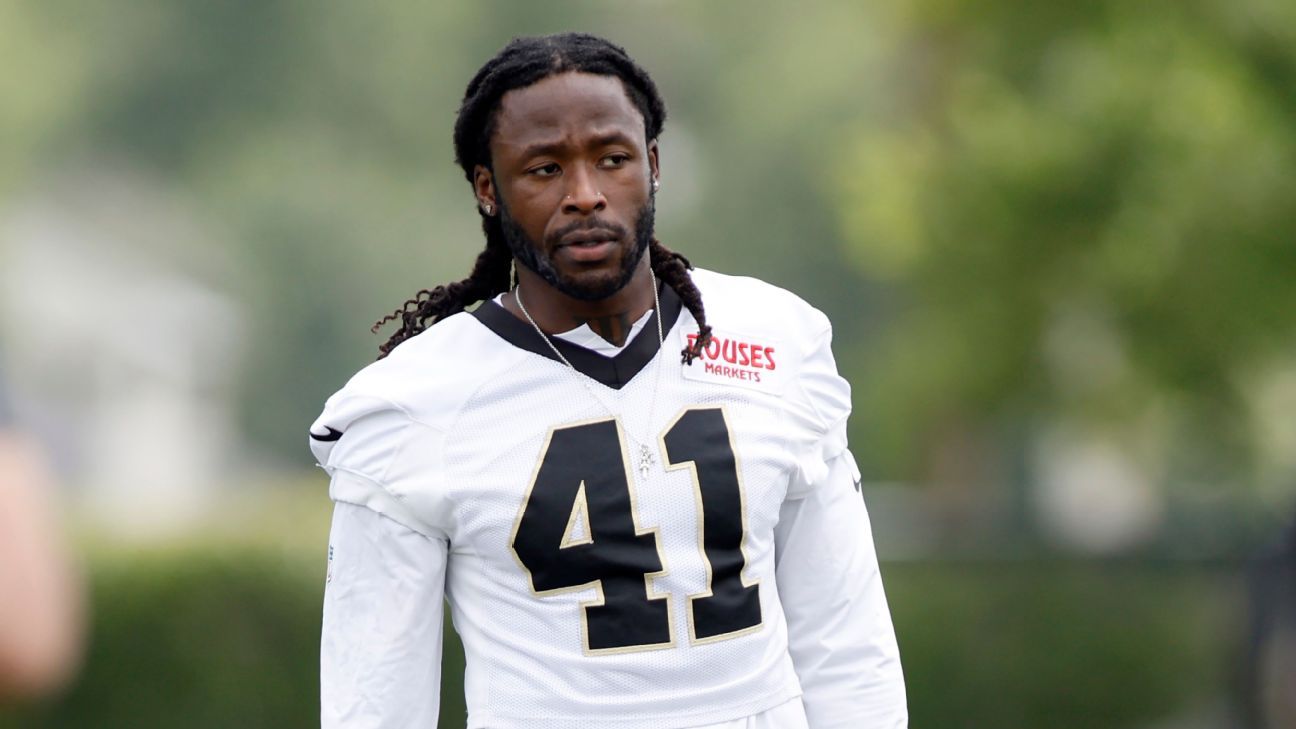
Alvin Kamara is staying put. After his worst statistical season as a pro in 2025, the Saints running back restructured his contract this summer to remain in New Orleans rather than test free agency at 31 years old. The move came weeks after the team signed 27-year-old Travis Etienne Jr. to a four-year, $48 million deal in March, signaling the franchise's intent to build around a complementary two-back system.
Kamara's willingness to rework his deal suggests organizational confidence he can still produce at a meaningful level—and his own framing suggests he sees it that way too. In June, he acknowledged the departures of Taysom Hill, Demario Davis, and the lingering contract tension with Cameron Jordan, calling it a necessary evolution of the roster. More telling: he invoked the "Boom and Zoom" era with Mark Ingram II in 2017, when the pair became the first running-back tandem to each log 1,500 yards from scrimmage in the same season. Kamara earned Offensive Rookie of the Year honors that year, and his ceiling clearly hasn't been forgotten by either party.
But the 2017 comparison contains a hidden tax on Kamara's prop profile. That season, he averaged 5.2 receptions per game and accumulated 826 receiving yards alongside Ingram's heavier rush distribution. Nine years later, Etienne arrives as a more well-rounded option than Ingram was—capable of both catching and running—and the Saints' offense has shifted toward more pass-heavy schemes. The risk isn't that Kamara loses snaps; it's that his receiving volume compresses as Etienne absorbs passing-game work that once fell to Kamara by default. Etienne averaged 6.8 receptions per game in Jacksonville over three seasons before his trade to Houston and subsequent release, suggesting he will factor immediately into the passing attack.
Markets have yet to fully price the volume redistribution. Kamara's receptions and receiving yards lines will likely open at or near his 2025 pace—already depressed by his poor season—but the structural opportunity cost of the Etienne pairing hasn't been baked in. If the Saints lean on two-back efficiency similar to 2017, Kamara could see 10-15 fewer receiving yards per game compared to his career average. His rushing volume may stabilize, but receiving props face elevated downside risk.
The contract rework is a green light on Kamara's durability and intent, but not a green light on his receiving opportunities. Fade receptions and receiving yards props for Kamara at opening lines; they will likely overweight his historical per-game rates and underweight the concrete shift in personnel.