NFL · transaction
Rams, Vikings, Eagles Clear Cap Space With Pre-Season Restructures
Three NFL teams executed contract restructures to create 2026 salary cap relief, converting base salaries and incentives into signing bonuses while adding void years to push cap hits forward.
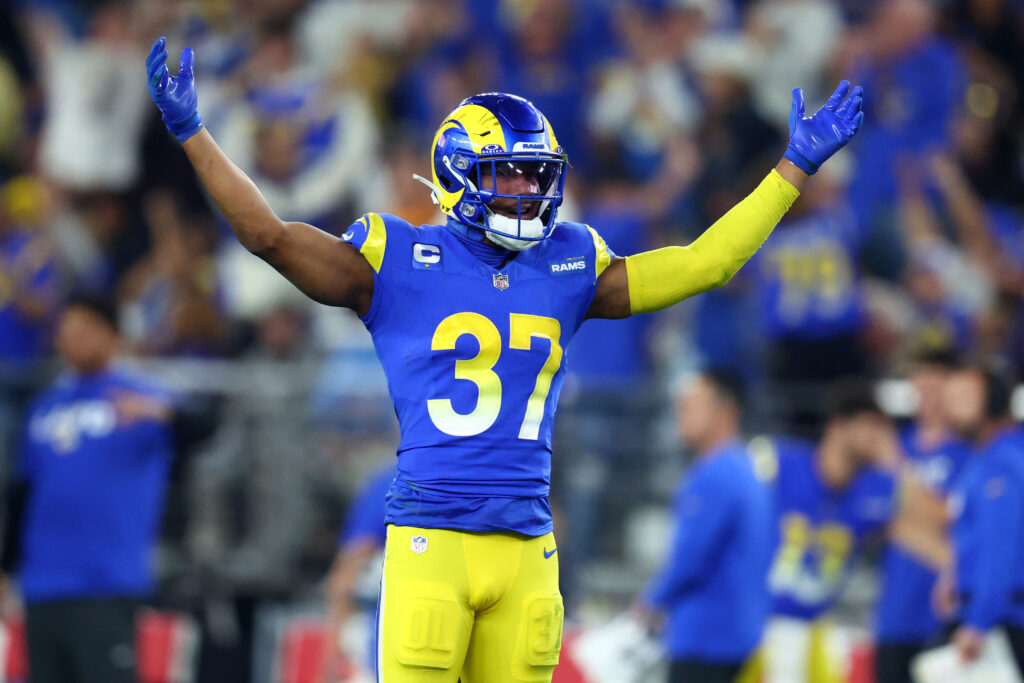
The Rams, Vikings, and Eagles all moved quickly to restructure veteran contracts before the 2026 season began, per OvertheCap.com and ESPN reporting. Los Angeles reshaped safety Quentin Lake's three-year, $38.25MM extension by converting $4.29MM of his base salary into a signing bonus and adding two void years at $857K cap hit each, netting $3.4MM in immediate relief. Minnesota followed suit with cornerback Isaiah Rodgers, converting $1.5MM in expected playtime incentives into a bonus and clearing $1.2MM of cap space, with void years structured to defer the majority of future hits. Philadelphia took the most aggressive approach with outside linebacker Nolan Smith, addressing both 2026 and 2027 cap calendars—converting $1.24MM in salary this year and restructuring his fifth-year option by converting $12.5MM into an option bonus, freeing $10MM in 2027 space while adding four void years across the remaining deal.
These moves reveal the familiar offseason calculus: teams that miscalculated their cap positions or prioritized spending elsewhere now rely on restructuring to stay compliant. The common architecture—base salary conversions, incentive restructures, and void-year extensions—tells a story about which rosters management believes can compete now versus which it's preparing to shed down the line. The Rams' $3.4MM relief suggests a close-call scenario; the Eagles' dual-year approach indicates deeper structural pressure.
For fantasy and prop purposes, restructures rarely signal performance decline in the immediate season, but they do telegraph organizational intent. A safety like Lake, freshly restructured with cap hits compressed into near-term void years, stays in the Rams' plans at least through 2026. His defensive snap count and tackle volume—core defensive prop metrics—remain tied to scheme and starter designation, not cap gymnastics. Rodgers' incentive restructure is more telling: converting likely-earned playtime incentives to a bonus means the Vikings are confident he'll be on the field consistently. That structural confidence, embedded in a contract renegotiation, can reinforce coverage snap rates and target-share stability for pass-defense metrics. Smith's elaborate five-year void structure, by contrast, may hint at the Eagles' uncertainty about his long-term fit; teams don't add that many void years to extension-track pass rushers they plan to build around.
The cap relief itself doesn't move prop lines, but the organizational signal buried in restructure terms sometimes does. When a team converts likely incentives (which assume production targets are met) into guaranteed bonus structure, that's the front office saying: "We expect this player to hit those benchmarks." For Rodgers specifically, the Vikings' willingness to restructure incentives suggests confidence in his defensive role staying intact. For Lake, a straightforward cap conversion with void years is more neutral—less a statement about role conviction, more a statement about cap mismanagement. The prop angles here are residual: monitor snap counts and coverage assignments over the next 2-3 weeks to confirm whether these restructures precede any role shifts, and if not, treat them as noise.
NFL Intelligence — Football intelligence beyond the final score. Open NFL Intelligence →