NFL · injury
Packers Lose Reed for Season as Neck Injury Ends Second-Year WR's Campaign
Green Bay's receiving corps loses its second-most targeted weapon after Week 2 injury, forcing immediate adjustment to air-attack architecture.
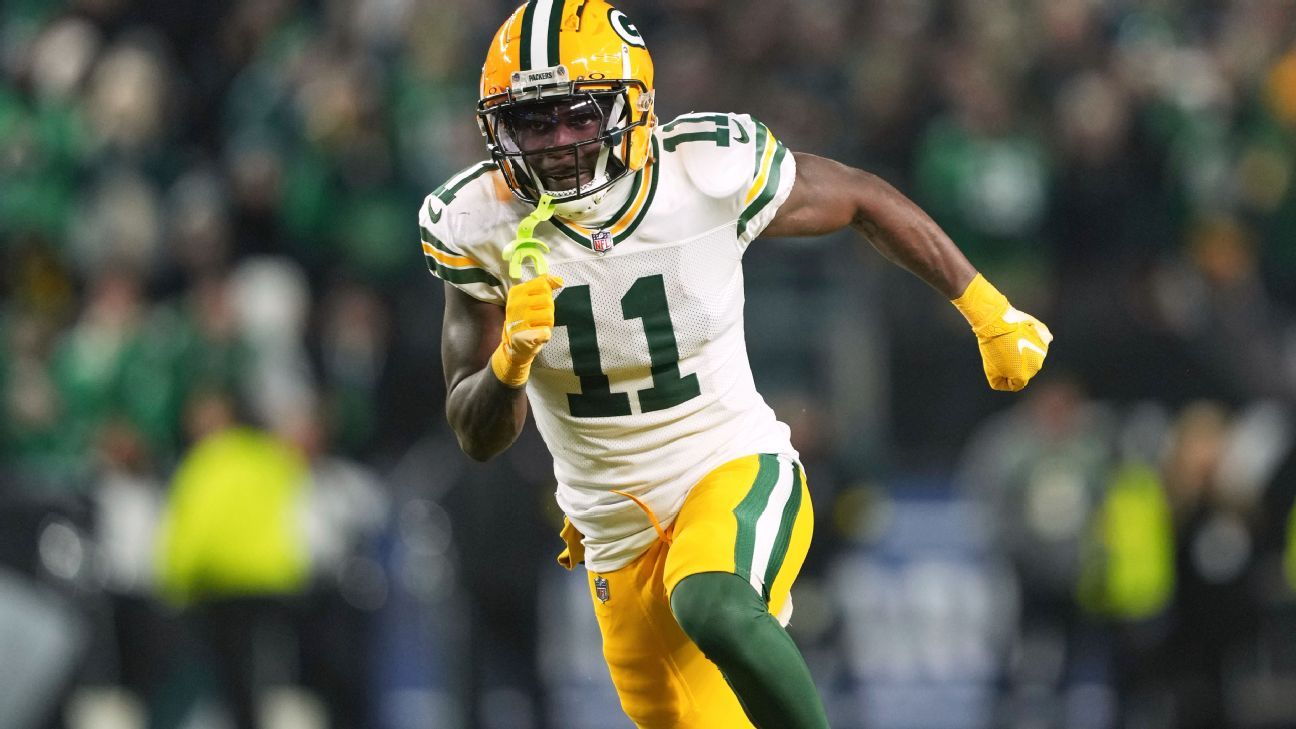
Green Bay has placed wide receiver Jayden Reed on injured reserve due to a neck injury suffered in Week 2 against the New York Jets, sources told ESPN. The 26-year-old is expected to miss the remainder of the season as he continues recovery. Reed, who signed a three-year, $50.25 million extension in April, appeared in just two games this season, recording four receptions for 24 yards before the injury sidelined him.
Reed was drafted in the second round in 2023 and had emerged as a fixture in the Packers' pass game. Over his three-year career, he compiled 142 receptions for 1,881 yards and 18 total touchdowns. His absence creates a significant void in Green Bay's receiver rotation at a critical juncture—the offense now enters the second half of the season without the depth it relied on for vertical and intermediate spacing.
The timing of Reed's placement is particularly costly. The Packers signed him to that lucrative extension precisely because he was expected to anchor a receiving arsenal alongside their primary targets. With only four catches through two weeks, he hadn't yet established the catch volume that would define his 2026 season. His injury occurred early enough that the offense has time to recalibrate, but not so early that Green Bay can easily replace that production via trade or waiver.
From a betting lens, Reed's absence reshapes Packers passing distribution. Whoever assumes his slot and intermediate targets—whether that's a secondary receiver elevated into heavier usage or a adjustment toward reliance on tight ends—will see increased opportunity. Books will need to reprice the Packers' receiving corpse downward overall; expect team passing-yard totals and per-game WR receiving-yard props to drift lower until the market fully absorbs the redistribution. The loss of a receiver who was averaging 2 targets per game removes efficiency from the air attack, meaning explosive plays become harder to generate and checkdown volume likely rises. Defenses can now stack the box with added confidence, which may also suppress Packers rushing-game efficiency in the weeks ahead.
NFL Intelligence — Football intelligence beyond the final score. Open NFL Intelligence →