NFL · milestone
Packers' 1-2 Collapse Exposes Crippling Depth Behind Parsons and Jacobs
A 35-14 home loss to Atlanta without two franchise cornerstones has Green Bay's offense and defense operating at league-worst capacity, with return timelines unclear and betting totals vulnerable to further deterioration.
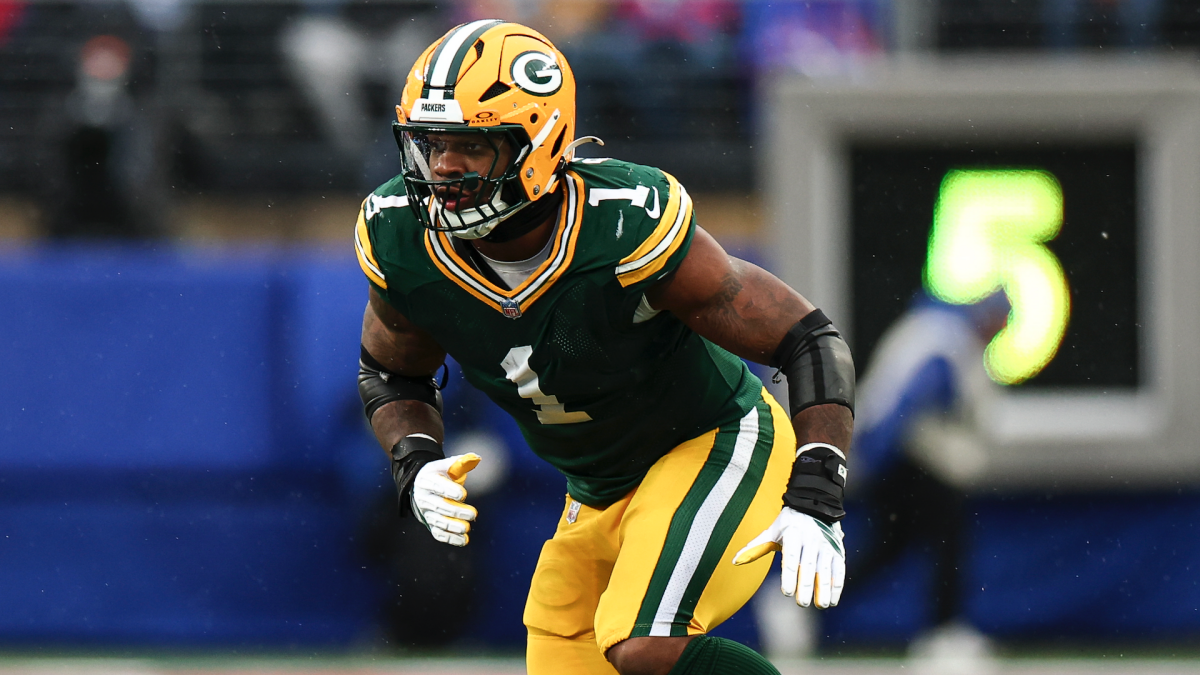
Green Bay's 1-2 start—their worst in eight seasons under Matt LaFleur—became official Thursday night when the Falcons dismantled the Packers 35-14 at Lambeau Field, ending a 13-game home-opener winning streak and exposing how thin the roster runs without its two most productive players. Micah Parsons and Josh Jacobs, injuries and legal matters respectively sidelining them since offseason, left Green Bay's defense helpless against Atlanta's run game and the offense incapable of balancing play-calling. Bijan Robinson galloped for 194 rushing yards and two touchdowns on 29 carries; the Packers generated 17 rushing yards total, their lowest single-game output since 1999. That disparity didn't happen by chance.
Parsons, an elite pass-rusher and run-defender, remains on the physically-unable-to-perform list after tearing his ACL and meniscus in his left knee in December 2025. Though he suffered the injury roughly nine months ago, LaFleur stated on September 17 that Parsons was still "a couple weeks away" from activation, and Green Bay has not yet opened his 21-day practice window—meaning he will sit out at least one more week before even stepping onto the practice field. The defensive line generated just one sack and mounted minimal pressure on Falcons debutant Michael Penix Jr., who was playing his first game after a season-ending injury last November. Without Parsons anchoring both the pass rush and the box, Atlanta's offensive line dominated at the point of attack.
Jacobs, the Packers' leading rusher the previous two seasons with 2,258 rushing yards and 28 touchdowns in 32 games, remains unavailable due to an offseason arrest and a groin injury suffered during training camp. He's on the commissioner's exempt list, a designation that typically precedes a suspension determination. The league may credit time on the exempt list as "time served" should a suspension be handed down, but no timeline has been announced. Without him, Green Bay has deployed Marshawn Lloyd and Kaleb Johnson—both receiving four carries Thursday—and interim lead back duty fell to quarterback Jordan Love on scrambles. The offensive result was predictable: six consecutive drives without points, including three three-and-outs, turned a one-possession lead into a 20-point deficit. Over the first three weeks, the Packers averaged just 64.5 rushing yards per game, the league's worst mark.
For bettors, the absence of these two playmakers creates a structural valuation problem that extends beyond single-game scoring. Green Bay's team totals have been inflated by prior-season expectation and Love's elevated completion and yardage profile; without Jacobs to establish run balance, defenses stack the box and force Love into extended passing situations that increase both sack vulnerability and interception risk. Over the team's first three games, Love has thrown five interceptions—a projection pace that would obliterate any reasonable season-long prop. Parsons' absence, meanwhile, continues to handicap run defense; Robinson's efficiency against Green Bay (6.7 yards per carry) reflects not just Atlanta's strength but the Packers' depth gap. Until Parsons returns—likely two to three weeks minimum from today—opposing running backs will face light boxes and minimal gap integrity. Jacobs' timeline remains opaque; even if the exempt-list clock favors the Packers, his return is weeks away at minimum.
The betting implication is acute: Packers team totals in the 20–23 point range are still priced as if both players are available. Love's passing volume will remain artificially elevated (good for his yardage and completion props) but interception rate will stay dangerous. Opposing rushing attacks will continue to exploit the gap left by Parsons' absence. The Packers' remaining schedule over the next two to three weeks features matchups against teams with strong run games—Kansas City and Detroit both rely heavily on ground attack—and neither Parsons nor Jacobs are coming back before those contests. Fade Packers team totals until at least early October, when one or both are likely to return.