NFL · injury
McMillan's Knee Injury Ends Another Season Before It Started for Tampa Bay
A PCL sprain in Week 3 sidelines the Buccaneers' third receiver for six to eight weeks, reshuffling an already thin passing-game pecking order and forcing the team to lean on unproven depth.
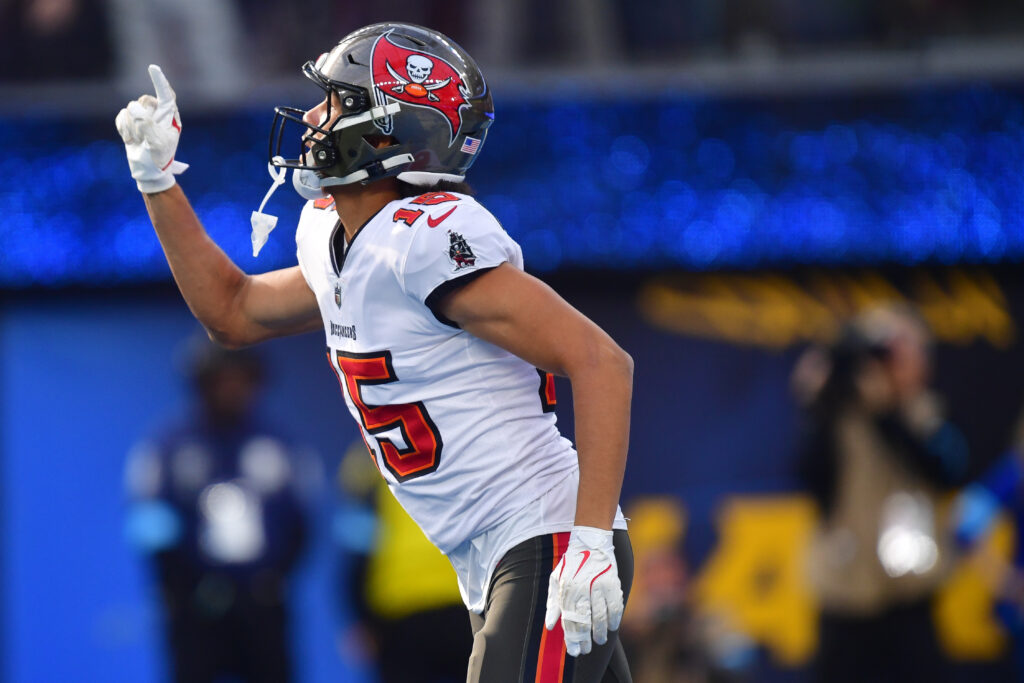
Jalen McMillan's 2026 season lasted nine snaps. The Buccaneers' third-year wideout sustained a PCL sprain in Sunday's loss to Minnesota and now faces a six- to eight-week recovery window, per ESPN's Jenna Laine, with the team seeking a second opinion to clarify the timeline. For a player perpetually shadowed by injury, the timing could hardly be worse: McMillan had finally found field time after a preseason neck fracture cost him Week 1 and Week 2, then re-aggravated his left knee—the same one injured during training camp—just as he appeared ready to anchor Tampa Bay's receiving corps.
Context makes this sting differently than a typical mid-season sideline. McMillan was drafted in the third round in 2024 and emerged as a productive rookie despite Chris Godwin's injury, posting 461 receiving yards and eight touchdowns in 13 games. Last season, despite missing Week 1-14 with a preseason neck break, he averaged 11.9 yards per target across four late-season appearances—efficient enough to suggest he could be a reliable option. The departure of Mike Evans this offseason tilted the target hierarchy toward McMillan; he was supposed to settle into the WR3 role behind Godwin and 2025 first-round pick Emeka Egbuka. Instead, he's managed only nine snaps across three weeks, catching zero passes before going down.
The Buccaneers now have breathing room to audition alternatives. Rookie Ted Hurst, a third-round pick this year, has collected six receptions for 103 yards in limited reps and now inherits expanded snaps at the three spot. Seventh-rounder Tez Johnson (two catches, 57 yards on seven targets) offers a lower-leverage option if Hurst falters. Neither projects as a reliable redzone target or down-the-field separator, which matters for a Buccaneers offense built around Baker Mayfield's arm talent and Godwin's intermediate route tree.
For prop bettors, McMillan's absence tightens the Buccaneers' passing-game distribution in a specific way: it's not a massive talent vacuum—the team's pass-catchers are still above-average—but it concentrates leverage into fewer players. Godwin's target share will tick upward, particularly in the red zone, where the Buccaneers ranked in the middle third of the league before this injury. Mayfield's volume per game should hold or grow slightly; the question is who's catching those passes. If Hurst proves unreliable, expect Godwin to see an even higher percentage of contested throws, which can suppress his efficiency even as his yardage total climbs. This is a subtle shift: Mayfield passing yards may stay flat or even increase, but Godwin receiving yards and red-zone touches become a more volatile proposition, since he'll be asked to do more heavy lifting against defenders who know exactly where the ball is going.
McMillan's recovery projection of six to eight weeks places a return window roughly between late November and mid-December, assuming no setbacks. That's well into the fantasy season and playoff push—not meaningless, but late enough that the Buccaneers will have already established their passing-game identity without him. His injury history (two major knee issues in three years, plus the neck fracture last season) is starting to form a pattern. For the Buccaneers' offense over the next eight weeks, assume Godwin and Egbuka absorb the secondary targets and Hurst gets a real shot to prove he belongs. For McMillan, this is now the third consecutive season where injury has derailed his availability window; his 2027 free-agency value just took a material hit.
NFL Intelligence — Football intelligence beyond the final score. Open NFL Intelligence →