NFL
Josh Downs Primed to Break Out; Steelers' Offense Still Mired in End Zone Drought
Two contrasting Week 3 narratives: a Colts receiver inheriting a starting role against a vulnerable secondary, and a Steelers offense that hasn't found the end zone in two straight games.
Week 2 left the NFL reeling from quarterback injuries—Jaxson Dart's season-ending knee injury, Jayden Daniels' dislocated elbow, and Caleb Williams' hamstring strain dominated headlines. Yet underneath those catastrophic losses, two storylines are quietly setting up for Week 3 with genuine betting consequence.
Josh Downs stepped into the Indianapolis Colts' primary receiving role on Sunday against Kansas City and immediately validated the advanced-metrics community that had flagged him as a deep sleeper. With Alec Pierce sidelined by a heel injury, Downs caught seven of nine targets for 72 yards, notching six of those receptions after Pierce left the field. More revealing: Downs leads the NFL in average separation score, a metric that tracks his ability to create clean catch windows independent of scheme. That edge doesn't evaporate week to week. Houston's secondary, which allowed both DJ Moore (100 yards) and Dalton Kincaid (130 yards) to eclipse the century mark in Week 1, hasn't tightened its coverage since. The Texans secondary is demonstrably softer than it was last season. Downs faces a Colts offense that now has clarity at receiver—he is the focal point—and a defense that has already shown it struggles to blanket athletic slot receivers in space.
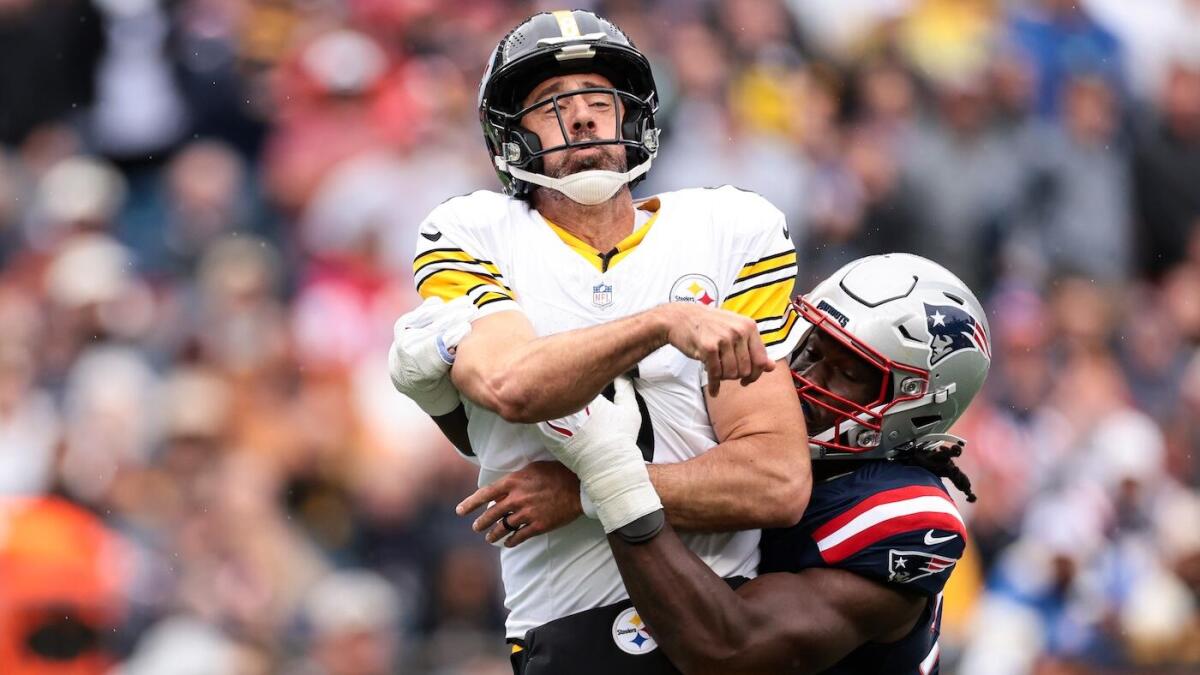
The Steelers present the inverse problem. Pittsburgh's offense remains structurally broken: 11.5 points per game (30th), 249.5 yards per game (30th), 3.8 yards per play (32nd), and a 20% third-down conversion rate (31st). Aaron Rodgers has gone 0-for-11 on throws of 20-plus air yards and 0-for-6 when targeting DK Metcalf deep. Last Sunday's 20-3 loss to New England marked the second consecutive game the Steelers failed to reach the end zone—a rarity even for struggling offenses. At 33.3% red zone touchdown efficiency (tied 28th), Pittsburgh has no answer for teams that can hold them to field-goal attempts. The Bengals, who held Cincinnati's own receivers to modest yardage totals last week despite facing dynamic talent, are equipped to replicate New England's defensive approach. There is nothing in the Steelers' two-game tape suggesting this drought ends.
For Downs, the edge is mechanistic: elevated target share (operating as a clear receiving option rather than a rotational piece) paired with a secondary that has already proven vulnerable to precisely his archetype—athletic, quick-strike receivers who win on separation. That pattern is durable across multiple opponents (Moore, Kincaid already did it to Houston). For the Steelers, the problem is equally mechanical: an offense built on pace and containment rather than vertical threat, an aging quarterback showing no chemistry on deep routes, and a Bengals secondary that has already demonstrated competence against receiving talent. Downs receiving 100-plus yards is a multi-opponent pattern backed by statistical advantage; Steelers scoring under 23 points is a two-game trend backed by schematic collapse.