Henry's Historic Week 1 Reframes the Rushing-Record Conversation
By Justin Erickson ·
Derrick Henry's three-touchdown performance on September 13 isn't just proof of concept—it's a data point that fundamentally changes the math on whether he can catch Emmitt Smith.
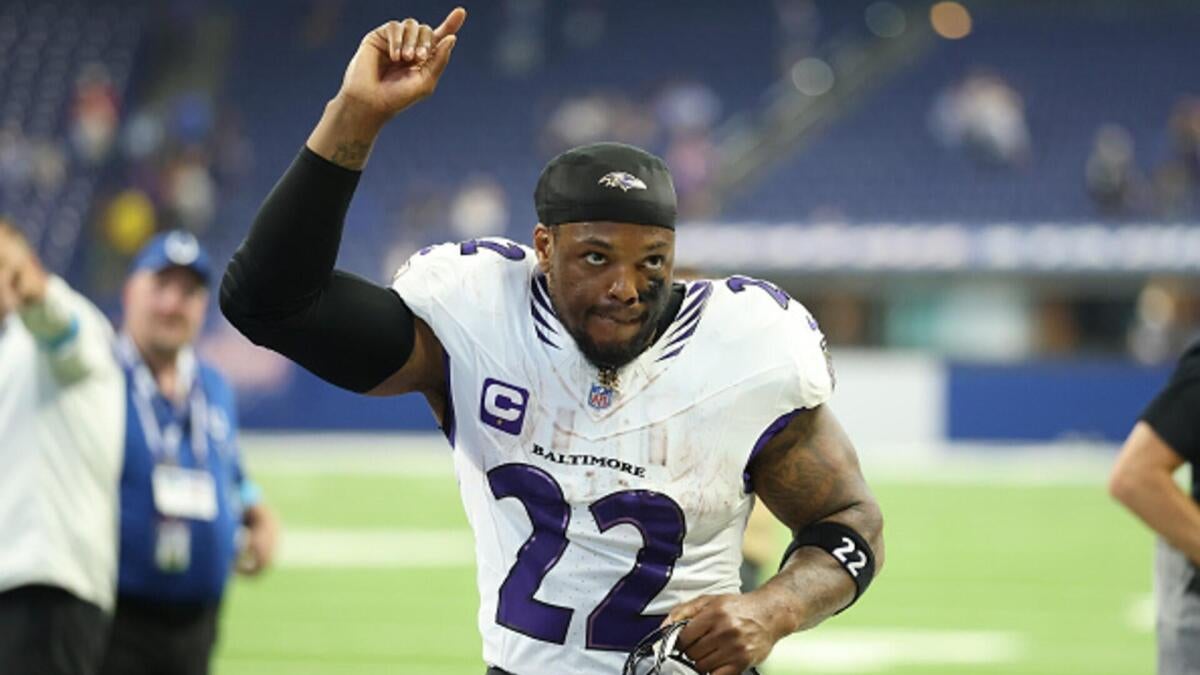
Derrick Henry opened the 2026 season with 144 rushing yards and three touchdowns in Baltimore's Week 1 win, moving into third all-time in career touchdown runs with 147. The performance arrived three days ago and carries real weight for one simple reason: it proves that at 32, Henry is not following the typical age-curve trajectory that has buried most running backs before their mid-30s.
The record he's chasing—Emmitt Smith's 18,355 career rushing yards, untouched since 2002—sits 5,193 yards ahead of Henry's current 13,162. On paper, that's a three-to-four season sprint at his career average of 1,473 yards per year since 2018. The math works. The harder question is durability. Smith retired at 35 with his record intact; running backs don't typically age into their mid-30s without steep production cliffs. Curtis Martin and John Riggins are the notable exceptions, but both benefited from reduced workload exposure earlier in their careers. Henry hasn't had that luxury. Yet last season—age 31—he recorded 1,595 rushing yards, ranking third all-time for a player that age. And now, at 32, Henry has already shown explosive touchdown efficiency in Week 1, the kind of peak-load performance that suggests his legs haven't deteriorated into the decline phase that typically awaits 32-year-old backs.
For prop bettors, Henry's rushing-yard projection for the season becomes the immediate focal point. If Week 1 reflects sustained capability rather than a single high-volume outlier, his seasonal rushing total (currently hovering near 1,700 yards for full-season projection) has legitimate upside. The Ravens are committed to Henry as their featured back; they signed him to be the centerpiece of this offense. That's a usage signal. Combined with his explosive Week 1 performance—three touchdowns in a single game is elite efficiency—the market may have initially priced Henry's season total conservatively, anchoring to age-31 outcomes rather than adjusting for Week 1's proof that he still operates at a different level than typical 32-year-old runners. If you're seeing Henry's seasonal rushing total at 1,700-1,750 yards, that number likely bakes in age-curve regression that Week 1 just contradicted. The real edge isn't in a directional guess about whether Henry breaks Smith's record—that's a three-year narrative, not a single-season prop. The edge is in recognizing that Henry's continued elite performance narrows the probability gap so sharply that it should influence how aggressively the market prices his near-term volume (this season, next season). He's not a lock to catch Smith. But he's far more likely today than the market priced him 72 hours ago.
Secondary touchdown-run props carry similar mechanics. Henry enters Week 2 with 147 career touchdowns runs, needing 18 more to match Smith's 164. If he maintains his current pace (he's averaging one touchdown run every 6.5 carries based on Week 1 volume), he could reach that milestone within 15-18 games, which spans the remainder of the 2026 season and into 2027. Anytime touchdown props for Henry should reflect elevated probability as long as the Ravens continue to feed him in the red zone as they did in Week 1. That's the mechanical edge: usage continuity plus demonstrated efficiency in a position (goal-line back) where he showed mastery this past weekend.