NFL · injury
Hall's Quad Injury Guts Jets Running Game at Worst Possible Moment
A week-to-week quad injury to Breece Hall arrives as the Jets' rushing attack has already cratered, forcing a depth rotation that could reshape game flow and prop targets for weeks.
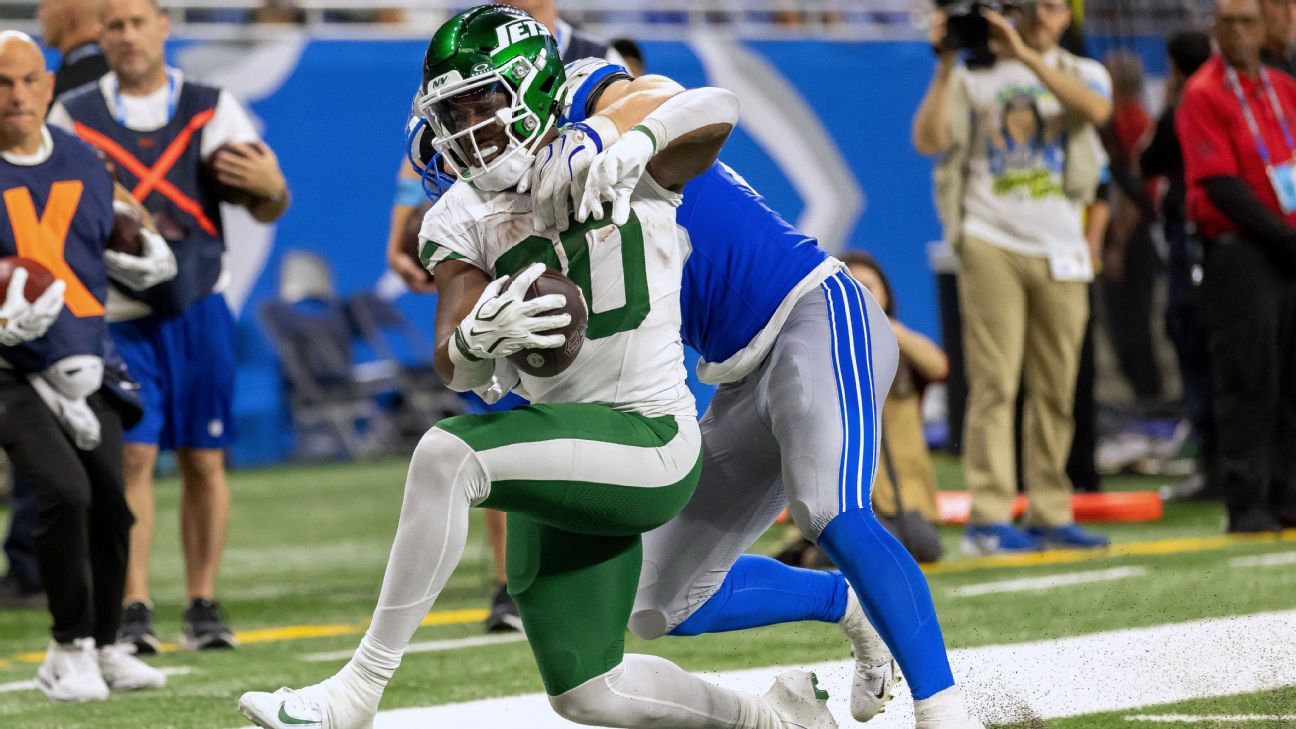
New York Jets running back Breece Hall suffered a right quadriceps injury in Sunday's 31-24 loss to Detroit and is considered week-to-week, sources told ESPN and NFL Network on Monday. An MRI revealed no long-term structural damage—a measure of relief in an organizational context where health has become a luxury. Hall is unlikely to play Sunday against Chicago, depriving the Jets of their only functional back at the precise moment their ground game has become a liability.
The timing compounds an already acute problem. Hall exploded for 152 rushing yards in the season opener against Tennessee, signaling the offense had found its anchor. Since then, the Jets have managed 67 yards in Week 2 and 58 yards in Week 3, with Hall himself averaging just 2.1 yards per carry in the Detroit loss on 29 attempts. That's not a minor slump—that's a system in failure. The Lions' defensive front consistently won the line of scrimmage, and losing Hall removes the only back capable of creating yards in heavy contact. Coach Aaron Glenn acknowledged the urgency Monday: "[The run game] is one area that we have to fix... that's been a strong point of ours, especially after the first game."
Third-year backs Braelon Allen and Isaiah Davis will inherit the workload against a Bears defense that allowed 139 rushing yards per game through Week 3. The opportunity exists—Chicago is vulnerable in run defense—but the Jets will likely lack the personnel to exploit it. More critically, the absence of Hall's volume triggers a cascading effect on offensive structure: fewer rushing attempts mean more passing downs, which invites pressure and increases interception exposure for Aaron Rodgers. Allen and Davis are reserve-grade talents; neither commands the defensive respect Hall does.
For prop purposes, the injury fundamentally reframes Jets team totals and passing volume. The 2.1-yard average Hall posted before the injury reflects a team that couldn't establish the run, yet losing him entirely will paradoxically force more reliance on pass-heavy schemes against competent run defenses. This is the inverse of what markets typically price: the Jets' team total may move down (fewer opportunities overall), but passing attempts and sack exposure may move up (desperation passing). Rodgers' interception prop and sack props become relevant again—desperation pace against a Bears edge rusher group built to generate pressure. Chicago's exterior rush generated 34 quarterback hits through three weeks, eighth in the league. Against a Jets team suddenly forced into passing downs with backup running back rotations, that sack line could offer value on the over, contingent on Hall's availability remaining unconfirmed closer to Sunday.
NFL Intelligence — Football intelligence beyond the final score. Open NFL Intelligence →