NFL · injury
Collins Returns to Texans Offense at Critical Juncture; Receiver Adds Volatility to Struggling Unit
Nico Collins is back after a two-game hamstring layoff, but Houston's 0-3 start and anemic offensive output without him raises questions about whether his return alone closes a widening gap.
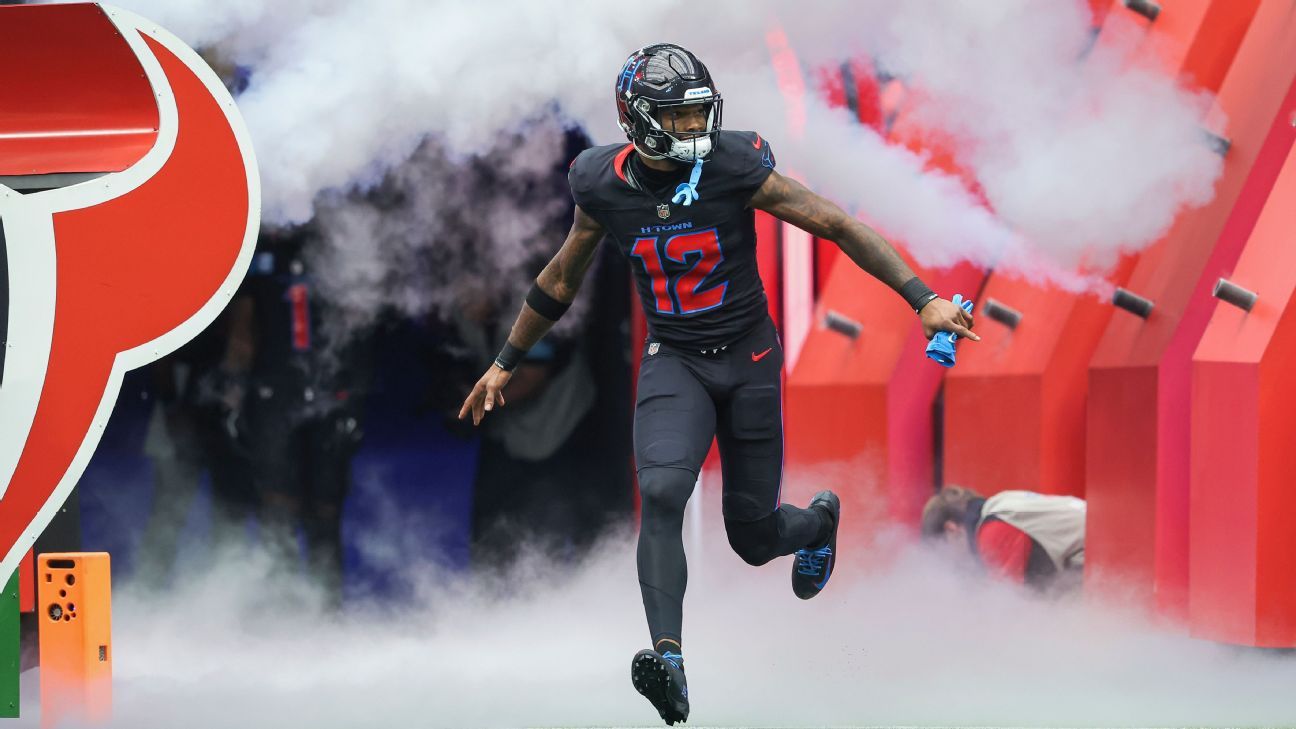
The Houston Texans will have Nico Collins available Sunday against the Dallas Cowboys, marking his return from a hamstring injury suffered during Week 2 practice. Collins missed Weeks 2 and 3, sitting out games against Cincinnati and Indianapolis as Houston fell to 0-3. The timing of his activation is urgent—the Texans are now in territory where historical precedent offers almost no comfort. Only the 1992 San Diego Chargers have recovered from an 0-4 start to reach the playoffs, a bar so rarely cleared that Houston's margin for error has effectively vanished.
The gap between Collins present and Collins absent is stark. In Week 1 with him on the field, the Texans scored 31 points against Buffalo. Over the subsequent two games without him, the offense managed 11.5 points per game combined. That 19.5-point swing isn't entirely attributable to one receiver, but it illustrates the leverage Collins holds in an offense still searching for identity. Coach DeMeco Ryans framed Collins' role plainly: "He's an explosive playmaker any time he's touching the ball; any time he's on the field, he's a threat. Defenses have to prepare for him and they have to do different things to adjust for him." Translation: Collins forces Dallas to allocate defensive resources that would otherwise flow toward containment schemes or coverage rotations designed to suffocate other weapons.
Guard Ed Ingram also returns after missing the last two games, restoring some structural integrity to the offensive line. The two-pronged injection—an elite receiver and a starting right guard—should theoretically flatten some of the offensive turbulence that accompanied their absences. But turnarounds built on singular reinstatements often disappoint. The 2025 Texans offer a counterpoint: down 0-3 last season, they won 12 of 14 to salvage a playoff berth. Context matters. That run happened because multiple corrective elements clicked simultaneously, not because one player returned.
For prop purposes, Collins' reactivation creates asymmetric risk. His receiving-yards line will likely move upward—sportsbooks price him as available and production-ready after a two-game absence. But game scripts matter more than individual readiness. If the Texans fall behind early, which is plausible against a Dallas defense that has shown competence, Houston will be forced to tempo and volume-pass out of desperation. Collins will see target increase by necessity, not by offensive design. Conversely, if Houston stays competitive, game flow normalizes and his volume moderates. The prop angle isn't "Collins returns, take the over." It's that his reentry introduces variance: Dallas will sell out on containing him, which either opens check-downs and underneath play-action routes (depressing his individual totals) or forces Houston to attack downfield more aggressively through Collins (elevating them). The market currently prices him as fully operational; the reality is he's entering a 0-3 emergency where offensive philosophy may still be in flux. Early numbers on Collins receiving yards over 60-65 carry edge because they assume consistent opportunity rather than game-script dependency. That edge compresses as the game approaches and markets recalibrate based on how aggressively Dallas schemes to account for his presence.
NFL Intelligence — Football intelligence beyond the final score. Open NFL Intelligence →