Texans Enter Week 2 Without Collins, Ingram, Clowney—Depth Charts Tested Early
By Ty Whitney ·
Houston's receiving corps and offensive line both take injuries heading into Cincinnati, forcing a second straight week of lineup shuffles against a top-tier defense.
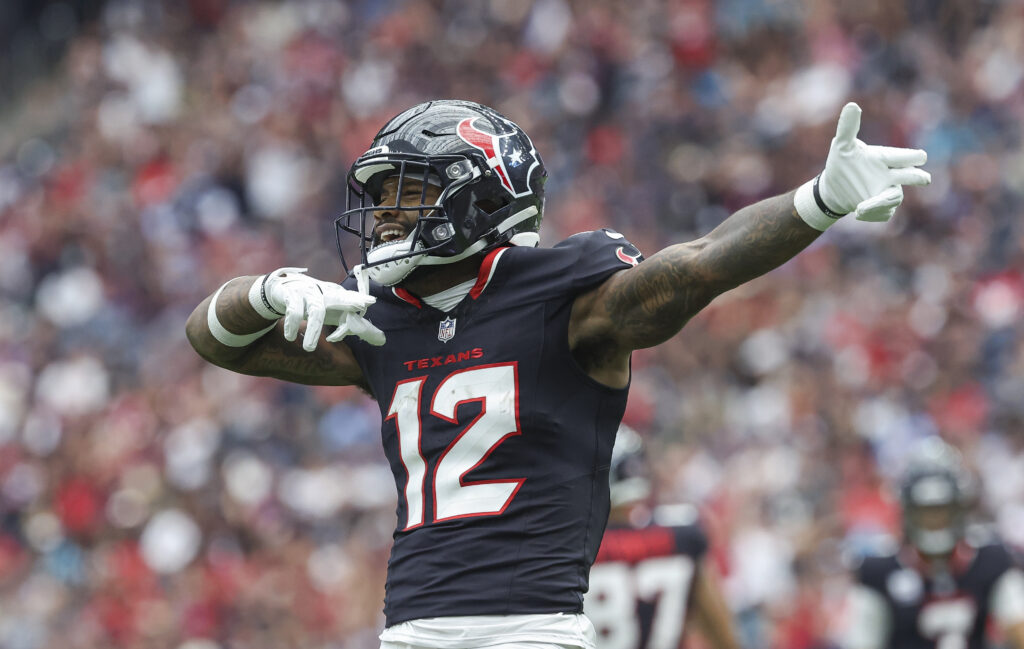
The Texans ruled out three starters for Sunday's Week 2 matchup against Cincinnati: wide receiver Nico Collins (hamstring), right guard Ed Ingram (groin), and defensive end Jadeveon Clowney (knee tightness). Collins sat out Thursday and Friday practice after suffering the injury in a Wednesday session, and Houston elected not to risk him against the Bengals. Ingram, who has been a full-time starter for two seasons, is expected to miss at least two weeks, per Aaron Wilson of KPRC 2. Clowney, though technically ruled out, remains a reserve behind Will Anderson Jr. and Danielle Hunter on the depth chart.
Collins' absence marks the second consecutive week without his services after he opened the season hot against Buffalo—seven catches on 10 targets for 75 yards and a touchdown. The Texans are already operating without 2025 second-round pick Jayden Higgins (torn ACL) and Tank Dell, meaning the passing game now leans entirely on Xavier Hutchinson, Jaylin Noel, Jared Wayne, and recent trade acquisition Kayshon Boutte. The depth is serviceable on paper but unproven in live action, particularly against a Cincinnati secondary that finished last season in the top 10 in pass defense DVOA. Every missing receiving option shrinks the target distribution window and forces higher usage rates on less-experienced hands.
On the offensive line, the loss of Ingram creates immediate leverage problems. Three-time Pro Bowler Wyatt Teller steps in from Cleveland, where he logged 94 games over seven seasons. While Teller carries pedigree, the transition to a new offensive scheme introduces adjustment friction—communication gaps, timing audibles, and protection adjustments all carry higher failure risk in Week 2. Cincinnati's edge rush, anchored by Trey Hendrickson, will probe that seam heavily. The Bengals ranked third in pressure rate last season; a new right guard in his first game with the team hands them additional opportunities.
For prop modeling, the combined effect tightens Houston's passing efficiency ceiling. C.J. Stroud's completion percentage likely compresses as secondary targets see increased targets; expect the market to shade his passing yards under any pre-injury number. Stroud finished Week 1 at 255 yards; without Collins and against an elite Cincinnati pass rush, staying over a projected 245-260 range becomes a fade situation. The interior line instability also elevates sack risk—Teller's acclimation period historically costs one additional pressure per game for new starters in their debut. Hendrickson over 1.5 sacks gains real value here. Tank load on secondary receivers like Hutchinson and Wayne is inevitable, but their usage totals against coverage schemes unknown to them carry volatility that rarely favors the over. The market will adjust receiving yards down, but not always by enough to account for efficiency loss baked into the scheme transition.
Houston's defense also loses Clowney depth, though his absence matters less given the first-team deployment. The real burden is on a secondary already thin at edge rusher—three players on injured reserve at the position—facing a Bengals passing attack centered on Joe Burrow and Ja'Marr Chase. This is a week where the Texans are being tested at nearly every position simultaneously, and the market hasn't fully priced the compounding effect of simultaneous debuts and absences.