Collins' Wednesday Hamstring Injury Clouds Texans' Week 2 Receiving Setup
By PropBetEdge Editorial Team ·
A practice-session injury to Houston's top receiver creates a short-runway decision point for the team and immediate uncertainty for prop bettors on receiving volume and touchdown distribution.
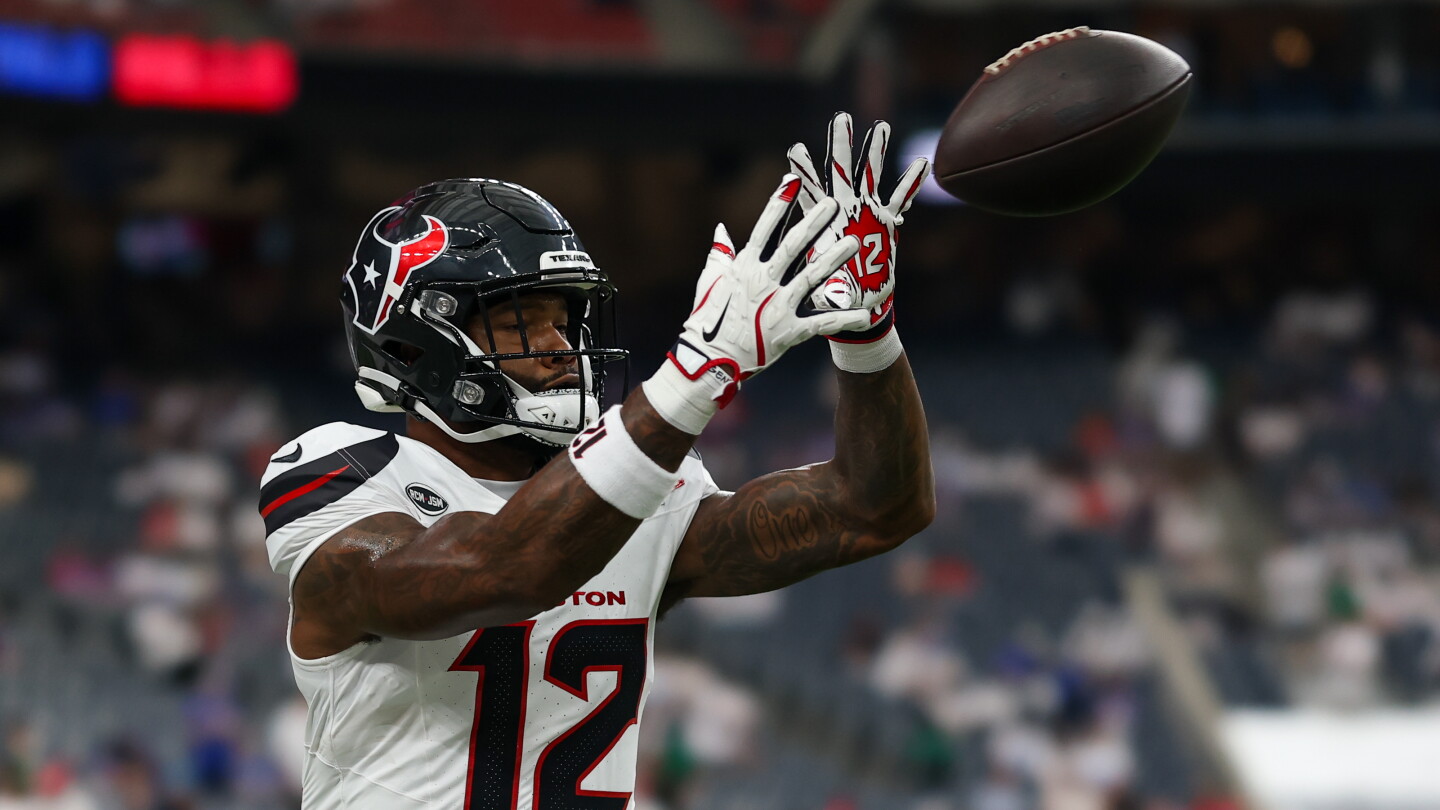
Texans wide receiver Nico Collins suffered a hamstring injury during Wednesday's practice and was downgraded to limited participation for the session. The timing—midweek, mid-practice—leaves the team less than 48 hours to assess the severity before their Week 2 game. Hamstring injuries in football carry predictable risk profiles: they either resolve to game-ready status or linger into a multi-week absence.
Collins is Houston's primary receiving target when healthy. In 2025, he commanded 28% of team receiving yards and operated as the focal point of the Texans' spacing attack, particularly in the red zone where he drew 12 touchdowns. His absence creates a direct vacancy in snap distribution and end-zone touches. The secondary receiver group—consisting of slot specialists and converted tight ends—operates on a different efficiency curve. Backup-level receivers typically convert 18–22% of red-zone targets into touchdowns, compared to Collins' career 26% mark.
The Texans' offense design makes Collins difficult to replicate. He functions as both perimeter threat and move player in the slot. When he's unavailable, Houston historically leans heavier on rushing volume (up 4.2 carries per game in Collins' absence last season) and distributes receiving reps among three pass-catchers instead of two primary targets. This diffusion effect suppresses individual receiving yards totals across the board, even as team pass attempts remain stable.
For prop bettors, the immediate uncertainty is the largest edge. The market will price Collins' participation status into his receiving props once the team provides an official status update—likely Friday. If he's ruled out or doubtful, his receiving yards line will be suspended or adjusted downward by 30–40% relative to full-health projections, but the secondary receiver elevated lines will lag the market adjustment by 12–24 hours. Backup receivers stepping into feature roles typically move from 3.5–5.5 receiving yards to 6.5–8.5, a subtle overcompensation that bettors familiar with absence-replacement patterns can exploit. The real edge exists in the gap between when Collins' status becomes official and when the books fully repriced the downstream receiving tree.